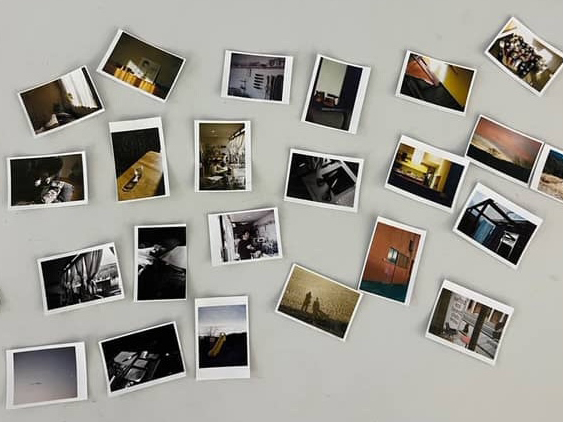
Recently, I had the opportunity to give a guest lecture at Arise Art Space here in Busan, South Korea, where I shared about my narrative photographic approach through my project Manabu. Preparing for that talk, and reflecting on the process aloud, gave me space and time to think more deeply about how this body of work came together. It’s led to some new realizations and questions I hadn’t fully articulated before. In many ways, this reflection has reshaped how I see the work now, even after the book has been made and shared.

Looking back, this project didn’t start with the intention of becoming a photobook or a cohesive body of work. It began as a personal trip to visit a close friend, Manabu, a bag and accessories designer living in Hatoyama, Japan. We’d built a friendship over years of exchanging gifts, drinks, and conversations, though I’d never visited his home before. When life’s timing finally worked out for me to spend six days with him, I brought my camera mostly out of habit and routine, not with a plan. I simply wanted to be present, to rest, and to share time in his space.

But as the days unfolded, the quiet rhythms of walking his dog, making coffee, cooking meals, and watching the sunrise each day, something deeper emerged. I felt myself slowing down, observing in a more patient and open way. I photographed more intuitively, letting images come to me rather than chasing them. At some point, I realized these moments were shaping into a visual narrative, and I wanted to give something back to Manabu: a tangible reflective slice of his own life, of what his friendship meant to me, of the stability and warmth he had offered me as a friend across distance and time.

When I think about how I arrived at this point, I trace it back to high school. I first picked up a camera because my friends were all in bands, and I had no musical talent of my own. The camera gave me a role and a purpose within my friend group. It gave me belonging inside a circle I always felt a bit outside of. Later, after the sudden passing of my father, my camera became a tool for navigating the real world: it became a way to process grief, to observe the quiet spaces around me, even bringing it into my dad’s hospital room. I started seeing the camera as a tool for empathy, a way to witness what others close to me were going through while holding space for myself.
Over time, that instinctive, observational approach evolved into what I now call a narrative, post-documentary style of photography, one that documents life as it is, but finds meaning through my subjective experience. That meaning doesn’t arrive all at once. It’s built iteratively: in the quiet moments before taking photos, while making them, and later, in the long process of editing and reflecting. Every stage of shooting, sequencing, and living with the work, adds another layer of understanding.

What I’ve realized more recently, through this period of reflection, is that Manabu is not just a story about place or friendship, it’s also a quiet exploration of male vulnerability. The tenderness, trust, and unspoken care between friends, which is woven throughout the images. I wasn’t consciously aiming to explore those themes at the time, but they surfaced through the process. It makes me wonder how much of our emotional lives stay below the surface, and how photography can reveal those subtleties without words.

The narrative became clearer not at the start, but through many rounds of arranging, sequencing, and living with the images. Each edit, each pairing, each omission shaped the story. And while the book may feel “finished” in physical form, the meaning continues to shift for me, especially now, reflecting on it with distance and a continued development of life experience and perspective.

Making Manabu has taught me that photography isn’t just about capturing moments, it’s about spending time with them, letting them teach you, and letting them change with you. It’s about slowing down, paying attention, and accepting that meaning is rarely immediate or fixed. Sometimes the story only reveals itself after you’ve given it time to breathe.

 dylan barnes | blog
Leave a comment