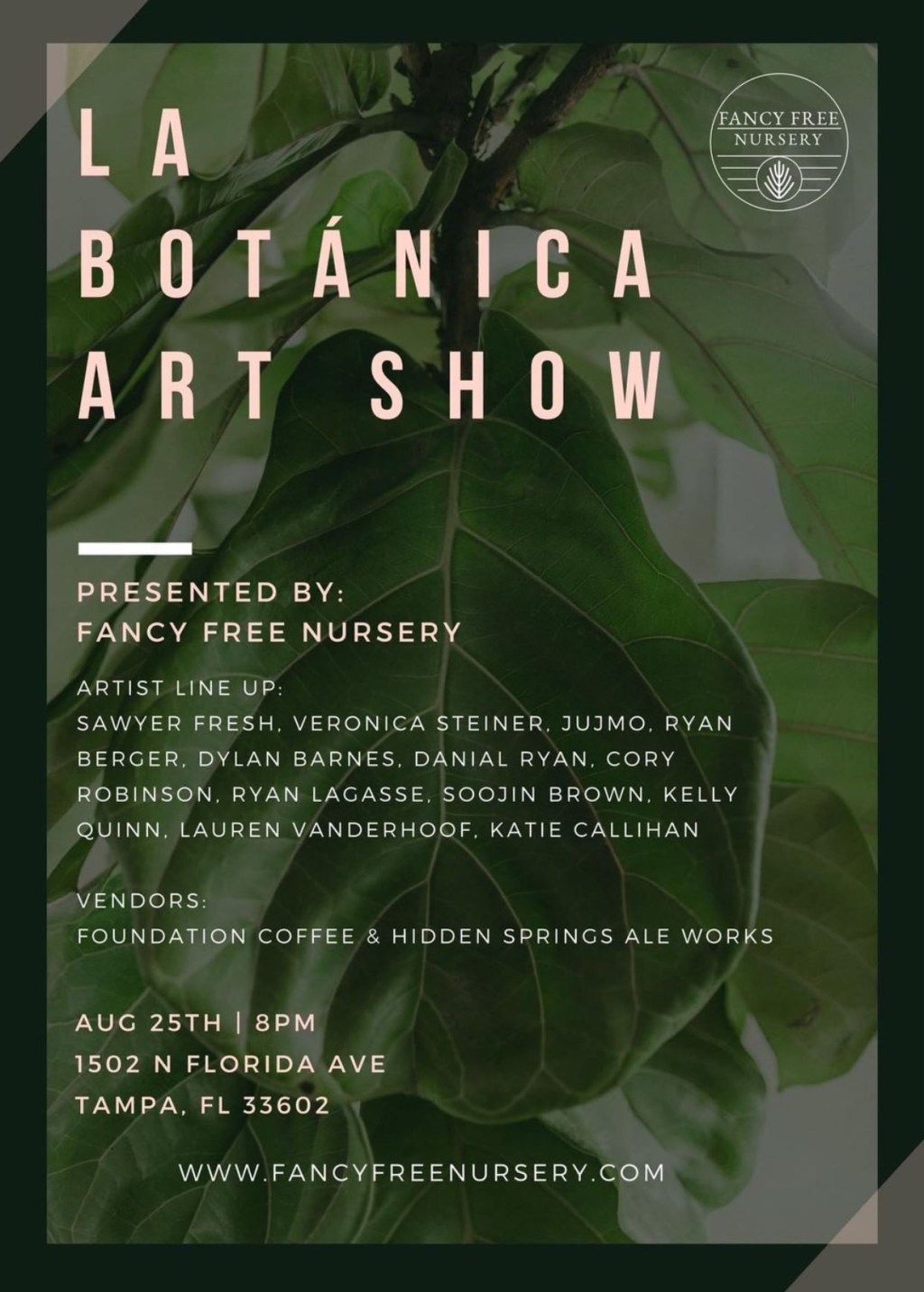
I am excited to announce that I will be exhibiting some work alongside some other very talented Tampa Area artists at Fancy Free Nursery in Tampa Heights. There will be an opening party in the coming weeks. I hope to see you there to enjoy some art, music, coffee, beer, and just an overall good time. Details are provided in the flyer and below:
La Botánica Art Show
Fancy Free Nursery
1502 N Florida Ave. Tampa, FL 33602
August 25, 2017 @ 8PM
Works displayed by Dylan Barnes, Ryan Berger, Daniel Ryan, Jujmo, Soojin Brown, Cory Robinson, Katie Callihan, and more!
Refreshments provided by Foundation Coffee and Hidden Springs Ale Works.
Getting out of the mega-city of Tokyo was a nice break every couple days or so. It just so happened that after we got our rail passes that we decided to schedule a day trip outside of Tokyo about every other day.
The bullet train ride from Tokyo to Kyoto was about three hours. When we arrived in Kyoto, we decided that it would be a good idea to rent bicycles and ride around the city. This allowed us to move quickly but also gave us enough control to stop when we wanted to and move slowly enough to still take in the city and soak in the sights. With only a couple things on our must-see list, we figured the day would be an easy one (it wasn’t). The first thing we did was ride our bikes towards Kiyomizu Dera. We rode a few miles before arriving at the west entrance of the park.
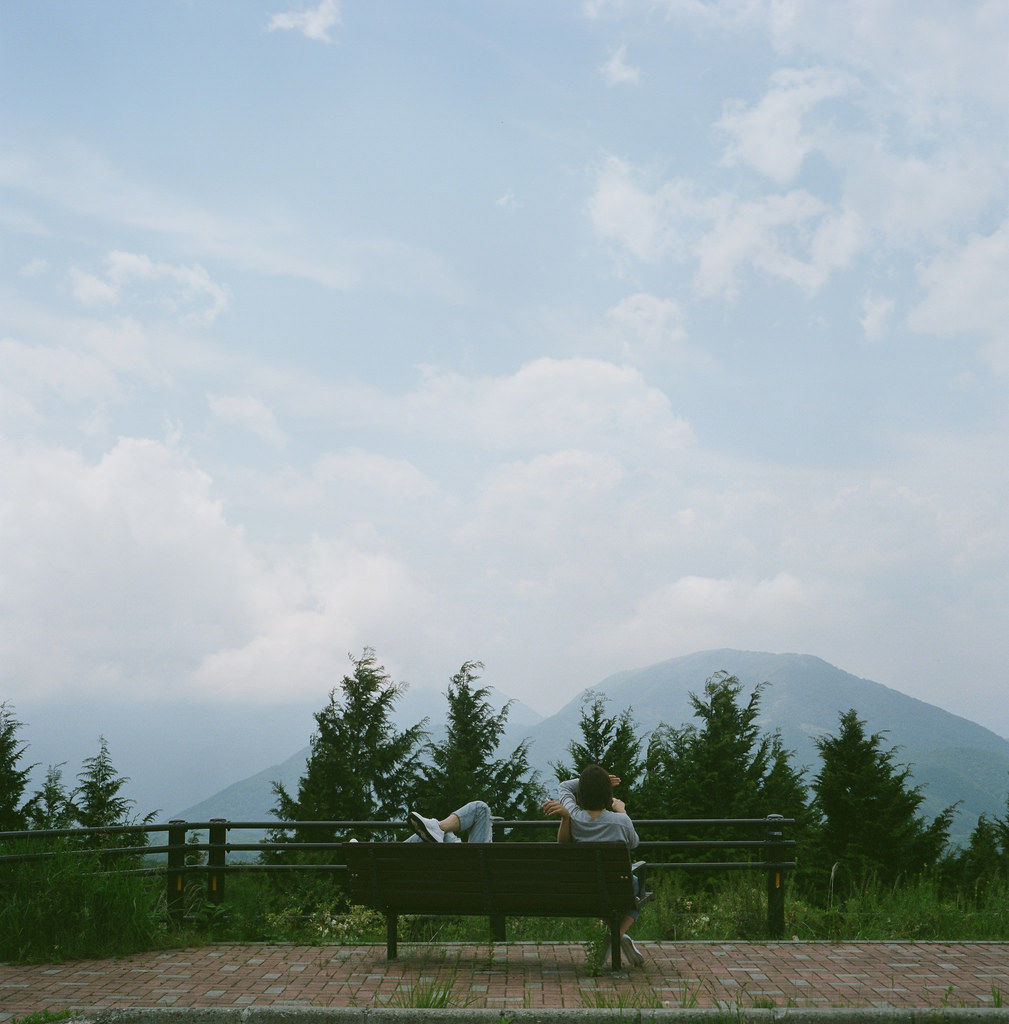
Mamiya 6 w/ 75mm // Fuji Pro 400h
We spent a few hours walking through the park, most of which was uphill, passing by a few temples and a insanely large graveyard. The views along the walk were impressive to say the least. Up until that point we had only seen a handful of people. Nearing the end of our trek, we turned a corner and finally arrived at Kiyomizu Dera.
Mamiya 6 w/ 75mm // Fuji Pro 400hContax T3 // Provia 100Contax T3 // Provia 100Mamiya 6 w/ 75mm // Fuji Pro 400h
Along with the temple, there were literally thousands of people buzzing along the main drag filled with shops that sold food, trinkets, and other things. Many Asians wore kimonos and geta, which just made the environment that much better. While walking around taking photos, I was approached by a group of Japanese middle school students. They asked if I could help them with their English homework. Of course, as a teacher myself, I obliged.
Contax T3 // Provia 100Contax T3 // Provia 100
After spending a bit more time walking through shops, we jumped back on the bikes and grabbed some udon for lunch. After lunch we planned on biking to the bamboo forest in Arashiyama. While riding and navigating simultaneously, I dropped my phone. Not only did I drop it, but it ended up right in between my spokes, slamming into the back of my front fork. Needless to say, it was done for. After riding a bit more, we decided that the additional mileage was not manageable before the last train left for Toyko. We returned the bicycles, had a match shot frappuccino, and hopped on the train back to Tokyo.
We did however make a second trip to Kyoto two days later. While this did mean that we would have to cross Osaka off our list for this trip, we thought the bamboo forest would be worth it. When we arrived the second time, we took a cab straight to Arashiyama.
Contax T3 // Provia 100Mamiya 6 w/ 75mm // Fuji Pro 400hContax T3 // Provia 100Contax T3 // Provia 100Mamiya 6 w/ 75mm // Fuji Pro 400h
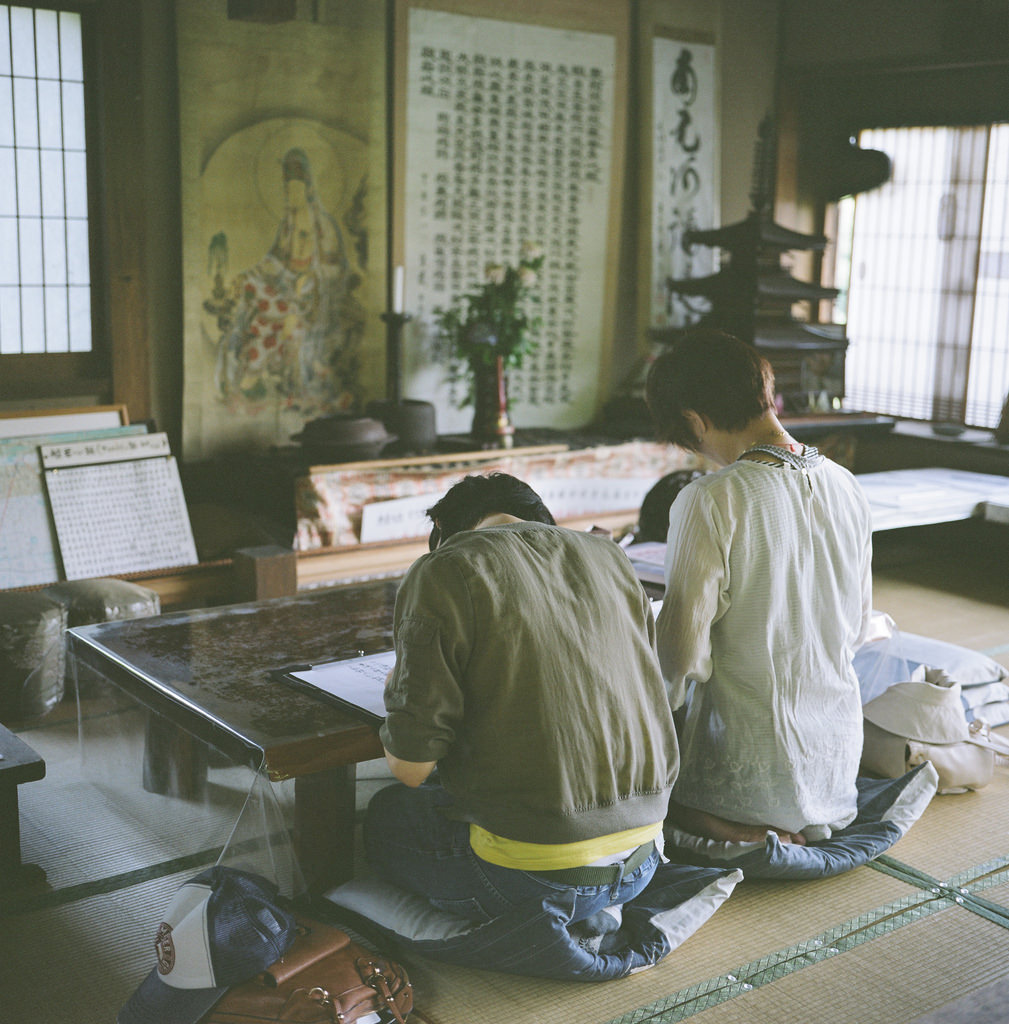
Still, we got sidetracked (a little lost) and ended up taking a hike to the highest point in the area. We were greeted at a temple at the top of the trail and decided to take in the view and reap the reward for our walking. I observed quietly at first, but then decided to make small conversation with some other visitors and took a few portraits.
Mamiya 6 w/ 75mm // Fuji Pro 400hMamiya 6 w/ 75mm // Fuji Pro 400hMamiya 6 w/ 75mm // Fuji Pro 400hMamiya 6 w/ 75mm // Fuji Pro 400hMamiya 6 w/ 75mm // Fuji Pro 400hMamiya 6 w/ 75mm // Fuji Pro 400h
After the temple, we took the easier walk back down and headed toward the bamboo forest. For someone who likes to take photos of natural environments, it was hard to wait out the perfect shot in an area that is packed with tourists and selfie sticks. I didn’t expect the amount of people that were there but I did manage to grab a few shots I was happy with.
Mamiya 6 w/ 75mm // Fuji Pro 400hMamiya 6 w/ 75mm // Fuji Pro 400h
While Kyoto was a bit more tourist-filled than anticipated, we did find the nature-based reprieve we were looking for although it took a bit of walking (and biking) to do so. Of course, we only were there for two half days so we remained focused on the bigger sites to see.
Part of the Process is a series of posts that puts the spotlight on film photographers and DIY film developers. These features provide unique experiences and perspectives on shooting and developing film while also showcasing diverse talent and film photographers around the globe. If you are interested in being featured, feel free to contact me!
What attracted you to film photography? How did you get started/introduced to shooting film? How soon after did you start developing?
When I was a sophomore in high school, I had to choose an elective class to round out my schedule. I had no interest in anything that was available, but Black and White Film Photography stuck out to me. My mom took me to a thrift store and I found a Canon AE-1 in pristine condition, with a 50mm f/1.8 stuck to it. I think it was $15 or something.
The second week of class we had to develop our first roll. I remember opening the tank for the first time, pulling out my film, and holding it up to the light. I couldn’t believe I had actually made images appear on film. It was like magic.
The following week we used enlargers to print our favorite image. After that print dried and I saw it in all its glory in the light, I decided I would never go anywhere without my camera. I still own that AE-1. It’s actually sitting on my desk as I type this.
Canon F-1 w/ 50mm 1.4 // Fuji Pro 400h
What do you like to shoot on a regular basis?
I love shooting portraits on location outdoors, as well as product, editorial, and anything coffee related. Lately, I’ve been shooting for Barista Magazine and they have allowed me a huge amount of artistic freedom. I got to spend time with amazing cafes and roasters really seeing their processes and documenting them the way I want. It’s truly amazing.
I have recently started a project focusing on architecture around my town with focus on minimalism. Basically different types of buildings framed against a stark cloudless sky.
What formats, cameras, and films do you shoot? What do you like about the formats, cameras, films you prefer?
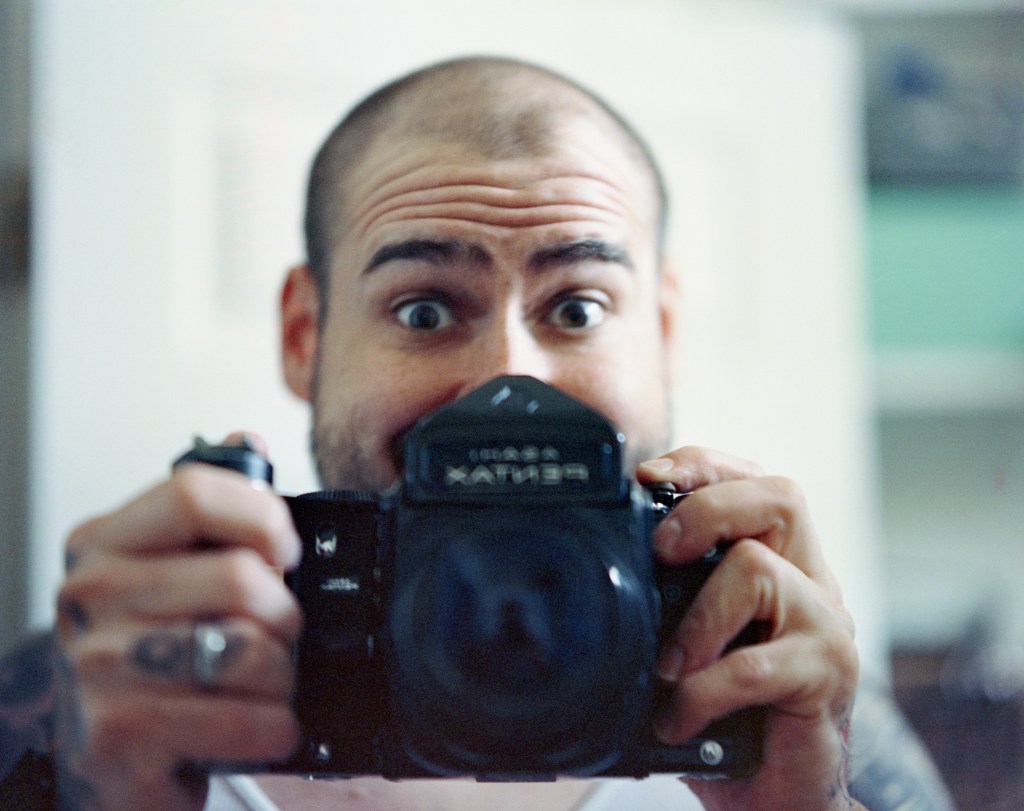
I shoot 35mm and medium format. My main film cameras are my Canon F-1, Pentax 67, Olympus XA, and Polaroid Land Camera 100.
Olympus XA // Kodak Portra 400The Canon F-1 is the most solid and professional feeling 35mm SLR I’ve ever used. I started off when I was 15 with an AE-1, and this camera is so very comfortable and familiar coming from that, but in a class of its own. The shutter sound and feel, the ruggedness, the brassing on the corners, the weight, everything. It just feels like a serious machine. I shoot that camera almost exclusively with the FD 50mm f/1.4, which is a gorgeous lens. Images are almost three dimensional. Ive been using it a lot for environmental portraits and some product stuff.
Canon F-1 w/ 50mm f1.4 // Fuji AcrosI was mainly shooting a Pentax 645N and a Mamiya RB67 for medium format, but I let both of those go and picked up a Pentax 67 with the magical 105mm f/2.4 lens. The huge form factor and cannon of a shutter just feels so right to me, almost like positive feedback from the camera that assures me I’m doing the right thing, I’m exactly where I need to be. I’ve shot with my friend’s Pentax 67 and finally ordered my own. It should be in my hands before this is published. I feel like Christmas is coming, and I can’t wait.
Pentax 645N w/ 45mm f2.8 //Fuji Pro 400hI used to be a total sucker for the “full frame vs crop sensor” argument and I totally believed that in order to be a professional you needed to own a full frame camera. Then I started shooting medium format and everything I knew went out the window. I started to realize that while it did matter what tool you chose for the job was the right tool, these are all just tools. I have shot professionally on 35mm film and full frame cameras, as well as crop sensor and medium format. It’s all about what you’re doing with it and how you see things.
Personally, I love medium format for intensely shallow portraits or environmental product or editorial work. But I will also shoot the Canon when I need to be a bit lighter with my kit and be able to wedge myself into smaller spaces. There is, however, an undeniable feeling when you hold up a 6×7 negative into the light for the first time.
What types of film do you develop?
I develop black and white as well as C41 at home. I have been developing black and white for years ever since high school, in my bathroom sink. A couple years back, I decided I really wanted to try C41 at home to bring costs down since I was shooting so much. After doing a ton of research online and a lot of trial and error, I developed a stand development technique that works really well, with very consistent and predictable results and not too much extra grain. Ive been processing my C41 like that for over a year now, about once a week, sometimes more.
Canon F-1 w/ 50mm f1.4 // Fuji Pro 400hTell us about your first experiences in developing your own film. How did you muster the courage to give it a shot? What resources did you use?
After my sophomore year in high school, I was just shooting black and white film like crazy and processing the film at a lab in Hayward that sadly doesn’t exist anymore. The woman who owned the lab told me that I could develop the film at home if I wanted, and that they carried all the stuff necessary to get the job done. I begged my mom to buy the stuff I needed. A tank, spools, the chemistry, a squeegee, a film changing bag, and clips to hang the film to dry. It didn’t take much convincing, I think she was just thrilled I was being creative and not asking her to buy me an Xbox.
I had already learned how to process film from my class, so I got right to it. I made a lot of mistakes that first year, but eventually it became like second nature. It took me 15 years to even consider trying C41 at home, because I always heard there was no way you could do it.
Olympus XA // Kodak Portra 400What is your development process like now?
When I’m shooting, I tend to overexpose colour at least a stop or two. I push black and white often, usually up to 1600 ISO, but not much higher than that. It depends on what I’m shooting.
I don’t want to give all my secrets away, but I use a modified stand development process for both black and white and C41. Since I use a stand development process, it doesn’t matter what the film is pushed to, the process remains the same. This has allowed me to really streamline my workflow and keep things simple.
Pentax 645N w/ 45mm f2.8 // Fuji Pro 400hAfter I shoot, film doesn’t hang out for too long before I process it. Sometimes I’ll process that day if I have time. The process for black and white takes about an hour and ten minutes, while colour takes about two hours. The whole idea behind stand development is that you load the film, add the chemicals, agitate for a short interval, then leave the tank alone. Since there isn’t constant agitation, the chemicals exhaust and develop the film slowly, allowing you to do other things in the meantime. It also means I can use room temperature or colder water for processing C41. I tried the traditional way with hot water and all that stuff, but it was a pain, and getting the water to stay a constant temperature to be sure everything works right is a juggling act I’m not interested in.
After the film has processed, I hang it up to dry, usually overnight. The next day, I’ll cut and scan the negatives with my Epson V550 flatbed scanner. I don’t use the automatic modes, I do it manually one frame at a time. That way I can control the curves and sharpness as it scans and leave nothing up to chance. I scan everything as flat as possible to make sure all the information is there, and then I make minor adjustments in Lightroom to contrast, exposure, and highlights. I don’t do any colour correction digitally. Everything is saved as high quality JPEGs for delivery or whatever.
Mamiya RB67 w/ 127mm f3.5 // Fuji Pro 400h
What’s your processes regarding scanning, enlarging, and/or printing your work?
When I was younger, I would print my work as much as I could. Photo paper is expensive, so I didn’t print a ton. One year, I was gifted five packs of Ilford Multigrade photo paper and I think I went through it in a month. I haven’t printed in a good three years, but I am looking into some professional enlargers so I can build a setup to start printing again.
The internet is amazing and Instagram is great for showing off your work around the world in a second, but I feel there’s something missing when you don’t print your work. I feel like its a necessary part of the photographic process that informs the photographer and the viewer something on a screen just can’t.
What equipment are you using to develop your film and why?
I use a Paterson four spool tank, mostly so I can process either two rolls of 120 or four of 35mm at a time. I use the same processes for both so it saves time and the results are very consistent. I use Kodak Photoflo for both processes. It’s cheap, lasts forever, and just works. Most of the stuff I use is easy to get and is affordable.
For black and white, I have had amazing success with Rodinal. It’s so cheap and economical. I was weary at first, but I’m so glad it performs so well, both with traditional and stand developments. I don’t believe there is a magic chemical or process that makes the best images. However, I do believe Rodinal is the best for me, simply because of the cost to performance ratio, plus it works great with the particular film I shoot.
For C41, I have been using the Jobo Press Kit. Its readily available, not super expensive, and lasts a decent amount of time. I go through a box every two or three months, which isn’t bad considering how much I process.
The weak point in my development kit is my changing bag. I got it from Amazon and the zipper broke. It was cheap, so what was I expecting? I need to find a bigger higher quality version soon.
Nikon F2 w/ 55mm f2.8 // Kodak Portra 400
Are you content with where you are now with your shooting and developing? Do you have any future plans or ambitions?
I would like to move to a house or a live/work space that I can have a permanent lab set up to process my work and print. I have really considered investing in a Jobo system to get the most high quality and consistent development possible. All of the things I want to do would take a considerable amount of money to get it off the ground, so I’m scheming at the moment.
Have you completed any notable projects or in the process of creating something from the film you have shot and developed? Feel free to give a solid summary of each project.
I am in the process of a project thats very collaborative with some film photographers that I am friends with, and I am really proud of it. I can’t talk about it just yet, but it will be coming out soon and I cant wait to share it.
Canon F-1 w/ 50mm f1.4 // Fuji Pro 400hWhat advice can you give to others who are interested in shooting and developing film but are apprehensive about getting started?
Film can be expensive, and it is a very manual, hands-on undertaking. However, there is nothing more satisfying then pulling out a roll of film after processing and seeing those images come to life.
Film is an organic, living, breathing thing that captures light in a way that digital still hasn’t conquered. Shooting and processing film is a learned skill, and anyone who has the desire to do it can absolutely be successful.
Find people who shoot film and talk to them. Look up classes in your town. Most colleges and night schools should have a course for film photography. Talk to your family and see if anyone has an old film camera collecting dust in a box or attic somewhere. Go forth and keep film alive.
Anything else you care to share?
There is an incredible film photographer community, and being plugged in to that community has helped me be more successful in my efforts, inspired me when I’ve been in a dry spell, and introduced me to some of the coolest people. I honestly think that I am a better photographer for having met other film shooters and become a part of that community.
Of course, Mount Fuji was at the top of our to-do list while in Japan. Driving in Japan is manageable in a physical sense, but perhaps not as feasible in a mental and emotional sense. Just getting out of Tokyo was an adventure in and of itself. Although, once we got moving, it wasn’t so bad. The interesting thing about Japan, is that since it is an island, most of the tourists in many of the sightseeing areas are actually Japanese citizens on day trips to a different part of the country of which they are from. There was only one rest stop on the way to Mount Fuji from Tokyo, and it was here that we saw couples, families, and motorcyclists getting away from their busy weekday lives on a Sunday morning.
Contax T3 // Velvia 50
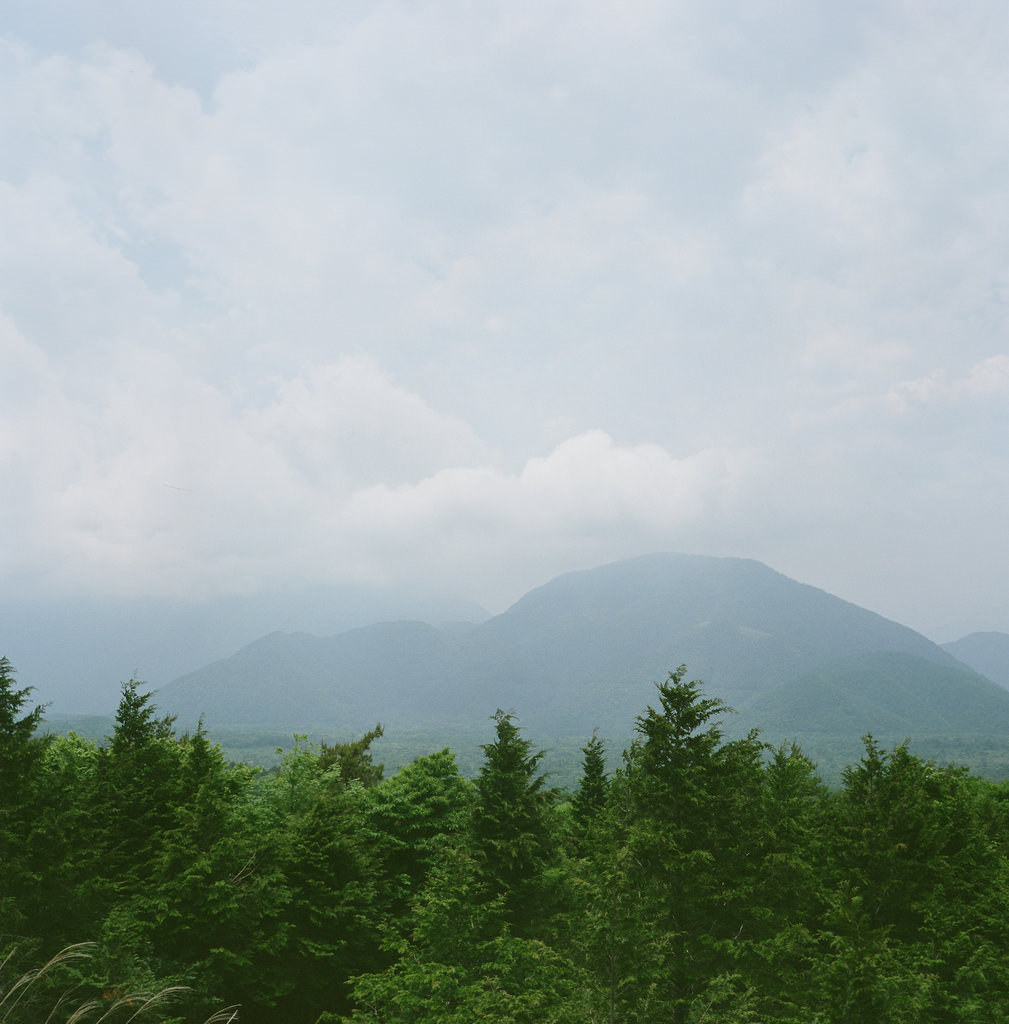
After driving about eighty miles, spending about $40 or $50 on tolls, getting stuck at a toll booth, and a single pit stop, we arrived in the vicinity of Mount Fuji. The air was fresh, the trees were green and spread as far as the eye, condensed over rolling hills and smaller peaks in the distance.
Contax T3 // Velvia 50
Mount Fuji, of course, is stunningly beautiful and is probably the number one nature-related thing to see while in Japan. And rightfully so. The ride to Mount Fuji wasn’t terrible, but was definitely much improved after crawling through Tokyo traffic and getting stuck at a toll plaza. Driving towards the mountain is just as scenic as arriving at the destination.
Contax T3 // Velvia 50
The base of the mountain is surrounded by campgrounds, viewpoints, and traditional dwellings. We stopped at a small cafe on the opposite side of Mount Fuji and took in the sights of the sun lowering behind the low-hanging clouds, windsurfers, canoes, and fisherman. Every person individually partaking in their own activity, but collectively embracing the beauty of the countryside.
Mamiya 6 // Fuji Pro 400hContax T3 // Velvia 50Mamiya 6 // Fuji Pro 400hContax T3 // Velvia 50
Aside from the mountain itself, the reason we journeyed to the area was to walk through Aokigahara, or the suicide forest. Aokigahara is a vast forest with dense vegetation and a ground layer consisting mostly of hardened lava from past eruptions that consumes most sound leaving it very quiet, tranquil, and even a bit eerie. However, the forest’s solemn mood does is not derived solely from its sound-deadening surface, but from the fact that it is the second most popular place for suicide in the world.
Mamiya 6 // Fuji Pro 400hMamiya 6 // Fuji Pro 400h
Without getting too much into details which can be readily found elsewhere online (here and here. Oh, and here’s a Vice Documentary here), there are many interesting traits to Aokigahara. The opening of the forest is set up more like a tourist attraction than a destination for suicide, including a gift shop that serves corn ice cream (which was delicious as it was life-changing). The forest is utterly beautiful and truly is an attraction on its own without the mystique and theme of suicide. Of course, the forest is not marketed to the public as “The Suicide Forest.” That large, lingering, and pretty well-known detail is seemingly swept under the rug.
Mamiya 6 // Fuji Pro 400h
Before I went, of course I did a little research about the forest. I had read that there were signs throughout the forest. These signs were said to have been hung by a man who previously set out to commit suicide and serve as a reminder to those who go with the intention to end their lives that their families are home waiting for them, depending on them, and of course love them. Another thing we were on the look out for were any ropes, strings, or long pieces of ribbon; as these are frequently used by those who are still uncertain about their choice to take their life and use this as a tool to get back to the main trail if they so choose to live and leave the forest and return to their families and lives. We did see some of these things (no bones or skulls, though) throughout our short trek through the forest. Needless to say, you can’t help but feel a bit despondent.
The forest is vividly green, the trees and foliage only allow for the sound of a light breeze and narrow rays of sunlight to cut through the cracks between the leaves (it was so dark at points, that my cameras couldn’t get enough light to take an automatically-metered exposure).
Contax T3 // Provia 100Contax T3 // Provia 100Contax T3 // Provia 100
We didn’t spend too much time walking through the forest, maybe an hour or two (we spent an hour or two just driving around looking for it). We should have spent the entire day hiking the forest, to be honest, but we weren’t exactly prepared for an all-day hiking excursion. So if you plan on visiting, I definitely recommend blocking a whole day for a proper journey through the sea of trees.
If anything, Aokigahara is a place of peace for both those who are dead as well as those that are living. It’s a place for quiet, serenity, and reflection where time and sound seems to stand still.
Part of the Process is a series of posts that puts the spotlight on film photographers and DIY film developers. These features provide unique experiences and perspectives on shooting and developing film while also showcasing diverse talent and film photographers around the globe. If you are interested in being featured, feel free to contact me!
What attracted you to film photography? How did you get started/introduced to shooting film? How soon after did you start developing?
I love the tangibleness of film and for me personally, having two kids, I want my kids to be able to have negatives and prints to be able to look through when they get older.
I was lucky enough to have film be the only medium for many of my early years of taking pictures. When digital got popular I used it a lot, but after my dad gave me his old Canon AE-1, I started using film here and there again.
I really got into shooting a lot of film after my son was born. About a year after, in 2015, I started developing my own black and white and C41. I recently began developing E6 last year.
Leica M3 // Fuji Provia 100F
What do you like to shoot on a regular basis?
I shoot weddings, portraits, boudoir, some street, and found objects.
What formats, cameras, and films do you shoot? What do you like about the formats, cameras, films you prefer?
I shoot mostly 35mm and medium format. I shoot a Leica M3 and a Widelux F8 for 35mm and a Pentax 67 for medium format. Although, I’ve had more cameras than I can count for each format.
Widelux F8 // Fuji Neopan 400 (+2)
I shoot a lot of black and white, slide, and color film. I love the mechanical goodness, tactile feel, and noises that my Leica makes. The Widelux is a terribly fun camera and format to shoot. Jeff Bridges was my inspiration to purchase that camera. Finally, the Pentax 67 sounds like a shotgun which I find fantastic. The 105mm f/2.4 lens is one of the sharpest and best lenses I’ve ever used.
What types of film do you develop?
Mostly black and white and slide film. I develop personal C41 stuff. However, I mail out my paid work that I shoot on C41.
Tell us about your first experiences in developing your own film. How did you muster the courage to give it a shot? What resources did you use?
My first experiences developing black and white would have discouraged most people and made them stop. I didn’t know it for a while, but my thermometer was off by 12 degrees (on the cold side) so all of my negatives were coming out super thin and almost unscannable and unprintable.
I had done some research on the MassDev website and a friend of mine had been developing his own film for a while and he showed me how to do it. After finding out my thermometer was off, I bought a Paterson thermometer from B&H to be sure it was accurate.
My whole world changed and I was finally getting nice, thick, contrasty negatives!
Pentax 67 // Kodak Tri-X (+2)
What is your development process like now?
For personal work, I try not to let my undeveloped rolls sit for too long and pile up. But sometimes life gets in the way. Most of the time I shoot, process, and scan within the same day or a day or two later.
For wedding, portrait, and boudoir work I process all the black and white I shoot as quickly as possible, and color is sent out to the lab as soon as possible. Printing and enlarging is tougher because my darkroom is in another town, not to mention that I’m so busy with my kids that I don’t always have free days to get there and print. I usually have to spend 8+ hours in there to get as much done as I can.
Pentax 67 // Ilford Delta 3200
What’s your processes regarding scanning, enlarging, and/or printing your work?
I scan my my traditional 35mm negatives with a Nikon Coolscan LS-40, and medium format with an Epson V550. I currently have a darkroom in my father’s basement and have 4 enlargers, although I really only use one or two.
My main enlarger is a Beseler 45MXT with Dichro45s color head that I got for the unbelievable price of $Free.99. I usually make prints from the black and white film I shoot at weddings and of my personal street and family photos.
I like to think that my kids will have boxes and boxes of prints to look through when they’re older. And also why 80% of their life is in black and white!
What equipment are you using to develop your film and why?
I bulk load most of the black and white I shoot (HP5, Tri-X, or Kodak XX). I sort of still shoot film like it’s the only medium available and there luckily there still is a ton available.
I use a medium size changing bag and Paterson developing tanks. I mostly use Ilfotec HC developer; it’s concentrated like Kodak HC110, and I’ve gotten 79 rolls out of a liter bottle.
I do my developing at home in my kitchen. I find the Paterson tanks and reels very easy to use. I hear people have complaints about the plastic reels being hard to load, and that the steel reels are the only “authentic” reels, but I’ve ruined more film using the metal reels than the Paterson counterparts. Although, my first Paterson 120 reel experience ended with me ripping my arms out of my bag with the film in one hand and the reel in the other, and hucking them across my kitchen.
Olympus Pen FT // Fuji Provia 100
Are you content with where you are now with your shooting and developing? Do you have any future plans or ambitions ?
I’ve gotten comfortable in my shooting and developing processes. Nobody’s perfect and there have been times I’ve messed up a development, but for the most part I’m happy with how my negatives and positives come out of the tank. I’d like to turn my “Before We Wake” and “Driver’s Side” projects one into a book.
Have you completed any notable projects or in the process of creating something from the film you have shot and developed? Feel free to give a solid summary of each project.
My life-long “project” is my kids, which will never be completed, so to speak. I’ve shot a half frame Pen F, with a 36 exposure roll (so 72 photos) in less than 10 minutes with my kids around the house. I know many people are super selective with their shots they take on film, and while I try and make sure each shot is worth something, if it’s of my kids, every shot is worth it.
Pentax 67 // Kodak Ektar 100
I’m too ambitious with projects, so I have a hard time focusing on one and seeing it to fruition. Other projects rely on people, and people are too often unreliable.
However, I did do a small project called “Driver’s Side” in which I shot HP5 pushed to 1600 using my old Leica Minilux, and shot photos while driving between the hours of 11pm-5:30am. I also started another project entitled “Before We Wake” in which I used my Widelux with Cinestill 800T pushed to 6400; shooting large, empty parking lots of stores and shopping centers before the hours of them opening (usually between 3:30a-5:30a).
Leica Minilux // Ilford HP5
What advice can you give to others who are interested in shooting and developing film but are apprehensive about getting started?
To the people thinking about developing their own film: talk to as many people that do it as possible. Get information and consume as much of it as possible: watch YouTube videos, maybe find someone local who does it and see the process. I’ve had a few friends come and hang out while I developed to see how the process is done.








 dylan barnes | blog