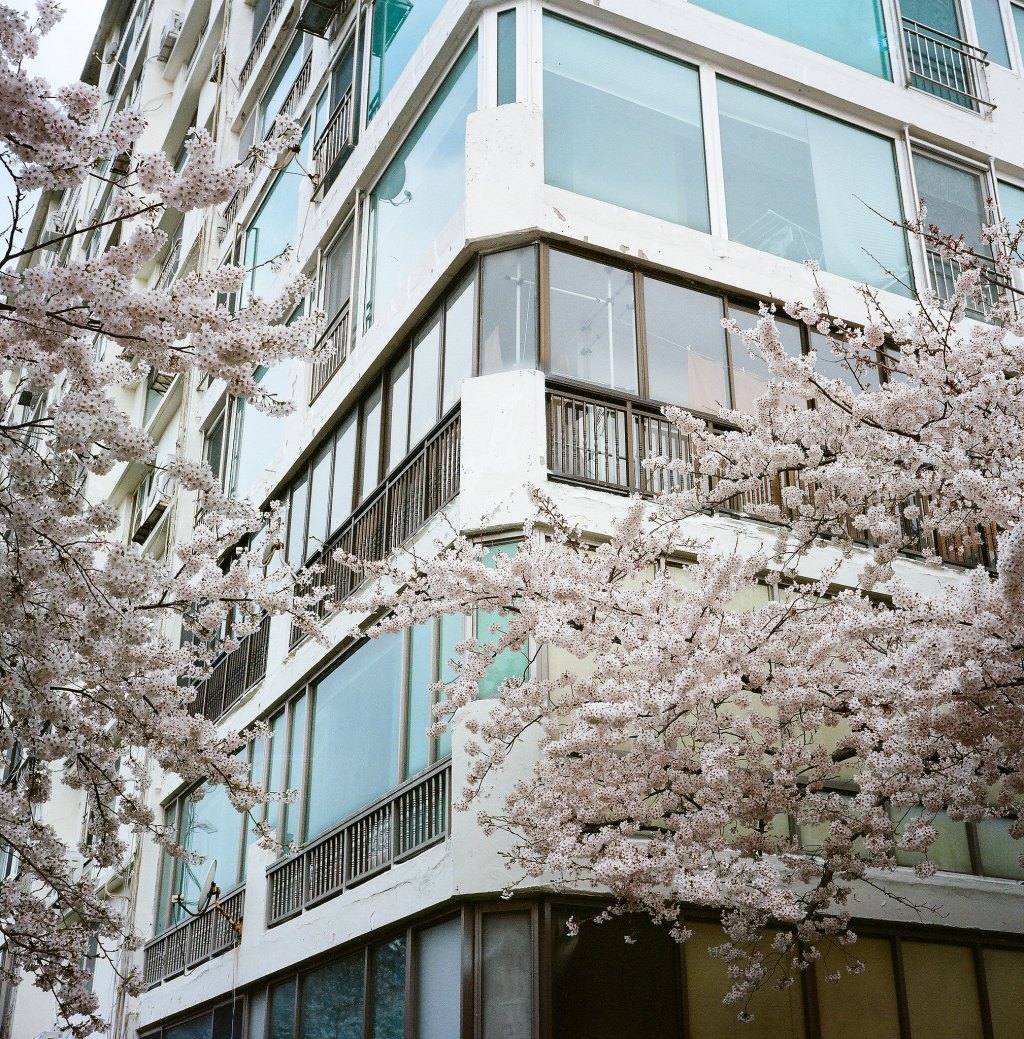
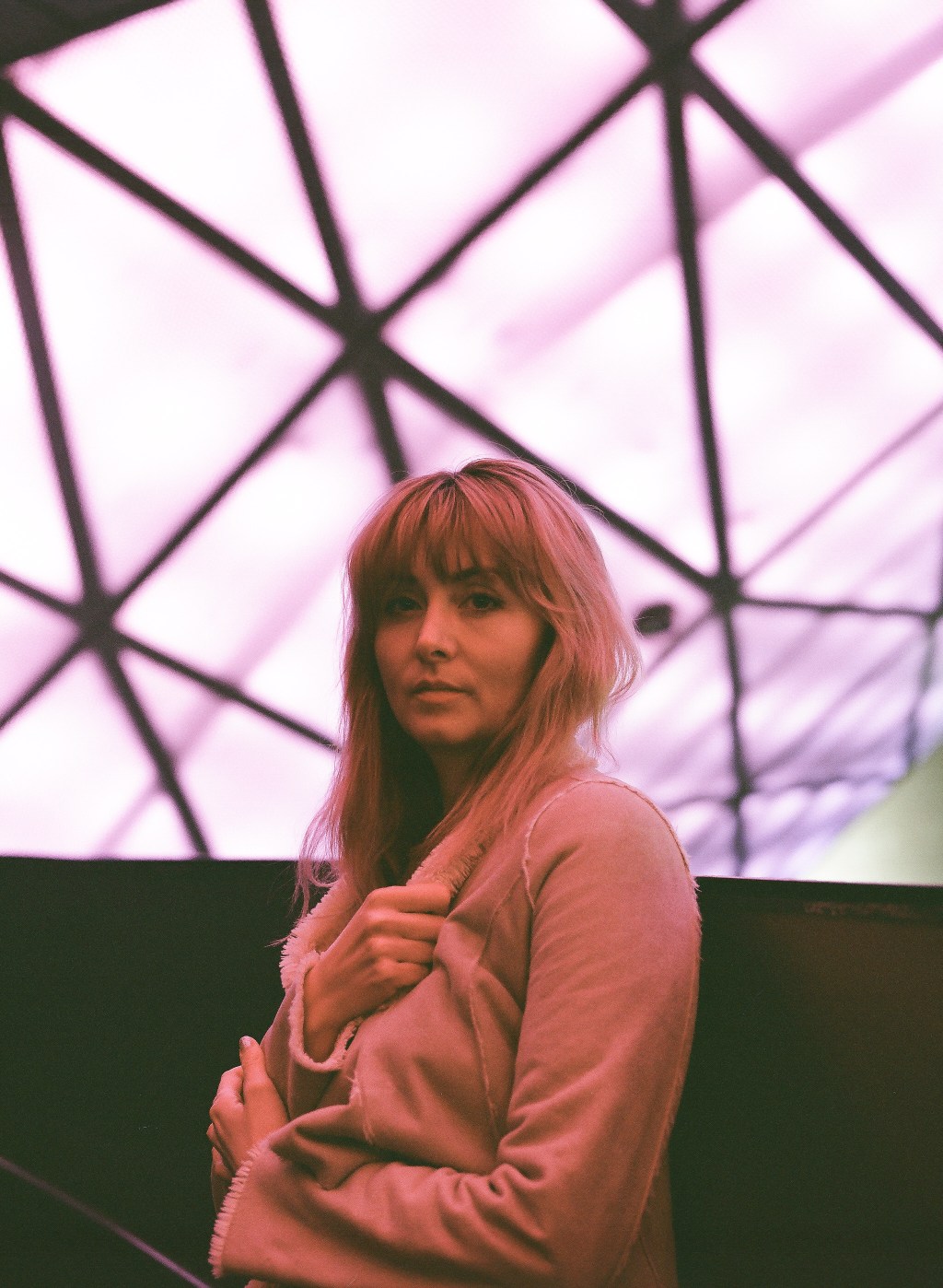
Images were taken with a Leica MP with Carl Zeiss 35mm f2 Biogon and a Rolleiflex 3.5f.
None of the petals were withered or brown. On the contrary, perhaps because the water was so cold, they seemed fresher and fuller than ever, and their fragrance, mixed with the morning mist from the river, was overpoweringly strong.
Petals covered the surface as far as the eye could see. My hands had cleared a patch of water for a brief moment, but petals soon came flooding in again to fill it, and then they flowed on, almost as if someone had hypnotized each one of them and was drawing them toward the sea.
I wiped my palms together, brushing the petals that had stuck them back into the stream.
From September 4 to October 25, 2020, my work will be on display at the new KT&G Sangsangmadang cultural arts in Busan, South Korea. The 12-story building features a cafe, a local makers shop, a two-floor gallery space, darkroom, live concert hall, a hostel, and so much more. On the 4th and 5th floor, an exhibition entitled Another Reality, will showcase the work of three photographers, two illustrators, and one installationist. More about my submission below:
Summer, After Dark is an ongoing photography project that focuses on Haeundae New Town, a neighborhood within the most populous and visited district in Busan, South Korea. My influence in photography derives from twentieth century American photography and the method of capturing the ordinary and commonplace by engaging with city landscapes and portraiture. In this project, I interact with the landscape of Haeundae New Town by only making images within walking distance of my home after dark. These images capture the unperturbed banality of a popular seaside town’s streets and walkways lit by street lights and storefronts to impart the ever so subtle movements of the night and the warmth of summer through the application of long exposure.
서머 애프터 다크(Summer, After Dark)는 대한민국 부산 지역에서 가장 인구가 많고 방문객이 많은 지역인 해운대, 그중에서도 뉴타운을 중심으로 진행 중인 사진 프로젝트다. 나는 20세기 미국사진술, 도시의 풍경과 포트레이트를 평범하고 흔하게 포착해내는 방법에서 많은 영향을 받았다. 이 프로젝트에서 나는 해가 지고 어두워진 뒤에, 집에서 걸어갈 수 있는 거리 안에서만 작업을 했다. 이러한 이미지들은 가로등과 상점가로 밝혀지는 유명한 해변 마을의 거리들과 산책로의 동요되지 않는 진부함을 포착하여, 긴 노출의 적용을 통해 밤의 매우 미묘한 움직임과 여름의 따뜻함을 전해준다.
Cool summer nights.
Windows open.
Lamps burning.
Fruit in the bowl.
And your head on my shoulder.
These the happiest moments in the day.

Next to the early morning hours,
of course. And the time
just before lunch.
And the afternoon, and
early evening hours.
But I do love

these summer nights.
Even more, I think,
than those other times.
The work finished for the day.
And no one who can reach us now.
Or ever.

The Best Time of Day
by Raymond Carver
In the two years that I have worked abroad, I have already made a handful of friendships that I truly value. Almost all the of the people I work with are far from the places that they used to or still call home, but despite the diverse backgrounds we possess, we all share the fact that we are in the same place at the same time. Right here and right now.
I have learned that my coworkers have and will continue to become my closest friends because we share so much of the same experience by just being “here”, where ever that may be. Eventually though, some, most, or all of us will eventually move on to bigger and better things and when we do, we all have to say goodbye.
I feel like there’s something different about when people leave here (a school abroad), though. Back home in the states, teachers leave schools perhaps just as often, but they usually go to another school or another district. It never seems to be too far away. Nevertheless, you will still see them around town from time to time. But here, things feel a bit heavier and with a little bit more potential to be final. I think it’s because that after you say your last goodbyes in person, there’s a bit more uncertainty as to when or if you will meet again. It feels like there’s a slight tension underneath those warm hugs goodbye where both people know that there is a possibility that it might be the last time you see each other. Your transient lives could allow you to meet again just as much as they could draw you apart forever. But for all the time you spent together and memories you shared up to that moment, you appreciate them that much more and you say “This isn’t a goodbye, it’s a ‘See you later.’”
This year, quite a few more teachers will be leaving compared to last year. It feels different this time, partly because of the number of people leaving, but also because of a few other reasons. An easy goodbye with tapered emotions was railed off by Corona Virus and distance learning, but a handful the people leaving this year are also a core part of my social and professional circles, making it feel like a substantial portion of the group’s personality will be missing.
One of those people who are leaving is Meghan. She speaks her mind and says the things that everyone is thinking, but they might not be brave enough to say. She is someone that has made me more conscious and aware of my circumstances and my actions, and how the two may affect one another as well as the perspectives and experiences of others around me. I thank her for that.
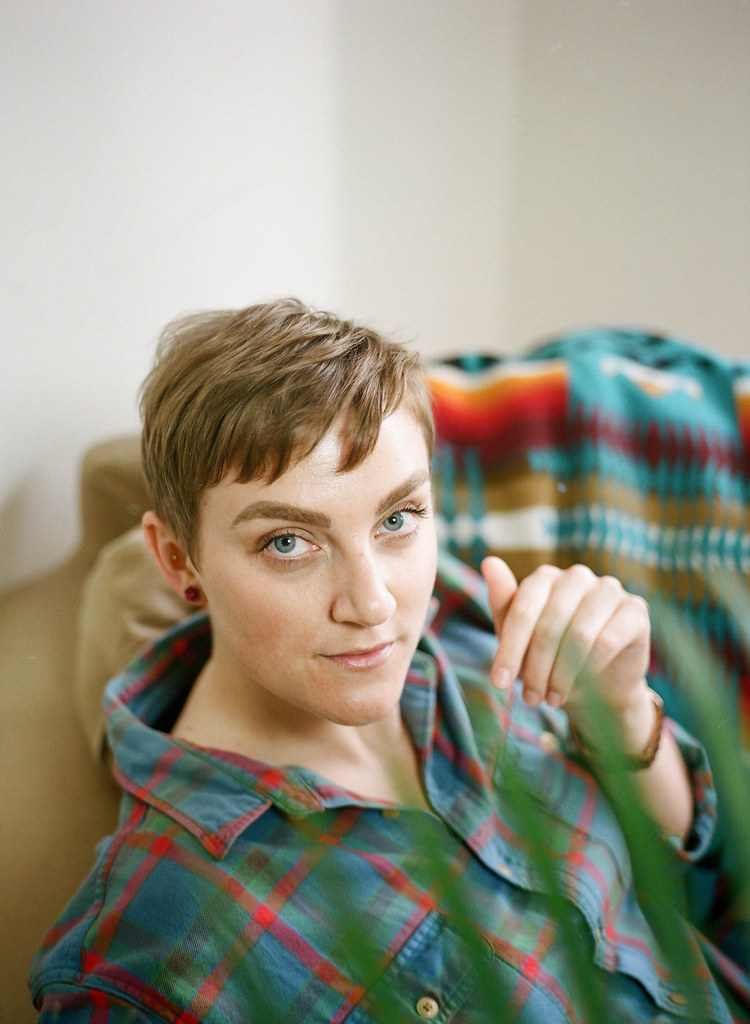
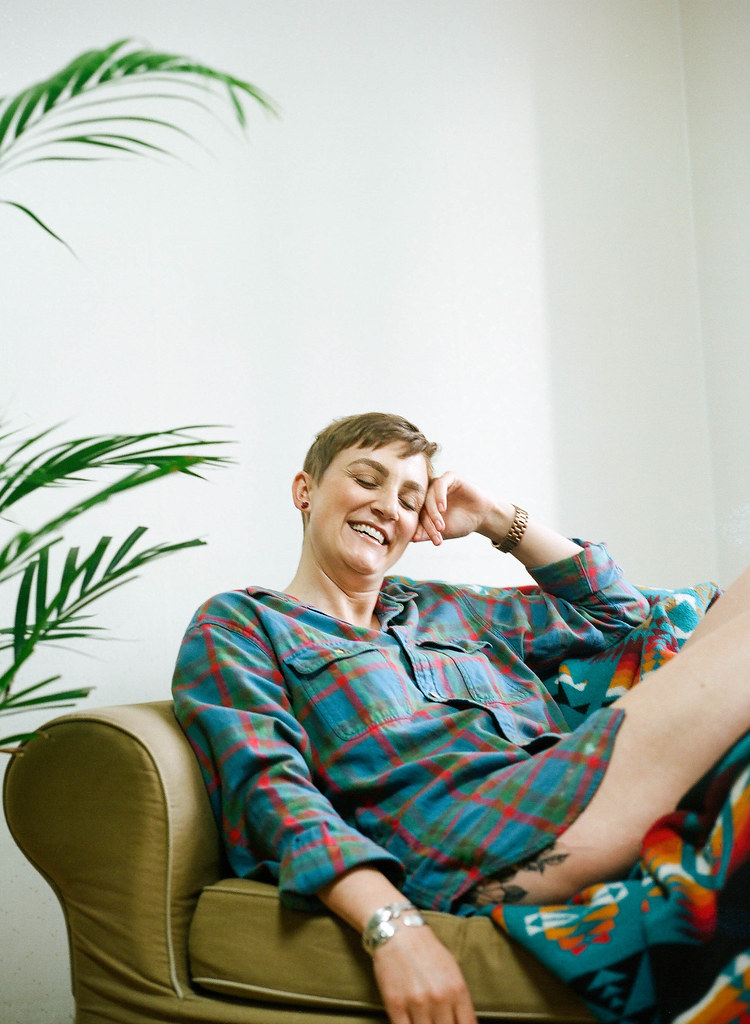
After seven years at our school, she is moving to embark on a new professional and personal journey. To bring some closure to her time here, we got together for some portraits to close her chapter on her time in Korea.
Lastly, Megs left some words to accompany the photos:
I’ve been sitting on this news for months—it’s never felt like a good time, and I am not sure when it will feel like a good time again, but I get on a plane in a week, so here we go: After seven years, I’m leaving Korea. I keep trying to write about this, but then I realized I already had—in my personal statement that is part of what helped me land my new job at a new-to-me international school in a new-to-me region. Here’s part of it:
It was in college, studying literature, where I learned to distinguish between the notion of place and an actual, physical location. The exploration of the way in which a location becomes a place—the catalyst for which American artist, author, and teacher Alan Gussow identified as “the process of experiencing deeply”—drove my twin passions: literature and teaching. I began to think of both as meeting points—vehicles to connect to varied human experiences.
Both international teaching and my love of literature have given me the opportunity to examine my own narrative and deepen my understanding of myself, my home, and my place in the world. Both require similar skills: uncovering the argument behind a story; exploring intertextuality; and leaving home, if only in our minds.
I will miss the home that Korea has become over the past seven years; I have experienced deeply. And I am ready to do it again. Moving will be unfamiliar at first, but I have gone through the process of transforming a new place into a home before. I welcome the redefining and examining of myself that I know will be part of leaving a familiar place. But I also know that when I leave this place, I will take a little part of it with me. And leave a little bit of myself here.
…
Needless to say, I didn’t anticipate a pandemic in thinking about the last chapter of my time here. And it has not been easy; this is not the ending I wanted. But Dan Savage always says that closure is something you give yourself. This tattoo is part of the gift of closure: to honor my time and experience here, the young woman I was when I got here, the woman I am today, and all the variations in between.
Like many people who choose to live outside their homeland, I use the word home to denote a feeling, not a particular location. In Korea, I say I am going home when I travel to Montana. I call San Francisco, California—where I have never actually lived, but have visited extensively—home. And when I am in Montana, I use the word home to refer to Korea. But this was not always the case.
Before I moved to Korea, I had only lived in Montana: a vast, beautiful, rugged, sparsely-inhabited state in the northwestern United States, largely unacquainted with diversity. After graduating high school, I moved to Missoula to attend the University of Montana and found myself surrounded by people whose home was not my home. And yet, as the years progressed and friendships formed, we all developed a familiar relationship with Missoula and each other; my home was redefined.
It was also in college, studying literature, where I was finally able to articulate my kinship with Montana: I learned to distinguish between the notion of place and an actual, physical location. The exploration of the way in which a location becomes a place—the catalyst for which American artist, author, and teacher Alan Gussow identified as “the process of experiencing deeply”—drove my twin passions: literature and teaching. I began to think of both as meeting points, vehicles to connect to varied human experiences.
After graduating and then working as a substitute, I took the leap to teach internationally. Growing up, I had traveled only regionally; moving to Korea, having never set foot on the Asian continent, radically redefined what and where I called home. It was in Korea that I began to understand that in the States, I’m a Montanan; in the world, I’m an American. This new emphasis on my Americanness led me to examine the legacy of my home: I had to rethink many of the values, norms, and beliefs that I learned as defaults; I had to examine the things I thought I knew and decide if I wanted to keep or redefine them.
Both international teaching and my love of literature have given me the opportunity to examine my own narrative and deepen my understanding of myself, my home, and my place in the world. Both require similar skills: uncovering the argument behind a story; exploring intertextuality; and leaving home, if only in our minds. The role of texts—their ability to allow us to step into the home of another—as the impetus to redefine and reimagine the self has become the heart of my teaching philosophy. I encourage and support students as they explore and deepen their understanding of themselves and the world around them so that they may go forth, embrace the unknown, and cultivate satisfying lives as globally-minded citizens focused on bettering their home—however they choose to define it.
I will miss the home that Korea has become over the past six years. I have experienced deeply. I have redefined my home and myself. And I am ready to do it again. Moving will be unfamiliar at first, but I have gone through the process of transforming a new place into a home before. I welcome the redefining and examining of myself that I know will be part of leaving a familiar place—a home. But I also know that when I leave this place, I will take a little part of it with me. And leave a little bit of myself here.
– Megs
All images taken on a Mamiya 645 Pro TL w/ 80mm 2.8 on Portra 400.









 dylan barnes | blog