All images taken on a Mamiya 645 Pro TL w/ 80mm 2.8 on Portra 400, pushed to 800.


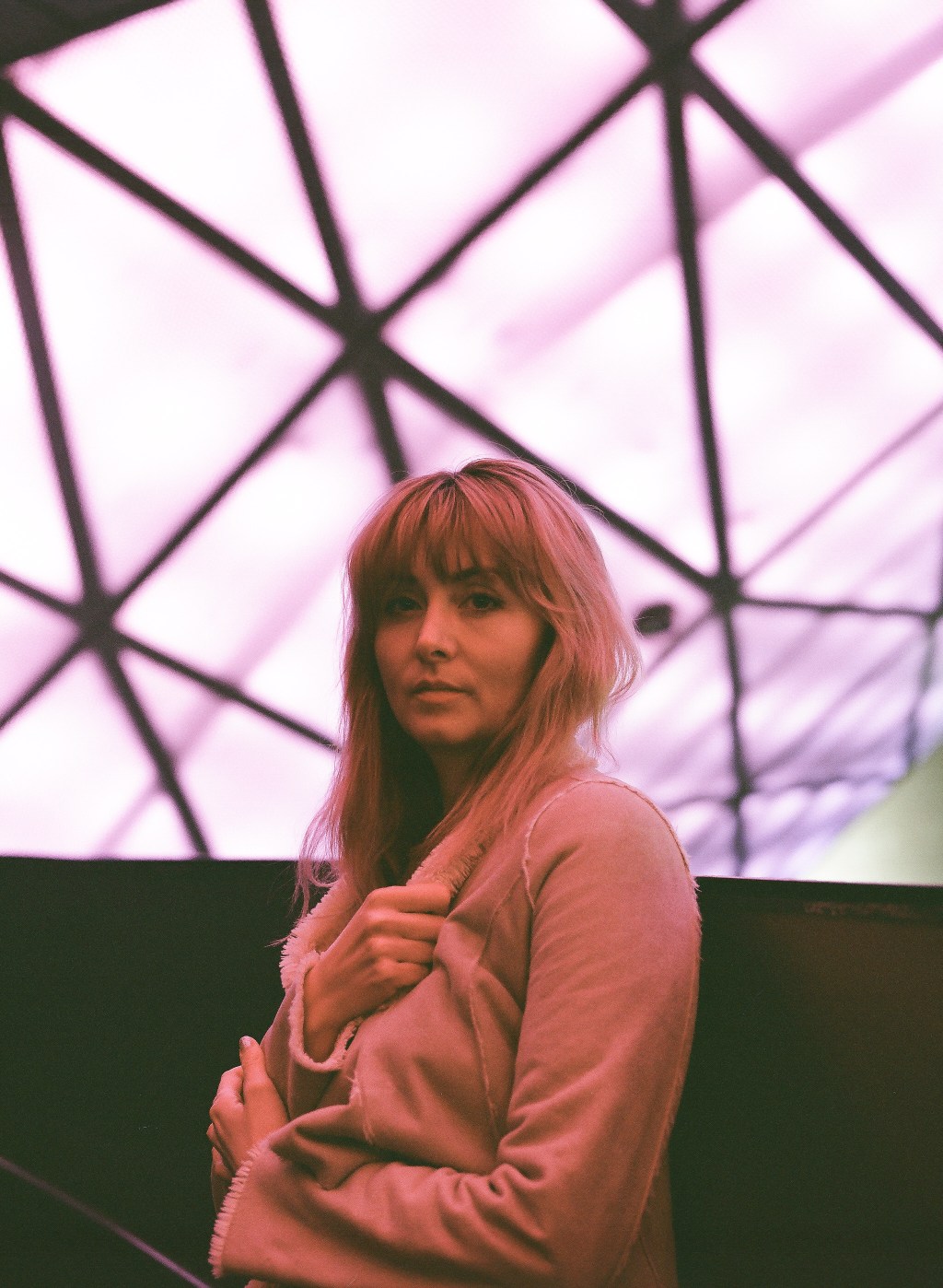
All images taken on a Mamiya 645 Pro TL w/ 80mm 2.8 on Portra 400, pushed to 800.

In the two years that I have worked abroad, I have already made a handful of friendships that I truly value. Almost all the of the people I work with are far from the places that they used to or still call home, but despite the diverse backgrounds we possess, we all share the fact that we are in the same place at the same time. Right here and right now.
I have learned that my coworkers have and will continue to become my closest friends because we share so much of the same experience by just being “here”, where ever that may be. Eventually though, some, most, or all of us will eventually move on to bigger and better things and when we do, we all have to say goodbye.
I feel like there’s something different about when people leave here (a school abroad), though. Back home in the states, teachers leave schools perhaps just as often, but they usually go to another school or another district. It never seems to be too far away. Nevertheless, you will still see them around town from time to time. But here, things feel a bit heavier and with a little bit more potential to be final. I think it’s because that after you say your last goodbyes in person, there’s a bit more uncertainty as to when or if you will meet again. It feels like there’s a slight tension underneath those warm hugs goodbye where both people know that there is a possibility that it might be the last time you see each other. Your transient lives could allow you to meet again just as much as they could draw you apart forever. But for all the time you spent together and memories you shared up to that moment, you appreciate them that much more and you say “This isn’t a goodbye, it’s a ‘See you later.’”
This year, quite a few more teachers will be leaving compared to last year. It feels different this time, partly because of the number of people leaving, but also because of a few other reasons. An easy goodbye with tapered emotions was railed off by Corona Virus and distance learning, but a handful the people leaving this year are also a core part of my social and professional circles, making it feel like a substantial portion of the group’s personality will be missing.
One of those people who are leaving is Meghan. She speaks her mind and says the things that everyone is thinking, but they might not be brave enough to say. She is someone that has made me more conscious and aware of my circumstances and my actions, and how the two may affect one another as well as the perspectives and experiences of others around me. I thank her for that.
After seven years at our school, she is moving to embark on a new professional and personal journey. To bring some closure to her time here, we got together for some portraits to close her chapter on her time in Korea.
Lastly, Megs left some words to accompany the photos:
I’ve been sitting on this news for months—it’s never felt like a good time, and I am not sure when it will feel like a good time again, but I get on a plane in a week, so here we go: After seven years, I’m leaving Korea. I keep trying to write about this, but then I realized I already had—in my personal statement that is part of what helped me land my new job at a new-to-me international school in a new-to-me region. Here’s part of it:
It was in college, studying literature, where I learned to distinguish between the notion of place and an actual, physical location. The exploration of the way in which a location becomes a place—the catalyst for which American artist, author, and teacher Alan Gussow identified as “the process of experiencing deeply”—drove my twin passions: literature and teaching. I began to think of both as meeting points—vehicles to connect to varied human experiences.
Both international teaching and my love of literature have given me the opportunity to examine my own narrative and deepen my understanding of myself, my home, and my place in the world. Both require similar skills: uncovering the argument behind a story; exploring intertextuality; and leaving home, if only in our minds.
I will miss the home that Korea has become over the past seven years; I have experienced deeply. And I am ready to do it again. Moving will be unfamiliar at first, but I have gone through the process of transforming a new place into a home before. I welcome the redefining and examining of myself that I know will be part of leaving a familiar place. But I also know that when I leave this place, I will take a little part of it with me. And leave a little bit of myself here.
…
Needless to say, I didn’t anticipate a pandemic in thinking about the last chapter of my time here. And it has not been easy; this is not the ending I wanted. But Dan Savage always says that closure is something you give yourself. This tattoo is part of the gift of closure: to honor my time and experience here, the young woman I was when I got here, the woman I am today, and all the variations in between.
Like many people who choose to live outside their homeland, I use the word home to denote a feeling, not a particular location. In Korea, I say I am going home when I travel to Montana. I call San Francisco, California—where I have never actually lived, but have visited extensively—home. And when I am in Montana, I use the word home to refer to Korea. But this was not always the case.
Before I moved to Korea, I had only lived in Montana: a vast, beautiful, rugged, sparsely-inhabited state in the northwestern United States, largely unacquainted with diversity. After graduating high school, I moved to Missoula to attend the University of Montana and found myself surrounded by people whose home was not my home. And yet, as the years progressed and friendships formed, we all developed a familiar relationship with Missoula and each other; my home was redefined.
It was also in college, studying literature, where I was finally able to articulate my kinship with Montana: I learned to distinguish between the notion of place and an actual, physical location. The exploration of the way in which a location becomes a place—the catalyst for which American artist, author, and teacher Alan Gussow identified as “the process of experiencing deeply”—drove my twin passions: literature and teaching. I began to think of both as meeting points, vehicles to connect to varied human experiences.
After graduating and then working as a substitute, I took the leap to teach internationally. Growing up, I had traveled only regionally; moving to Korea, having never set foot on the Asian continent, radically redefined what and where I called home. It was in Korea that I began to understand that in the States, I’m a Montanan; in the world, I’m an American. This new emphasis on my Americanness led me to examine the legacy of my home: I had to rethink many of the values, norms, and beliefs that I learned as defaults; I had to examine the things I thought I knew and decide if I wanted to keep or redefine them.
Both international teaching and my love of literature have given me the opportunity to examine my own narrative and deepen my understanding of myself, my home, and my place in the world. Both require similar skills: uncovering the argument behind a story; exploring intertextuality; and leaving home, if only in our minds. The role of texts—their ability to allow us to step into the home of another—as the impetus to redefine and reimagine the self has become the heart of my teaching philosophy. I encourage and support students as they explore and deepen their understanding of themselves and the world around them so that they may go forth, embrace the unknown, and cultivate satisfying lives as globally-minded citizens focused on bettering their home—however they choose to define it.
I will miss the home that Korea has become over the past six years. I have experienced deeply. I have redefined my home and myself. And I am ready to do it again. Moving will be unfamiliar at first, but I have gone through the process of transforming a new place into a home before. I welcome the redefining and examining of myself that I know will be part of leaving a familiar place—a home. But I also know that when I leave this place, I will take a little part of it with me. And leave a little bit of myself here.
– Megs
All images taken on a Mamiya 645 Pro TL w/ 80mm 2.8 on Portra 400.








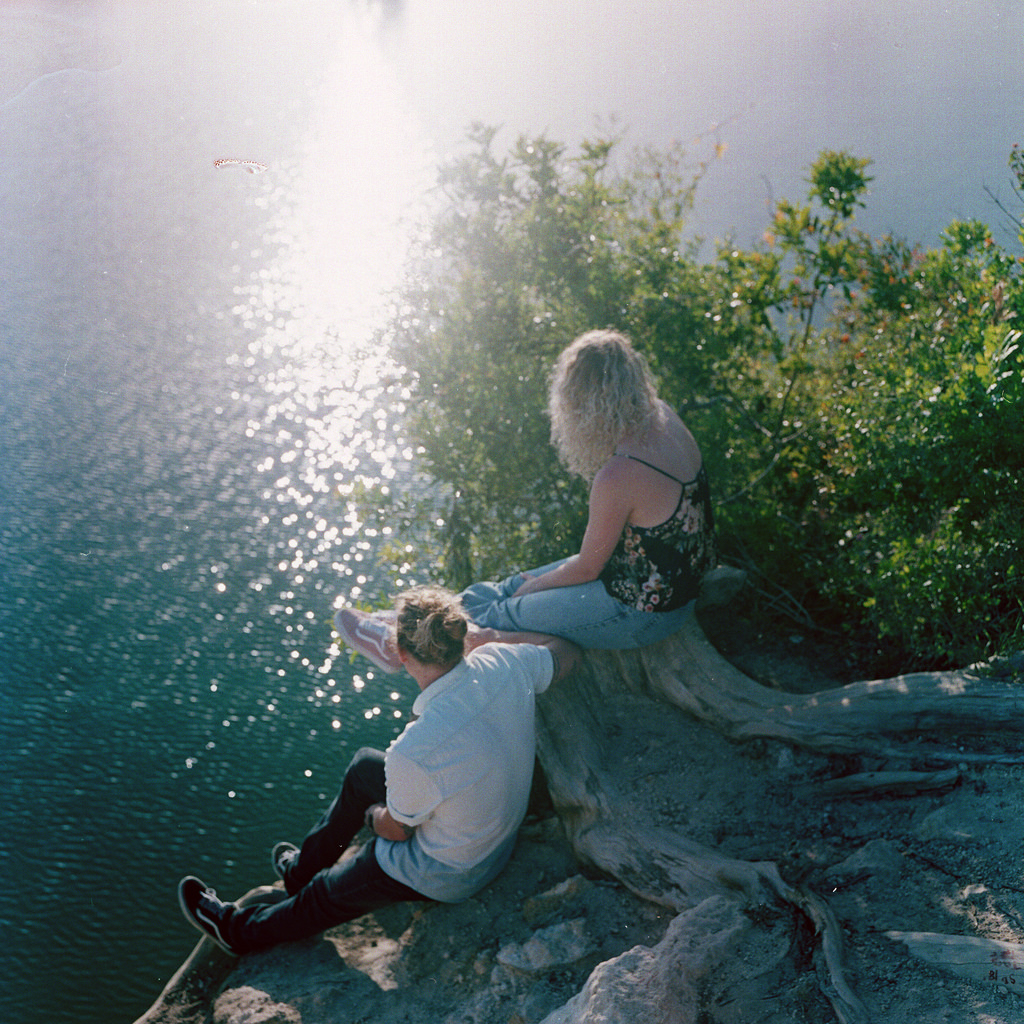
Last week I was able to take some photos of a couple of friends of mine. Alex and Madison are destined to get married later this year and we took some photos to celebrate the event. I didn’t know this beforehand, so I was somewhat deceived into a very casual photo shoot with just my Rolleiflex and Fuji GA645i. Had I known prior to showing up to the Weeki Wachee Preserve, I probably brought along some sort of digital camera to make sure I got some “keeper” shots before the session was over. At least I had a Polaroid One Step 2 in the car to take a couple photos to hand them on site. Anyway, unexpectedly, this was my first session done completely on film without any digital peace of mind.
I got to know more about Alex and Madison on a lengthy walk through the preserve’s entrance which was a really great way to not only make things a bit less awkward, but to learn more about them and try to present something more true to who they are as a couple than simply taking some generic run-of-the-mill photos. I was pleasantly surprised to see that their candor with me as well as with each other shined through some of the photos.
For two people in a relationship who claim to be pretty awkward together were naturally calm and receptive to anything I suggested, even if it seemed a little silly at the moment. Most of the shots were taken after I noticed something I liked about their natural interactions with one another. As they sat, talked, and made gestures, I made them go back and freeze frame those to get the natural shots I was looking for. Luckily for all of us, everything came out just the way we wanted it.


There’s something about receiving mail that has never lost its luster. When I was a kid, getting mail, whether a letter or package always filled me with an excitement that was similar to Christmas morning. Of course, as a child, getting mail was always a good thing. I didn’t have to worry about bills, notices, election materials, or junk mail. As an adult, I think it is even more exciting to receive personalized mail and packages.
I like to think that I appreciate the small things. These things don’t necessarily need to be physical objects, but sometimes small things like handwritten letters or small gifts prove that something about you crossed someone’s mind with a strong enough resonance to make some sort of impression or connection causing them to take action. I don’t know, but to me that’s pretty amazing.
This past year, I got to take part in a print exchange that was coordinated by Mike Padua of Shoot Film Co. I got to send and receive a few prints from a complete stranger. That was quite enjoyable. So much so, that I am thinking of coordinating a zine/book swap. Most recently though, I got to exchange some pleasantries with Christopher Sturm of The Photo Dept.
Chris lives in the Oakland area of California. After messaging back and forth, I decided that since Chris and I have a love for both coffee and cameras, it would be a great idea to trade local specialty coffee beans. In my package, I decided to send him a bag of Mountaineer Coffee’s seasonal Hill and Holler beans and I also send him a copy of my book twenty seven, twenty eight, which he ended up reviewing on his YouTube channel. You can watch that, along with his perspective of our trade and friendship below:
Just a few days after I sent out my package to Chris, he also sent me a few things: a bag of coffee, some really nice prints, and a short hand written note. Now my three favorite things might actually be hand-written letters, coffee, and photography-related paraphernalia, so it might explain my excitement for such things even though they are so small. I think appreciate these tangible items more because in a digital society, they have become so sparingly utilized for human connection.

Like the process of analog photography, something like human communications can be compared in the same sort of light. Snail mail contains a lengthier process than sending a direct message to someone. It takes time, thought, and effort. There is a human element to it that is absent in its digital counterpart.

I guess I could get on the soap box and start making the whole “technology is ruining us” argument, but I don’t think that does much good. In turn, I would much rather promote the positive affect tangible items have on the heart and the human condition. Of course, being conscious of the fact that technology takes out a lot of the work and time it takes to create and send things to others is something we should force ourselves to be aware of, but I don’t think it’s enough. I think we should act more on our thoughts and connections we make in our minds and hearts of the people we meet and care about. It makes our days easier and our lives more pleasant.

So, whether you are taking photos or thinking about sending a message to someone you haven’t talked to in a while I think we should take a step back, think about what we are doing, and choose the route that best shows our intentions, regardless of the amount of time and effort it takes. No matter how small the tangible item is, it’s impact will be far greater. It’s just worth it.
Thank you, Chris. Your package and friendship is more than appreciated.

I have just passed the two month mark on this blogging endeavor. To be honest, it’s one of the things I look forward to putting my time and effort into. It’s fun, it’s challenging, and I like knowing there’s a few people who are reading every post keeping me accountable and driving me to create more content. Just like teaching, I feel like I am imparting knowledge into the vast unknown of the internet (best case scenario). Just as likely that no one is reading this is the possibility that I actually have some sort of affect on someone; whether they start developing film, adjust their darkroom habits, admire my work, or simply start a conversation with me. All of these things are possible and humbling things for me to think about.
Over the course of the past couple of months, people have sent messages asking mostly about my development process and they have also sent many encouraging compliments. One such individual was my new friend Kris.
Kris reached out to me via Instagram and told me how much he enjoyed my artistic style and asked if we could meet up for some coffee and shoot some photos. I obliged.
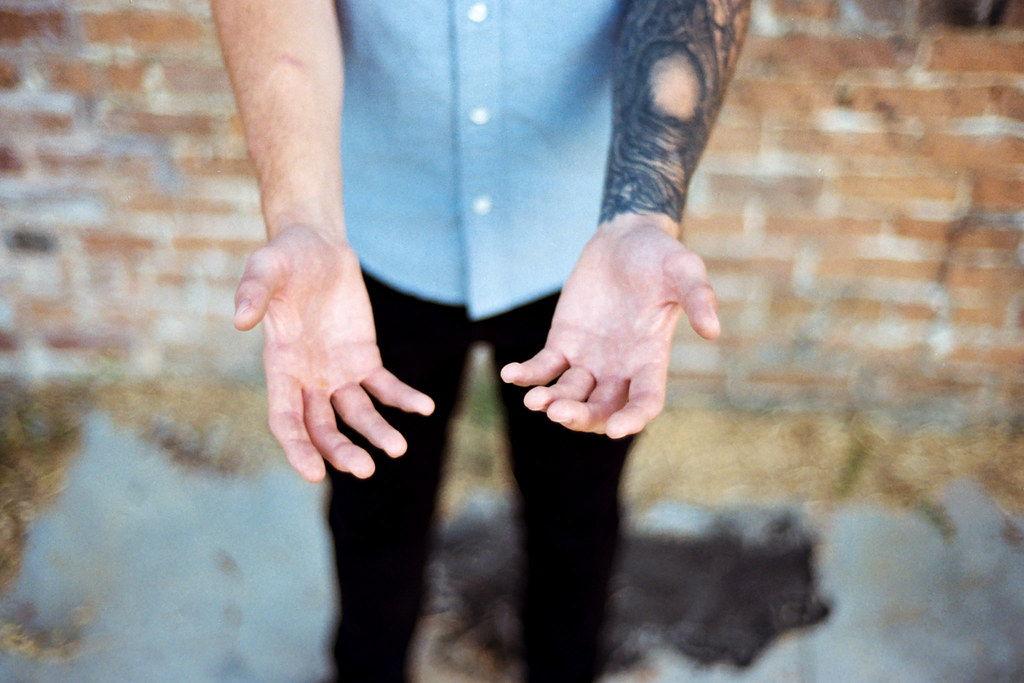
Me and Kris met up at Blind Tiger Cafe in Ybor City. The plan was to just sort of chat, have a cup of coffee, and talk about some pictures he wanted made of him. We discussed his recent move to the Tampa Area which started in the town I live in, the life he left behind in Pittsburgh, Wiz Khalifa and Mac Miller, amongst other things. We ended up walking around a few blocks after a quick cup of coffee and shot some photos. Afterwards, we ended up grabbing a beer and talking politics at The Bricks and called it a day. Kris is a great dude and I am glad he reached out. Cheers, dude. Here’s a few photos from our meet up:
All photos were taken with my Voigtländer Bessa R3A w/ 40mm Nokton on Lomography 100 and scanned on a Pakon 135 scanner.




 dylan barnes | blog