Category: Thoughts

  • building narrative through process: a reflection on manabu

    building narrative through process: a reflection on manabu

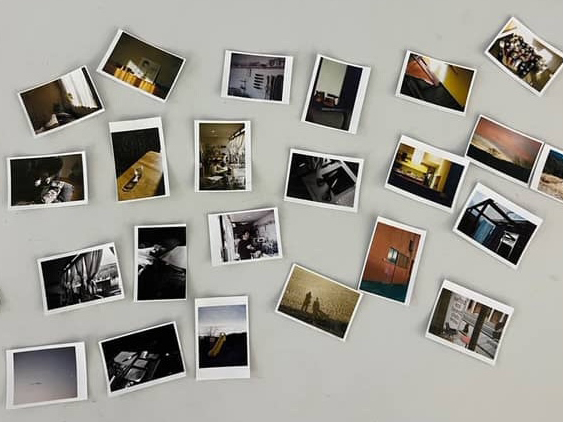
    Recently, I had the opportunity to give a guest lecture at Arise Art Space here in Busan, South Korea, where I shared about my narrative photographic approach through my project Manabu. Preparing for that talk, and reflecting on the process aloud, gave me space and time to think more deeply about how this body of work came together. It’s led to some new realizations and questions I hadn’t fully articulated before. In many ways, this reflection has reshaped how I see the work now, even after the book has been made and shared.

    Looking back, this project didn’t start with the intention of becoming a photobook or a cohesive body of work. It began as a personal trip to visit a close friend, Manabu, a bag and accessories designer living in Hatoyama, Japan. We’d built a friendship over years of exchanging gifts, drinks, and conversations, though I’d never visited his home before. When life’s timing finally worked out for me to spend six days with him, I brought my camera mostly out of habit and routine, not with a plan. I simply wanted to be present, to rest, and to share time in his space.

    But as the days unfolded, the quiet rhythms of walking his dog, making coffee, cooking meals, and watching the sunrise each day, something deeper emerged. I felt myself slowing down, observing in a more patient and open way. I photographed more intuitively, letting images come to me rather than chasing them. At some point, I realized these moments were shaping into a visual narrative, and I wanted to give something back to Manabu: a tangible reflective slice of his own life, of what his friendship meant to me, of the stability and warmth he had offered me as a friend across distance and time.

    When I think about how I arrived at this point, I trace it back to high school. I first picked up a camera because my friends were all in bands, and I had no musical talent of my own. The camera gave me a role and a purpose within my friend group. It gave me belonging inside a circle I always felt a bit outside of. Later, after the sudden passing of my father, my camera became a tool for navigating the real world: it became a way to process grief, to observe the quiet spaces around me, even bringing it into my dad’s hospital room. I started seeing the camera as a tool for empathy, a way to witness what others close to me were going through while holding space for myself.

    Over time, that instinctive, observational approach evolved into what I now call a narrative, post-documentary style of photography, one that documents life as it is, but finds meaning through my subjective experience. That meaning doesn’t arrive all at once. It’s built iteratively: in the quiet moments before taking photos, while making them, and later, in the long process of editing and reflecting. Every stage of shooting, sequencing, and living with the work, adds another layer of understanding.

    What I’ve realized more recently, through this period of reflection, is that Manabu is not just a story about place or friendship, it’s also a quiet exploration of male vulnerability. The tenderness, trust, and unspoken care between friends, which is woven throughout the images. I wasn’t consciously aiming to explore those themes at the time, but they surfaced through the process. It makes me wonder how much of our emotional lives stay below the surface, and how photography can reveal those subtleties without words.

    The narrative became clearer not at the start, but through many rounds of arranging, sequencing, and living with the images. Each edit, each pairing, each omission shaped the story. And while the book may feel “finished” in physical form, the meaning continues to shift for me, especially now, reflecting on it with distance and a continued development of life experience and perspective.

    Making Manabu has taught me that photography isn’t just about capturing moments, it’s about spending time with them, letting them teach you, and letting them change with you. It’s about slowing down, paying attention, and accepting that meaning is rarely immediate or fixed. Sometimes the story only reveals itself after you’ve given it time to breathe.

  • american photographer in korea: dylan barnes on art, grief, and legacy

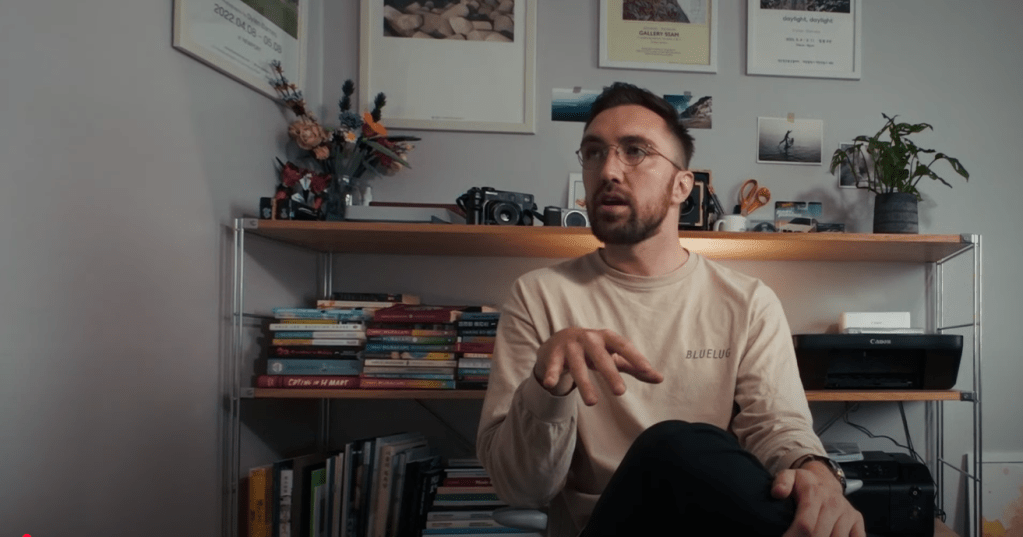
    american photographer in korea: dylan barnes on art, grief, and legacy

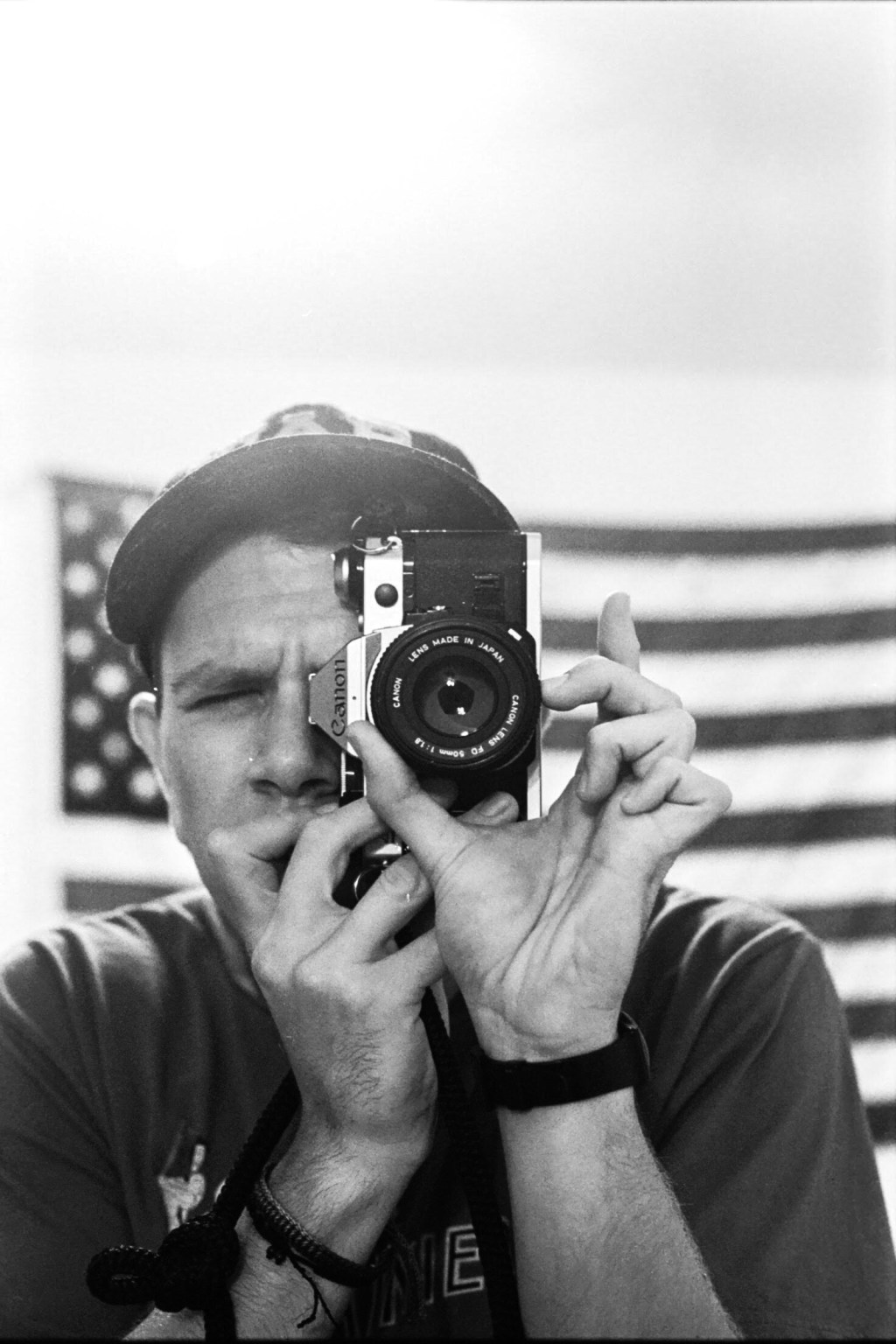
    Back in Novemeber, I sat down and hung out with with Philip Brett to chat about my photographic approach and process. What started as a four-hour conversation somehow became this tight, beautiful piece of work thanks to Philip and his team. I’m still in awe of how they shaped it, and just so stoked to be able to share it.

    We talked about how I found my way into photography and how the medium’s stayed with me through different seasons of life. It’s helped me stay close to the people and places I care about. It’s also helped me process some heavy things including grief, loss, and all the confusing emotions that come with it. Picking up a camera has often been the only way I knew how to make sense of all of it.

    I also shared a bit about some of the projects I’ve put together over the years, what I’m working on now, and how I’m still learning as I go. There’s something kind of comforting about not having it all figured out. I think that’s part of why I keep coming back to it with new and refined energy and purpose.

    A big thanks again to Philip for taking the time and care to shape this into something that really feels honest. If you’ve got a few minutes, I’d love for you to check it out.

  • Gifted Cameras, a Reddit Post, and a Small World

    Gifted Cameras, a Reddit Post, and a Small World

    Today, I would like to chronicle a small story of an event that happened to me just a few days ago.  It’s an interesting story that truly shows how small the world is, how awesome the film community is and how our cameras are more than what they appear to be.  I will try to regurgitate this story with clarity to the best of my ability, so please bear with me.  I would like to tell the story from my own perspective and order of events, even if they aren’t purely chronological.

    As most know, I am a middle school teacher with an after-school film photography club.  My school is tiny and our school community with students, staff, and parents is extremely tight knit.  I am pretty much known as “that guy” when it comes to photography and technology since I teach both subjects at the school.  Due to this dynamic, this next event was made possible.

    About two or three months ago, a parent of one of my photography students asked to speak to me after hours.  At the time, his wife/the student’s mother was still battling cancer, but sadly, she has since passed away.  I thought maybe it regarded this sensitive topic.

    He brought me to his car and told me he had some photography equipment for me.  At the time, I thought it was his personal gear [when i received this package, I later developed an exposed roll of film left in one of the cameras, thinking they were photos that he took.  I also made a few digital prints from some scans I did of the roll as a gift to say ‘thank you’].  About a week later, I learned from his daughter that he picked up the gear at a garage sale over that previous weekend.  He paid a negligible amount of money for the gear and said, “I saw this stuff and thought of you.  If you want it, you can have it.  Use it with the kids, use it for personal stuff, it doesn’t matter.”

    He lifted the trunk of his car with a camera bag and two cardboard boxes worth of film things.  The cardboard boxes contained some generic darkroom and studio equipment: developing trays, paper, old packets of developer, tripod, light stand, studio strobe, and so on.  Some really useful things that we use quite often in our club now.

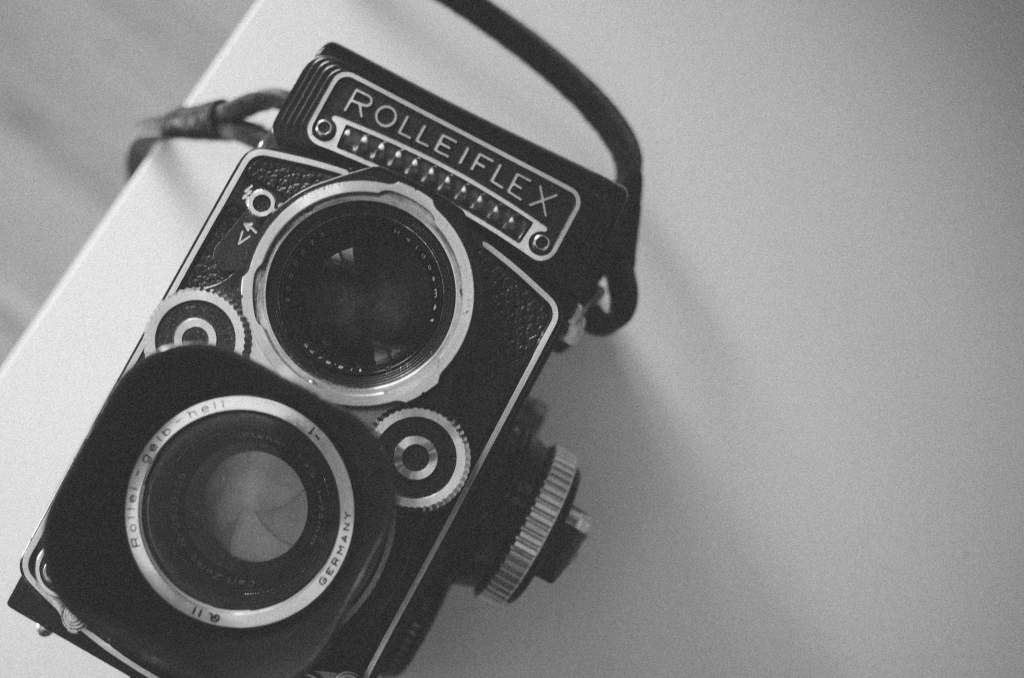
    He then opened the camera bag.  According to my coworker, I was really bad at hiding my emotions and excitement.  I thought I was going to see your run of the mill film SLR; perhaps a Canon AE-1 or something of the like.  But instead, I was gifted a Rolleiflex 3.5f with a 75mm Zeiss Planar and a Yashica Mat 124.  I use the Yashica to introduce the kids to TLRs, but I’ve kept the Rollei by my side.  In regards to the Rolleiflex, I truly couldn’t believe how lucky I felt. Needless to say, I was elated.  I was and still very much am sincerely grateful.

    Since receiving the camera, I have debated putting it up for sale, perhaps to find some other gear or maybe doing something for my photo students.  I felt I couldn’t justify having a camera that had such value when I could do more practical things like buying many more cameras, buy film, or darkroom supplies for the after school club, or maybe trading it for something different for myself.  I guess it was technically was mine after all.  Over the course of a month or so, I struggled with the idea of keeping the camera or letting it go.

    I felt that receiving a camera as a gift because someone specifically thought of you as the recipient is a bit different than someone saying they have a bunch of old cameras laying around in my attic and they don’t know what to do with — so they dump them on you.  I realized that something about letting the camera go just didn’t seem right to me.  So it stayed with me for the time being.

    Fast forward to just a few days ago.

    A couple of days ago, a coworker of mine (the same one who was present when I received the Rolleiflex  and who also has an interest in film) sent me a link that directed me to an Imgur post that included a story that originated on Reddit regarding a Rolleiflex.

    Long story short (you can click through to read it verbatim), a man had a Rolleiflex camera that belonged to the Roosevelt family.  Yeah, that Roosevelt family.  He posted the story of these cameras to /r/history just to share the amazing story  and uniqueness about these cameras.  Another user gave a fairly verbose response to the cameras, assisting in identifying and informing OP more about the cameras, even offering his expertise and assistance.

    A third person chimed in with a (drunken) comment to the helpful commenter, stating that his father had two Rollei’s he wanted this helpful commenter to have due to his apparent knowledge and passion for film photography.  These cameras did in fact end up being sent from one Reddit user to another.

    At the bottom of the Imgur post that summed this all up, I checked out the Flickr link that was provided which included photos that he took with the gifted Rolleis.  Upon scrolling through the photos on his Flickr page, I couldn’t help but notice a gleaming familiarity with these images.  Once I saw a certain photo, it had hit me.  The owner of this Flickr account, who was the recipient of two Rolleiflexes from another Reddit user, was someone who was  previously featured here on Now Developing.  That person being Derek Boswell.

    Once I realized this, I messaged Derek via Facebook and explained this longwinded revelation to him.  I told him how crazy I thought it was that this Imgur post about the Reddit cameras was forwarded to me by a coworker, simply by chance.  I also explained how I was also gifted a Rolleiflex and was previously playing tug-of-war with the idea of letting it go.  However, once I read the story and realized who it was attached to, it was obvious that I could never, ever sell my Rolleiflex or let it go.  It was really touching to see that Derek and I shared very unique stories of being gifted such iconic and beautiful cameras.  We’re both very lucky, to say the least.

    Derek and I have since agreed to make a pact that we won’t let these cameras escape our ownership.  Hopefully, Derek and I will also be able to meet up and take some photos together in the coming months and hopefully you’ll see more of his work posted here in the future.

    With all this being said, the world is a really small place.  This story has made me reflect a bit more about how great the film community is and can be.  It’s nice to feel close with people whom of which are seemingly so far away, physically speaking anyway.  It also makes me think about the stories that our cameras carry with them; some cameras have been cradled through the hands of historical families, while others have meaningful stories simply because of human kindness and chance.  Hearing these stories always give me the goosebumps, but being a part of one is all the more better.  Plus, I am pretty sure that karma exists for situations just like this.

    Of all the cameras that have past through my hands and onto others, I hope that those cameras live a long journey with more interesting stories to tell.  And as for the ones I own with stories already engrained in them, I’ll be sure to cherish both the cameras and the stories within them.

  • Why You Should Leave the Light Meter at Home (At Least Once)

    Why You Should Leave the Light Meter at Home (At Least Once)

    Why You Should Leave the Light Meter at Home (At Least Once)

    When I first started shooting film, I toyed around with some auto-exposure point and shoots (I think I still have that Canon SureShot 35AF somewhere) that I picked up from a local thrift store.  I simply just wanted to give film a try.  As I quickly researched and progressed through different 35mm cameras, I finally mustered up the courage (with plenty of pressure from a friend of mine) to purchase my first medium format camera.  Not only did I not know how to load my new-to-me Mamiya 645 Pro TL with a non-metered prism, but this would also be the first time that every step of the photographic process would become a more manual experience.

    Mamiya 645 Pro TL w/ 80mm // Kodak Portra 400

    I had never used a light meter, loaded a roll of 120 film, nor had I ever really forced myself to manually focus prior to the purchase of that camera.  At that time, I remember being so afraid to learn how to work a light meter.  For some reason, that device was just intimidating, not worth the expense (neither was the metered prism), or too cumbersome to carry for whatever reason.  After a quick search or two, I found a few mobile light meter apps that seemed to be much more inviting and user friendly until I could muster up the bravery to try a real light meter.  Something about the older ones with all of the numbers really frightened me for some reason.  Knowing what I know now, of course a dedicated light meter performs much better than your cell phone, but at the time, it did the job in letting me get the shots that I wanted and enabled my dependence on using something to evaluate the light in a scene.

    The photos I got with my Mamiya are still some of my absolutely favorite photos I have ever shot.  Not only do I love the shots I took with that camera, but there was something about that learning experience that make those pictures a bit more sweeter and more meaningful.

    Mamiya 645 Pro TL w/ 80mm // Kodak Portra 400

    Over the course of the next few years, I bought, sold, and traded a bunch of different kinds of cameras.  Almost every single camera that I wanted to try or get my hands on, it was sort of required that it would have a built in meter.  While I still tried cameras like the Pentax 67 and Hasselblad 500c, I felt that it was more of a chore to shoot these cameras simply because I had to take a light reading out of camera.  And due to my continuous use of a built in meter, I also felt that I would need to meter the scene every single time I decided to take a photo.  I know that isn’t totally necessary now, but everyone’s habits are different.

    Hasselblad 500c w/ 80mm // Ilford HP5

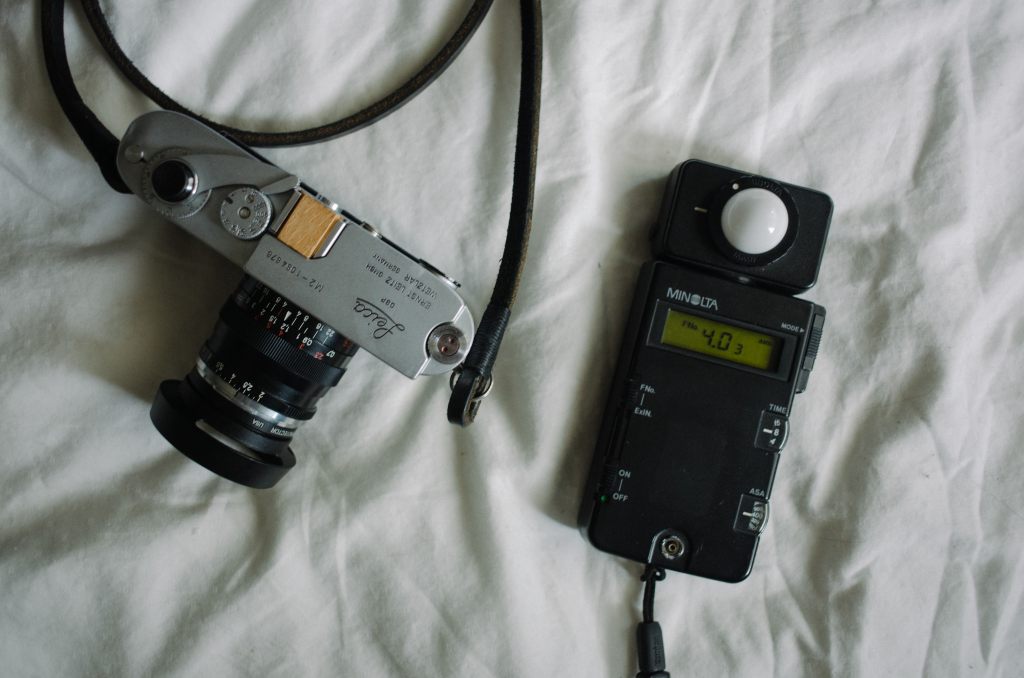
    Fast forward to a couple of weeks ago, I had a chance to get my hands on a Leica M2.  After experimenting with other M-mount bodies like the Konica Hexar RF and Leica CL, I just still didn’t understand the mystique behind the Leica name.  Meanwhile, I am still stuck here lusting after an MP.  But, I figured I would give the M2 a fair attempt with the understanding that I would definitely purchase Voigtländer VC ii meter when I found one for a reasonable price.  Turns out, the VC meter is pretty sought out after, maintains its value on the used market, and people don’t like splitting the meter from the body it’s on to sell separately.  And understandably so.

    With that, I decided to purchase a Minolta light meter for less than $40.  I used it once on the day I got it, and haven’t really touched it since.  Again, I found it to be a bit troublesome to carry around this extra piece of extraneous equipment simply to take a single light reading on a day or shooting.  At a time where I am trying to simplify many things, including the number of cameras and lenses I have on the shelf to choose from, I decided to leave the meter at home from that day on.  I decided to simply use my instincts and all of those basic rules we learn when we first start shooting photos (f/8 and be there, Sunny 16, and so on).  If I really needed to use a meter, I can always pull out my trusty meter app that served me well enough in the past on more than a handful of occasions.

    Yashica A // Kodak Porta 400

    While I have only put a few rolls through my M2 since receiving it, foregoing the meter and trusting my instincts has been a liberating experience.  So far, I have only shot three rolls of rather-forgiving 400-speed Ilford films and a single roll of Kodak ColorPlus 200, but I can happily say that I have yet to waste a single frame from absolutely botching a light estimation in my scene.

    Leica M2 w/ 35mm Zeiss ZM // Ilford HP5

    Sure, I may have missed by as much as a couple of stops, but nothing has been rendered unusable or unfixable with some minor corrections if necessary.  Even when doing a few prints in the darkroom, not much has been lost.  I’ve pushed and tested myself in a variety of environments simply by using the Sunny 16 rule and adapting it to whatever environment I find myself in; whether that be an indoor sporting event, night shooting, or in direct or indirect sunlight.

    I have found that shooting without a meter has been quite a liberating and confidence-boosting experience.  After depending on something for so long and just going without it was a bit uneasy, it was a great way to put my skills to the test.  When it comes to shooting without a meter, I probably wouldn’t say that it’s one less thing to worry about.  If anything, I probably worry about it even more.  As each roll is developed, I and initially nervous and anxious to see if there will be photos throughout the roll, but in turn I have become more and more comfortable in foregoing a meter.  I’m not saying that I’ll go meter-less from now on or even go shoot a somewhat important event without one, but it makes the simple reward of seeing my images that much sweeter.

    Leica M2 w/ Canon 50mm LTM // Kodak Color Plus 200

    If you have been shooting for a bit now, but have yet to go without a meter, then I urge you to just give it a shot.  Perhaps you’ve been looking for a new challenge, or simply want to alter your shooting experience just a bit to break from your normal routine for something slightly new and different.  Perhaps you are like I was; scared to remove that safety net in favor of verified, perfectly exposed shots, every single time.  If that’s the case, then I say it may be time to give yourself some room to make a mistake and simply test yourself.  Give up a little control in exchange for a little bit of uncertainty and excitement.  It makes the process that much more rewarding in the end and chances are that you are way better at this than you think.

  • Reader Excerpts: April the 2nd

    Reader Excerpts: April the 2nd

    Reader Excerpts allow those who read Now Developing to become part of the collective by sharing a written piece alongside their images on a topic of their choice.  If you have any ideas for a piece and would like to have it featured here, feel free to contact me!

    Today’s piece comes from my good friend Phil Schiller. Phil writes about the first day he got his hands on a camera and how he made the quick and swift progression into shooting film.  Although his experience in photography in general may be limited, he tells us how shooting film has quickly made him realize why and what he loves about the craft and process of photography.

    April the 2nd, Written by Phil Schiller (Instagram)

    April 2, 2016

    That was the day when I finally got my hands on what I would consider to be a real camera. Before that day, the iPhone was as far as I had got into photography.

    Fast forward to April 2nd 2016.

    My boss let me borrow a Nikon D200 for a while. I expressed to him that I’ve been looking to get myself an actual camera, so he graciously lent me his.  I remember when he gave it to me, I had literally zero idea of what I had just gotten myself into. I’ve never been a patient person by any means, and this definitely tested that. I would look on various Flickr pages, Instagram accounts, etc. and see people’s results and it would simply frustrate me. I finally decided that I wanted to actually sit down, do the research and force myself to learn the basics of photography. Finally, understanding aperture, ISO, and exposing my subject properly; I began seeing actual progress.   I’ll never forget when I took a photo of my roommate working on a project.  I snapped the photo and looked down at the camera to see the final result and it make me geek.

    From then on out, I’ve been so lucky to have friends that have already been in the field of image creation, most notably, Katy Konsulis. She was the number one person to teach me not only do you need to know how to operate a camera, but to feel what you’re actually shooting. I can’t express enough how grateful I am for her guidance and knowledge. She’d always ask me “Do you love this?”

    At the time, I sort of overanalyzed that. It made me in a way, reconsider what I’m actually striving for in photography. Which in turn, made me realize that all I want is to love the images and the experiences that bring me there. You can be using the best equipment in the world and think that this is it. You’ve found that true happiness that you feel produces the best quality. However, in my opinion, it doesn’t matter what you use to create an image; just make sure it gets you stoked.

    After the D200, and gaining as much knowledge and experience from that camera, I knew what I wanted. I saved up and bought myself a Fuji x100T.  Before I plunged and got the T, I gained a lot of interest in street photography. Mainly from watching YouTube channels like Pablo Strong and Negative Feedback. I knew I wanted to give it a shot, so I took the D200, went out of my comfort zone and drove to Downtown Tampa. Being out in that environment was breath of fresh air and super enlightening. I immediately fell in love and I knew what I needed. That’s when and why I bought the x100T. I wanted something fast, quiet, and could produce images without having to think about setting up your camera for an image. This camera, will forever be one of my favorite cameras. I never thought a piece of equipment could train you like the x100T did. It opened my eyes in a completely different way. The Fuji gave me that and so much more.

    I started gaining more confidence with photo making and being my own individual when it came to shooting. I even got the opportunity to put up physical work in the coffee shop I work at. This was insane to me at the time. Actually seeing my photos in physical form for others to see. That’s a feeling I don’t think I’ll ever forget. I have to give the Fuji so much credit, because it taught me what I actually wanted. It made me realize that it’s okay to only be a hobbyist. It made me happy, and that’s all that mattered. It also made me realize that the T was not my end all. I was getting to the point where I was just shooting to shoot. In hopes that I’d snag at least one good photo from that session. At the time, it bummed me out and curbed my drive to go out and shoot. I knew I needed a change. That’s when the latest stage of my photography journey came together.

    In February earlier this year, I had the opportunity to go to Portland and Seattle for a week with the company I work for. I haven’t traveled much in my life, so this was actually a huge deal in my book.  For one, I actually get to check out the west coast coffee scene and most importantly, I was so stoked to take my camera with me to freeze those moments in time.

    I thought to myself, I’m truly excited to record my experiences over there but I wanted to do it in a different way. I wanted to take photos that actually capture the environment and the feel of what I was feeling. I wanted to shoot film. The dude that has graciously allowed to me tell my story on this blog, Dylan, let me have a Canon SureShot 35 and a roll of Arista 400.  It may seem like a simple point & shoot, but right when I loaded the film up, I knew that this was different. I knew I had to revert back to how I originally took photos and to shoot what I feel. I did that exact thing and it was the best experience of my life to date. When Dylan gave my the link to my scans I was so unbelievably stoked. I don’t think I’ve felt that feeling.. perhaps ever? Seeing what you captured weeks later and remembering that exact moment and how it made you feel. That was an amazing experience.

    I knew I was hooked. The film bug was in full effect and I sold my x100T.

    About a month ago, I finally picked up a new film camera. I bought a Contax G1. When I was researching what I wanted in a camera, I knew I wanted sharpness and reliability. Everywhere I read, the G series is hailed as some of the best cameras do date, for good reason too. Zeiss glass. The competitor to Leica’s glass. I was lucky enough to find a killer deal on a G1 with the Planar 45mm T. Once it arrived in the mail, I knew this was it. I immediately loaded a roll in, and went out shooting. While I was shooting the G, it made me realize how of a wildly different experience it was than shooting with any camera I had shot before it. I shot what I felt and that’s all I did. I just recently got back my first three rolls from Dylan and I’m so excited to keep diving deeper into film. Seeing and feeling the environment of what this camera produces is enlightening and produces such a different feel that I honestly cannot put into words. All I know is I was looking for more realism, more challenge, more emotion.

    I found it and I’m not letting go.