
Ilgwang in Busan, South Korea and Niko in Japan share the same Chinese character(日光). Japanese companies ran copper mines in both cities of the same name. During the period of Japanese occupation, some Koreans were relocated to work in Niko or stayed to work in Il-gwang. The now deserted mine, nestled underneath underpasses and scattered with machinery, still bleeds crimson rusts and stands as a living memory of labor exploitation amongst those who still live in the village.
Category: Travel
-

Michigan
When I got back home from Asia this summer, I was looking forward to just catching back up with life. However, it just wasn’t it the cards just yet, at least for another few weeks. After I completed my last doctoral course (just have to write a dissertation now), I was off to Michigan for a long weekend.
The target destination in Michigan was Marine City, just across the River from Ontario. After the worst flight experience I have ever had (shoutout to Spirit Airlines), I arrived In Michigan a day and a layover longer than anticipated.
The first day of the weekend in Michigan was spent in Marine City. The old maritime vibe of Marine City is still present as it never moved away from the river or its roots with many historical sites, houses, and museums to check out. Not to mention you can sit in the grass anywhere along the coastline against the river and watch the boats crawl by.

Mamiya 6 w/ 75mm on Fuji 400h On the main drag of Water Street, there are plenty of antique stores, coffee shops, restaurants, and parks to spend your time. Looking for a reprieve from my busy summer, I spent most of the first day just taking in the small town atmosphere, drinking the local coffee, and doing some light exploring around town.

Contax T3 on Kodak Color Plus 200 
Contax T3 on Kodak Color Plus 200 Day two was a bit more exciting as I headed into Detroit for the day. First, I headed to a camera store in Dearborn, just west of Detroit. Being a huge Eminem fan growing up, I was excited to visit the filming locations of 8 Mile and checking out other iconic spots from the movie. I also meandered around downtown and hung out in Hart Plaza after seeing the Joe before they tear it down in favor of the Red Wings moving into Little Caesar’s Arena this upcoming hockey season.

Mamiya 6 w/ 75mm on Fuji 400h 
Mamiya 6 w/ 75mm on Fuji 400h 
Contax T3 on Kodak Color Plus 200 
Mamiya 6 w/ 75mm on Fuji 400h Walking a few blocks west from Hart Plaza, I ran into an event celebrating the birthday of the city. Children and adults alike lined up for free ice cream, played basketball, and took photos with Paws, the mascot of the Detroit Tigers. I even decided to take part and take a few shots with the kids on the court.

Contax T3 on Kodak Color Plus 200 As run down and abandoned some parts of Detroit were, there was an strong, intangible feeling of brotherhood in the air every where you went. If you could put, “yeah life sort of sucks sometimes, but we’ll get through it together” into a city’s atmosphere , then that’s exactly what it felt like.

Contax T3 on Kodak Color Plus 200 There was also something about the city that just exhaled some sort of historical pride that has been carried and passed on through the decades. It could have been and probably was the echoing of the bustling automative and manufacturing industries of years past. But there was something about the decay in the city that was also beautiful. Something like a flower that grows through broken concrete.

Mamiya 6 w/ 75mm on Fuji 400h 
Contax T3 on Kodak Color Plus 200 
Mamiya 6 w/ 75mm on Fuji 400h The last full day in Michigan included checking out the massive amount of local antique shops in Marine City for cameras and a drive up to and through Port Huron and taking in the sites of the Blue Water Bridge, just across the water from Sarnia, Ontario. I managed to pick up two new cameras, a Rollei 35 LED and a Minox 35 EL, both of which I have yet to test out.

Mamiya 6 w/ 75mm on Fuji 400h 
Contax T3 on Kodak Color Plus 200 There’s just something about Michigan that just felt so…American, but in the best way possible. In the few places I got to see in the limited amount of time I got to see them, I got to see both ends of a few different spectrums. Each one of those still aligning somewhere within stereotypical American ideals.

Mamiya 6 w/ 75mm on Fuji 400h 
Contax T3 on Kodak Color Plus 200 Overall, the trip was rather relaxed and provided a little bit of a break since I did basically no planning whatsoever. In that regard, it was a nice way to end my marathon summer.
-

Hiroshima, Japan
Our last day trip was to the city of Hiroshima. Hiroshima was the city I was most looking forward to since I have a deep interest in social studies and history, especially that of World War II. The five-hour train ride surprisingly didn’t feel as long as it actually was. Although, we definitely felt the constraints of time since we were only able to spend about five or six hours in the city.

Contax T3 // Fuji Natura 1600 Right out of the train station, we caught a cab to the north side of Peace Park. With the Hiroshima Carp baseball game on the radio with the every-so-often cheer from our cab driver reacting to the game, it was already evident that Hiroshima truly was a city that rallied around baseball and each other.

Contax T3 // Fuji Natura 1600 
Mamiya 6 w/ 75mm // Fuji Pro 400h The highlight of Hiroshima was the A-Bomb Dome, an untouched dome just a short walk from a three directional bridge, which was the hypocenter of “Little Boy”, the atomic bomb dropped on the city over seventy years ago. On the other side of the river, surrounding the dome lies Peace Park.

Mamiya 6 w/ 75mm // Fuji Pro 400h 
Contax T3 // Fuji Natura 1600 
Contax T3 // Fuji Natura 1600 At the memorial, I couldn’t help but notice an odd feeling of guilt. Perhaps it wasn’t guilt, but it was something along those lines. Being an American that had nothing to do with the bombing that occurred well before my lifetime (and my parents’ as well), I still carried a guilt-like and dejected aura walking around the dome.

Contax T3 // Fuji Natura 1600 On the far side of the dome, I came across a group of Japanese people chatting and sitting in lawn chairs with books spread out at their feet. Books and binders that told the story of the day the atomic bomb was dropped on their city.

Contax T3 // Fuji Natura 1600 
Contax T3 // Fuji Natura 1600 One woman who was sitting in the lawn chairs took some time to share her personal story about her grandparents who were in the city that day. It was a sobering tale, one that truly pulls at your heart in hopes that such tragedies need not happen again.

Mamiya 6 w/ 75mm // Fuji Pro 400h 
Contax T3 // Fuji Natura 1600 After spending a bit of time at the memorial, we decided to randomly wander about the streets, stores, and markets for the remainder of time we had left.

Mamiya 6 w/ 75mm // Fuji Pro 400h 
Mamiya 6 w/ 75mm // Fuji Pro 400h 
Contax T3 // Fuji Natura 1600 -
Kyoto, Japan
Getting out of the mega-city of Tokyo was a nice break every couple days or so. It just so happened that after we got our rail passes that we decided to schedule a day trip outside of Tokyo about every other day.
The bullet train ride from Tokyo to Kyoto was about three hours. When we arrived in Kyoto, we decided that it would be a good idea to rent bicycles and ride around the city. This allowed us to move quickly but also gave us enough control to stop when we wanted to and move slowly enough to still take in the city and soak in the sights. With only a couple things on our must-see list, we figured the day would be an easy one (it wasn’t). The first thing we did was ride our bikes towards Kiyomizu Dera. We rode a few miles before arriving at the west entrance of the park.

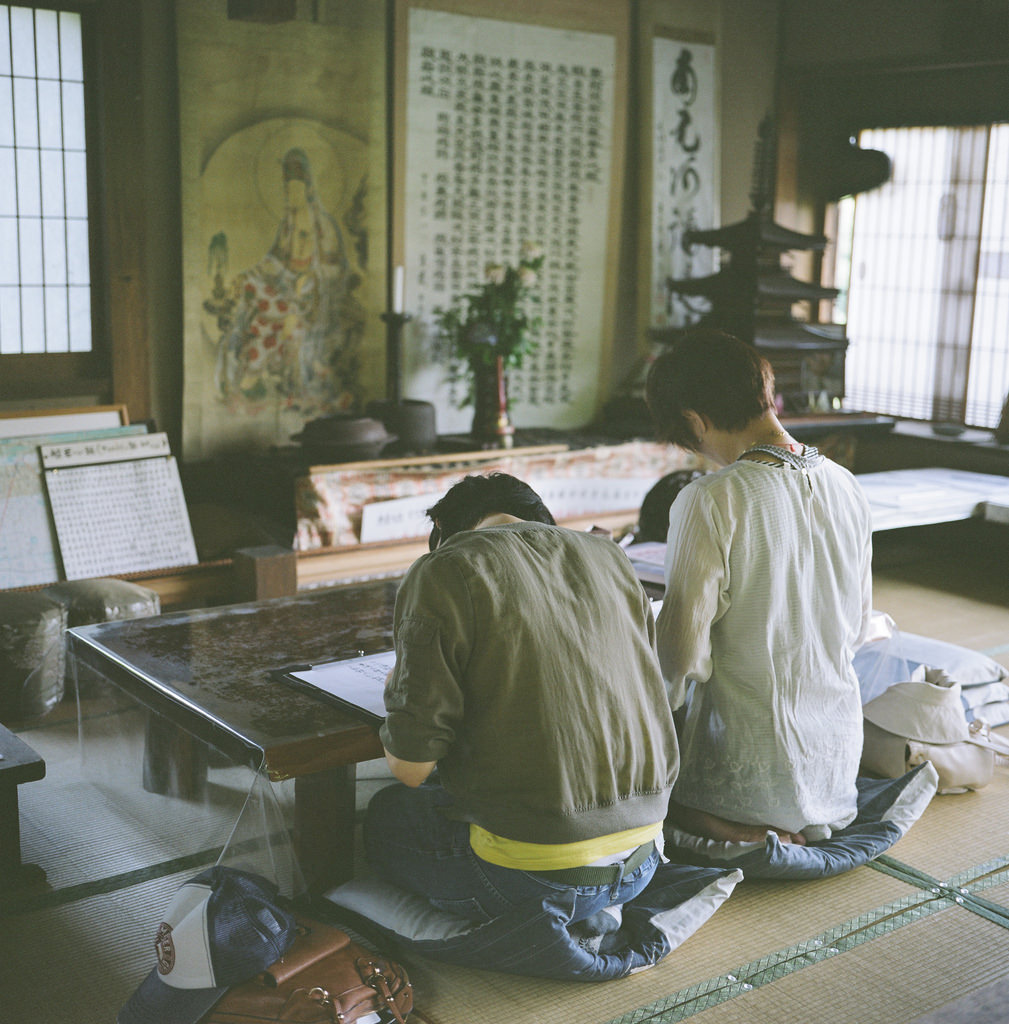
Mamiya 6 w/ 75mm // Fuji Pro 400h We spent a few hours walking through the park, most of which was uphill, passing by a few temples and a insanely large graveyard. The views along the walk were impressive to say the least. Up until that point we had only seen a handful of people. Nearing the end of our trek, we turned a corner and finally arrived at Kiyomizu Dera.

Mamiya 6 w/ 75mm // Fuji Pro 400h 
Contax T3 // Provia 100 
Contax T3 // Provia 100 
Mamiya 6 w/ 75mm // Fuji Pro 400h Along with the temple, there were literally thousands of people buzzing along the main drag filled with shops that sold food, trinkets, and other things. Many Asians wore kimonos and geta, which just made the environment that much better. While walking around taking photos, I was approached by a group of Japanese middle school students. They asked if I could help them with their English homework. Of course, as a teacher myself, I obliged.

Contax T3 // Provia 100 
Contax T3 // Provia 100 After spending a bit more time walking through shops, we jumped back on the bikes and grabbed some udon for lunch. After lunch we planned on biking to the bamboo forest in Arashiyama. While riding and navigating simultaneously, I dropped my phone. Not only did I drop it, but it ended up right in between my spokes, slamming into the back of my front fork. Needless to say, it was done for. After riding a bit more, we decided that the additional mileage was not manageable before the last train left for Toyko. We returned the bicycles, had a match shot frappuccino, and hopped on the train back to Tokyo.
We did however make a second trip to Kyoto two days later. While this did mean that we would have to cross Osaka off our list for this trip, we thought the bamboo forest would be worth it. When we arrived the second time, we took a cab straight to Arashiyama.

Contax T3 // Provia 100 
Mamiya 6 w/ 75mm // Fuji Pro 400h 
Contax T3 // Provia 100 
Contax T3 // Provia 100 
Mamiya 6 w/ 75mm // Fuji Pro 400h Still, we got sidetracked (a little lost) and ended up taking a hike to the highest point in the area. We were greeted at a temple at the top of the trail and decided to take in the view and reap the reward for our walking. I observed quietly at first, but then decided to make small conversation with some other visitors and took a few portraits.

Mamiya 6 w/ 75mm // Fuji Pro 400h 
Mamiya 6 w/ 75mm // Fuji Pro 400h 
Mamiya 6 w/ 75mm // Fuji Pro 400h 
Mamiya 6 w/ 75mm // Fuji Pro 400h 
Mamiya 6 w/ 75mm // Fuji Pro 400h 
Mamiya 6 w/ 75mm // Fuji Pro 400h After the temple, we took the easier walk back down and headed toward the bamboo forest. For someone who likes to take photos of natural environments, it was hard to wait out the perfect shot in an area that is packed with tourists and selfie sticks. I didn’t expect the amount of people that were there but I did manage to grab a few shots I was happy with.

Mamiya 6 w/ 75mm // Fuji Pro 400h 
Mamiya 6 w/ 75mm // Fuji Pro 400h While Kyoto was a bit more tourist-filled than anticipated, we did find the nature-based reprieve we were looking for although it took a bit of walking (and biking) to do so. Of course, we only were there for two half days so we remained focused on the bigger sites to see.
-
Mount Fuji & Aokigahara
Of course, Mount Fuji was at the top of our to-do list while in Japan. Driving in Japan is manageable in a physical sense, but perhaps not as feasible in a mental and emotional sense. Just getting out of Tokyo was an adventure in and of itself. Although, once we got moving, it wasn’t so bad. The interesting thing about Japan, is that since it is an island, most of the tourists in many of the sightseeing areas are actually Japanese citizens on day trips to a different part of the country of which they are from. There was only one rest stop on the way to Mount Fuji from Tokyo, and it was here that we saw couples, families, and motorcyclists getting away from their busy weekday lives on a Sunday morning.

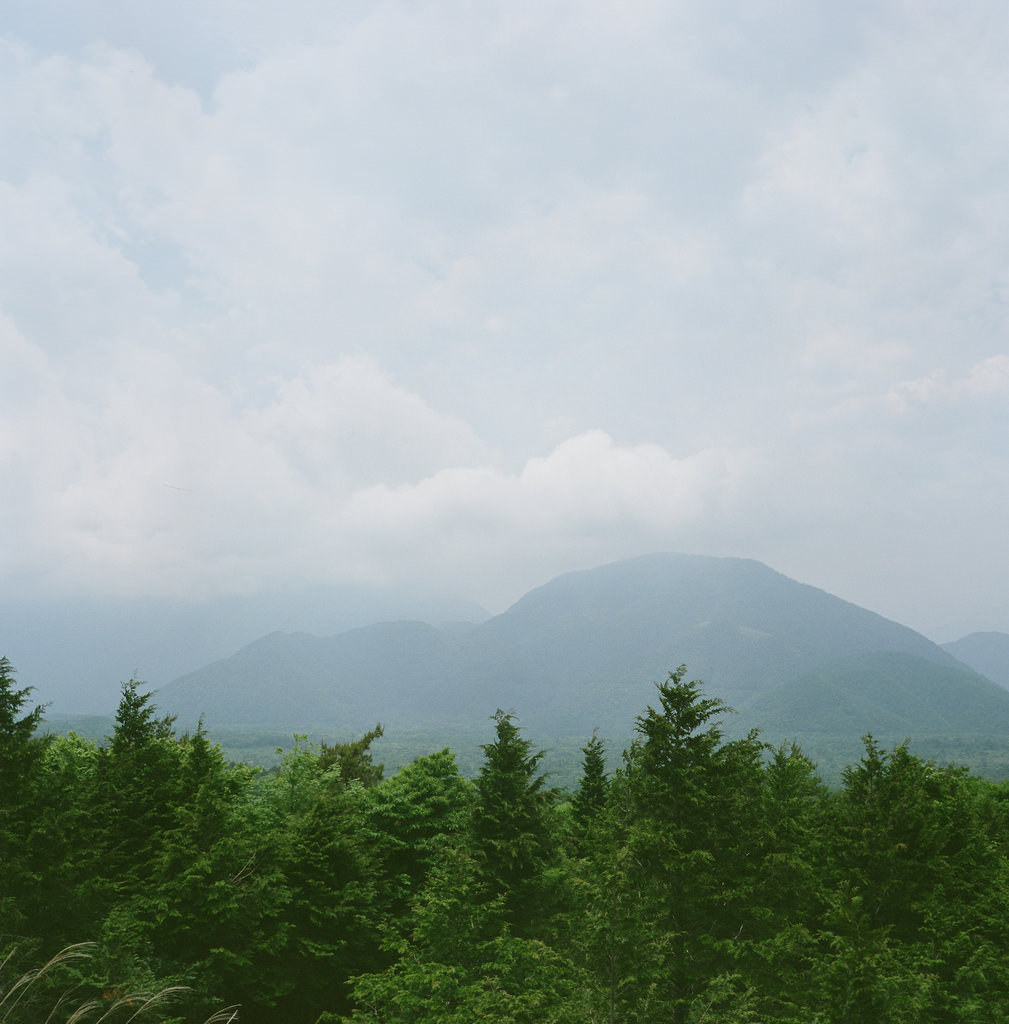
Contax T3 // Velvia 50 After driving about eighty miles, spending about $40 or $50 on tolls, getting stuck at a toll booth, and a single pit stop, we arrived in the vicinity of Mount Fuji. The air was fresh, the trees were green and spread as far as the eye, condensed over rolling hills and smaller peaks in the distance.

Contax T3 // Velvia 50 Mount Fuji, of course, is stunningly beautiful and is probably the number one nature-related thing to see while in Japan. And rightfully so. The ride to Mount Fuji wasn’t terrible, but was definitely much improved after crawling through Tokyo traffic and getting stuck at a toll plaza. Driving towards the mountain is just as scenic as arriving at the destination.

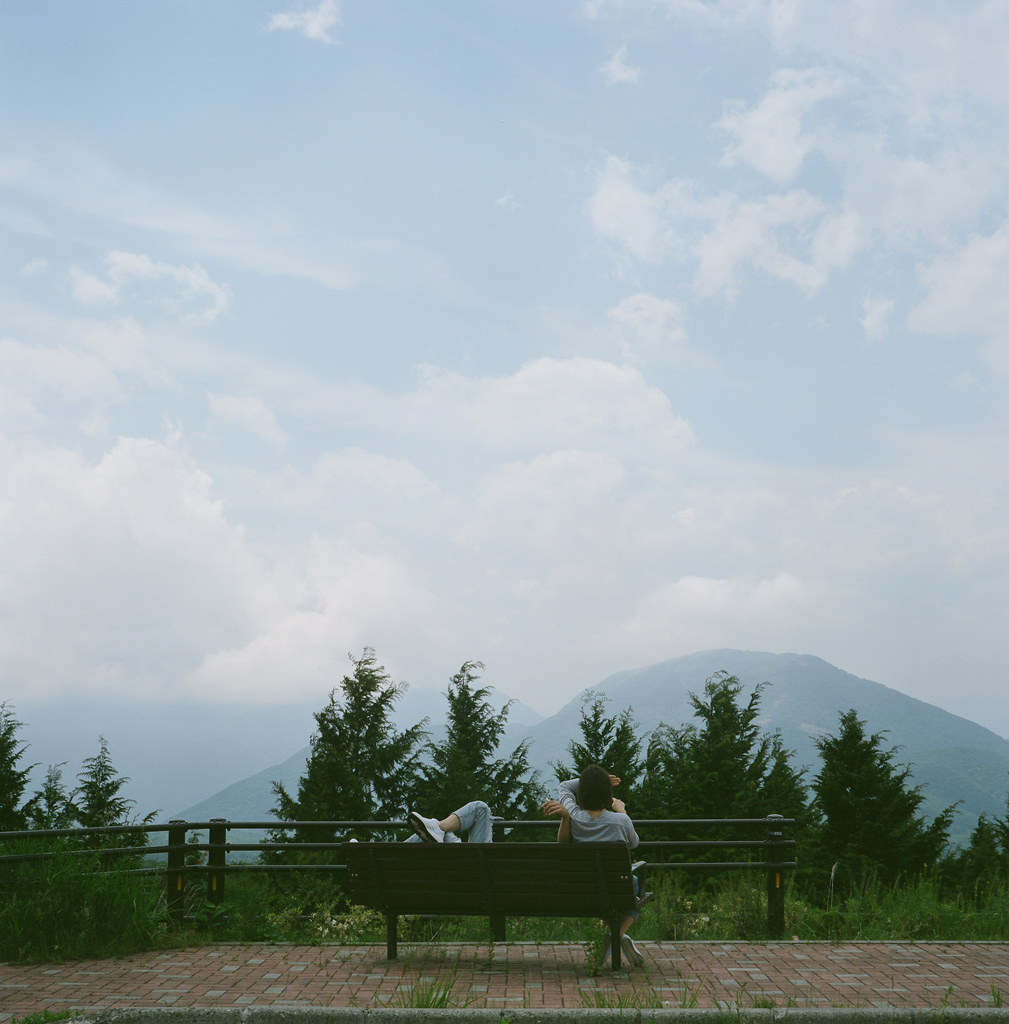
Contax T3 // Velvia 50 The base of the mountain is surrounded by campgrounds, viewpoints, and traditional dwellings. We stopped at a small cafe on the opposite side of Mount Fuji and took in the sights of the sun lowering behind the low-hanging clouds, windsurfers, canoes, and fisherman. Every person individually partaking in their own activity, but collectively embracing the beauty of the countryside.

Mamiya 6 // Fuji Pro 400h 
Contax T3 // Velvia 50 
Mamiya 6 // Fuji Pro 400h 
Contax T3 // Velvia 50 Aside from the mountain itself, the reason we journeyed to the area was to walk through Aokigahara, or the suicide forest. Aokigahara is a vast forest with dense vegetation and a ground layer consisting mostly of hardened lava from past eruptions that consumes most sound leaving it very quiet, tranquil, and even a bit eerie. However, the forest’s solemn mood does is not derived solely from its sound-deadening surface, but from the fact that it is the second most popular place for suicide in the world.

Mamiya 6 // Fuji Pro 400h 
Mamiya 6 // Fuji Pro 400h Without getting too much into details which can be readily found elsewhere online (here and here. Oh, and here’s a Vice Documentary here), there are many interesting traits to Aokigahara. The opening of the forest is set up more like a tourist attraction than a destination for suicide, including a gift shop that serves corn ice cream (which was delicious as it was life-changing). The forest is utterly beautiful and truly is an attraction on its own without the mystique and theme of suicide. Of course, the forest is not marketed to the public as “The Suicide Forest.” That large, lingering, and pretty well-known detail is seemingly swept under the rug.

Mamiya 6 // Fuji Pro 400h Before I went, of course I did a little research about the forest. I had read that there were signs throughout the forest. These signs were said to have been hung by a man who previously set out to commit suicide and serve as a reminder to those who go with the intention to end their lives that their families are home waiting for them, depending on them, and of course love them. Another thing we were on the look out for were any ropes, strings, or long pieces of ribbon; as these are frequently used by those who are still uncertain about their choice to take their life and use this as a tool to get back to the main trail if they so choose to live and leave the forest and return to their families and lives. We did see some of these things (no bones or skulls, though) throughout our short trek through the forest. Needless to say, you can’t help but feel a bit despondent.
The forest is vividly green, the trees and foliage only allow for the sound of a light breeze and narrow rays of sunlight to cut through the cracks between the leaves (it was so dark at points, that my cameras couldn’t get enough light to take an automatically-metered exposure).

Contax T3 // Provia 100 
Contax T3 // Provia 100 
Contax T3 // Provia 100 We didn’t spend too much time walking through the forest, maybe an hour or two (we spent an hour or two just driving around looking for it). We should have spent the entire day hiking the forest, to be honest, but we weren’t exactly prepared for an all-day hiking excursion. So if you plan on visiting, I definitely recommend blocking a whole day for a proper journey through the sea of trees.
If anything, Aokigahara is a place of peace for both those who are dead as well as those that are living. It’s a place for quiet, serenity, and reflection where time and sound seems to stand still.
Mamiya 6 // Fuji Pro 400h
 dylan barnes | blog