Tag: film camera

  • untitled: a photo series, january 2018 edition

    untitled: a photo series, january 2018 edition

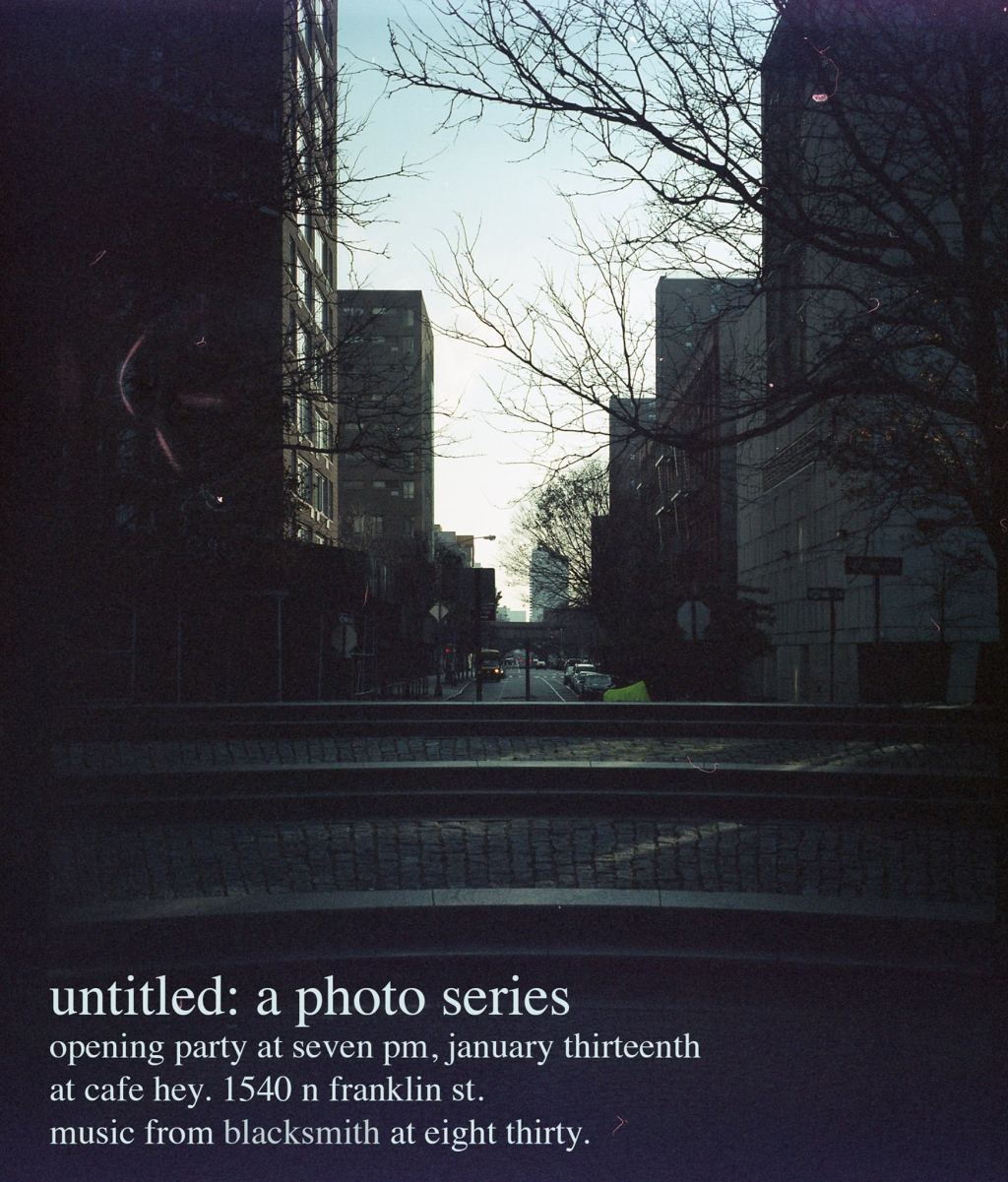
    I am excited to announce that I will be exhibiting some work alongside some other very talented Tampa Area photographers at Cafe Hey in Tampa Heights.  There will be an opening party this coming weekend.  I hope to see you there to enjoy a whole lot of photos, music by local talent Blacksmith, coffee, beer, full food menu, and just an overall good time.  Details are provided in the flyer and below:

    untitled: a photo series

    Cafe Hey

    1540 N Franklin St. Tampa, FL 33602

    January 13, 2018 @ 7PM, Blacksmith to play at 8:30.

    Works displayed by Dylan Barnes, Ryan Berger, Caleb Hartman, Jordan Schmidt, Luis Espel, Jeremy Evans, and more!

  • Books & Zines: All the Places I Thought Were Strange

    Books & Zines: All the Places I Thought Were Strange

    Today, we take a look at Amy Jordan’s zine All the Places I Thought Were Strange.  Amy is a contemporary landscape photographer living and working in Portland, Oregon.  Amy specializes in working with black and white themes.  Amy’s latest zine includes twenty pages of monochrome images in an 8.5×11 format, taken between 2015 and 2017.  These images put a spotlight on what the title simply states: places she found to be strange.

    The opening preface by Harper S. sets the stage for the zine and gives remnants of a feeling of entanglement with an inability to break free from unfamiliarity.

    Looking through the images, some places are more obviously strange than others.  While all images have something “off” about the environment recorded, I specifically enjoyed the images that has a single or simplistic element that breaks a balance or pattern that would be there otherwise.

    Amy does a great job in allowing you to experience the set up of each shot through her mind, framing, and finally snapping the shutter.  A great expression of her planning and photographic vision.

    Of course, like any other black and white images, the beauty is either constrained or exuded by its lack of color. Many of the images in Amy’s latest work are not only visually appealing in their content, but show a rather wonderful use of lighting and contrast.

    Perhaps my favorite aspect of these images is that the landscapes are rather common places that most people would walk by and think nothing of, however Amy does her best (and succeeds) in making the ordinary world into an extraordinary photograph, and ultimately a body of work.

    Thanks so much to Amy for reaching out and submitting her latest zine.  This is definitely a great collection of photos to have for anyone who loves contrasty, black and white images.  To see more of Amy’s photos and to inquire about purchasing your own copy, check out her Instagram accounts here and here.

    If you have a book or a zine that you would like to have featured here on Now Developing, feel free to send an email!

  • Camera Giveaway: Minox 35 EL

    Camera Giveaway: Minox 35 EL

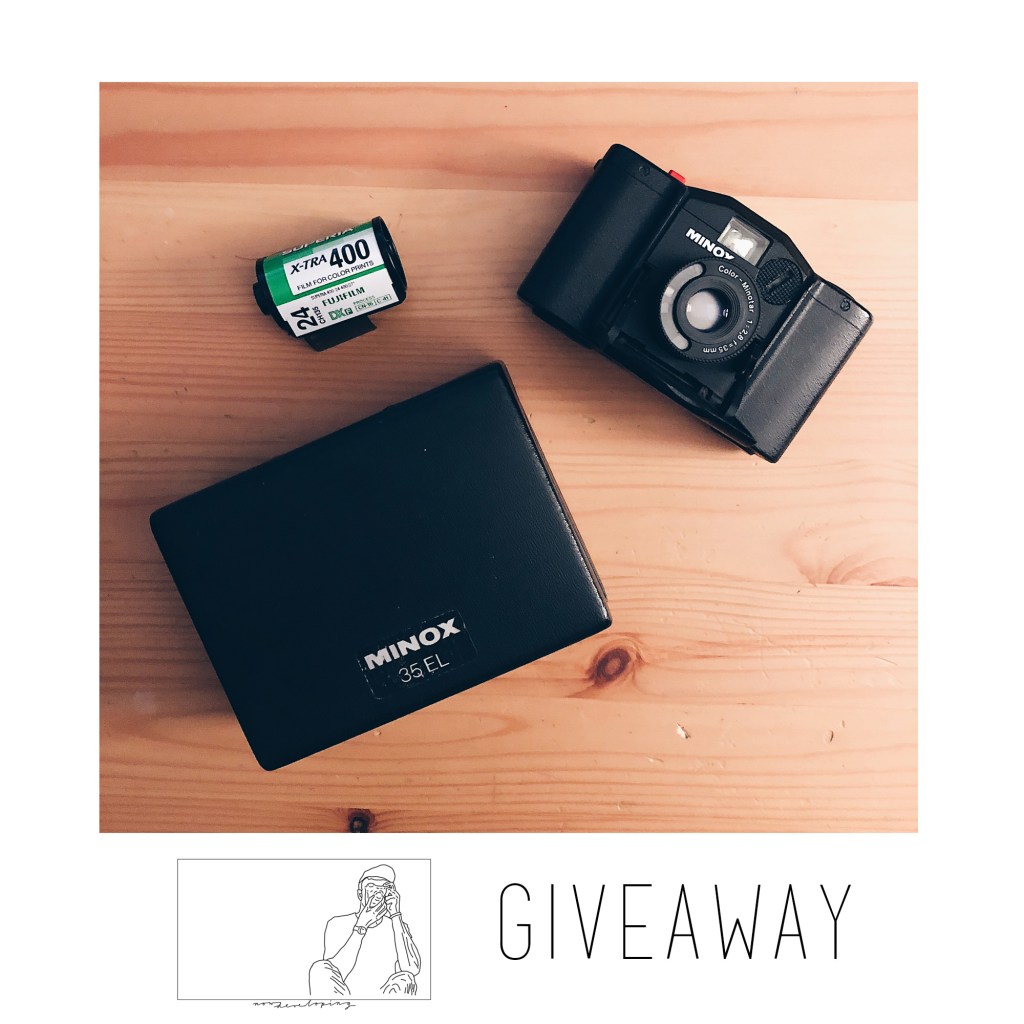
    It’s time for another camera giveaway. This time, I will be giving away a Minox 35EL. The Minox is an amazingly small, compact camera, with a great lens! Camera will include original box, manual, and a roll of Fuji Superia Xtra 400. As always, participants both domestic and international are eligible to enter.

    To enter the giveaway:
    1. Make sure your following @Now.Developing on Instagram
    2. Like this photo on Instagram
    3. Tag three photographer friends in a comment in this photo on Instagram

    The winner will be randomly selected and announced in 10 days, on January 16, 2018. Winner will be contacted via Instagram direct message.

  • Student Photo Exhibition 2017

    Student Photo Exhibition 2017

    Last week, the first half of the school year came to a close.  What that meant for me and my twenty photography students was that it was time to show their friends and families what that have been doing for the past eighteen weeks.

    Every year, I put together a small photography exhibition of my film photography students’ work at our school. As most film shooters can agree, it’s so much nicer to see and hold a tangible image.  The printing process, both through enlarging and digital scanning and printing, is not a step I like to skip over when it comes to the club.  We get a little dressed up, display our gear and our images, and talk to our guests about our processes and experiences as photographers.  It’s always held the week before we get off for the Winter break, and something about that makes the environment a bit cozier and more intimate.

    Every year is always better than the last, although I am not sure how it can get much better.  Although, I do try to add a new element to the club each year to make it better and a bit more unique from the last.  This year, we were able to add a darkroom within the school to our program.  In addition to this, I also changed up my instruction a bit as well.  In years past, I started my beginner students with point and shoots, however I decided this year that everyone was getting an SLR.  The images, the crowd, and the vibe of the evening did not disappoint.

    This year, I was lucky enough to have two assistants help me run the club.  These two now-high-school students are past students of mine that came back every Wednesday evening to donate their time for the club.  Not only are they extremely helpful but have become pretty darn good photographers, too.  Without them, my job would not be as easy, that’s for sure.

    On the two days leading up to the event, we spent a bit of time preparing for the event.  We gathered all of the darkroom prints, placed them in individual folders to go home with the students, printed some digital copies for display, made name cards, put together some gift bags, hung photos, mood-lit the space and decorated accordingly.

    At about a quarter-to-seven, my students with their friends and families started filing into what is essentially our all-purpose room.  When seven p.m. rolled around, I gave a little talk on the status of the film world as I know it, basically just explaining the fact that there is a pretty big, and very passionate, close-knit community of die hard film enthusiasts that are keeping the craft alive.  Not only that, but that this community is ecstatic that these students are shooting film and support us specifically and individually.  And that due to this enthusiasm and the people within the community, this club and event is all made possible.

    Thanks to the cameras we use donated from the Film Photography Project and the gifts that the kids got to go home with from Shoot Film Co., this event truly comes together.  In addition to that, my administration is extremely supportive of what I do and I also have a pretty good support system made up of my closest friends who also shoot film to come out to check out the kids’ work and really make the kids feel good about what they do.  I just want to make it clear that even though I am the one directly instructing and interacting with these students, it takes the village of film shooters to make this what it is.

    After making a short introductory speech, guests enter our gallery hallway which is lined with photos, and sprinkled with cameras, developing materials, and other things to spark conversation and questions from our guests.  This is where parents and students both excitedly search for where their photos are located, take some pictures together, eat some cookies while I usually I get to talk to some of the families and tell them more about how great their kids are simply for being a part of the club and what I love about their work specifically.

    We also set up a couple of neat displays, one being of some old glass plate negatives that one of my coworkers picked up for me at a yard sale a few years back.  It’s a cool way to let people see what film was before film was….well, film.  Next to these, we also display some of our darkroom tests prints to show the guests parts of the process that may not be regularly visible in a final presentation.  It gives great insight to the fact that this is a process that takes a lot of trial and error and that mistakes are not only commonplace, but are expected to occur in order to make us better at our craft.

    While students and parents walk around, admire photos and take photos of their young photographers in front of their work, I quietly peruse the space with one of my close friends to choose five photos that will receive recognition in the form of a certificate when everyone returns to the the seating area.

    As things start to wind down, everyone eventually heads back to the all-purpose room where students are called up individually to receive their gift bag and darkroom prints.  Gift bags include a few film-related pieces from Mike Padua of Shoot Film Co: stickers, buttons, and notebooks.  This time also gives me a great opportunity to quickly speak and compliment (maybe embarrass, too) the students personally on their work as I show their darkroom prints to the audience.

    After all students receive their things, I close things with a thank you to not only the students, but also to their parents who support their children and their artistic interests, something that I think schools could all use a bit more of.  At this point, I usually talk just enough to make myself cry because I am so dang proud of these kids.  But this time, I made sure to cut the speech just short of that to wish everyone a great holiday and to give a thanks to the kids for allowing me to be a part of their every Wednesday just to experience and appreciate the photographic process together.

    All images taken by Nick Anatala.

  • Part of the Process: Szalai Imre

    Part of the Process: Szalai Imre

    Part of the Process is a series of posts that puts the spotlight on film photographers and DIY film developers.  These features provide unique experiences and perspectives on shooting and developing film while also showcasing diverse talent and film photographers around the globe.  If you are interested in being featured, feel free to contact me!

    Name: Szalai Imre

    Location: Budapest, Hungary

    Links:

    Instagram

    Website


    What attracted you to film photography? How did you get started/introduced to shooting film? How soon after did you start developing?

    The physical material of film, the special look, the chemical processes and the fact that taking pictures on film inspires me more than digital.  It extends my imagination and it forces me to be better at photographing. It is pure addiction: I want to experience, learn and I’m enjoying every single moment of it.

    What do you like to shoot on a regular basis?

    Portraits, glamour, lifestyle, fashion, but street mostly.  However, when travelling or hiking and the nature amazes me, obviously I don’t miss taking a shot of it.

    What formats, cameras, and films do you shoot? What do you like about the formats, cameras, films you prefer? 

    35mm: Nikon AF600, Nikon FE + 20mm, 35mm, 105mm

    Medium Format: Rolleiflex 3.5e Planar, Hasselblad 501c + 80mm + 8/16mm extension tubes

    The Nikon AF600 (LiteTouch) is a point&shoot camera with an incredibly sharp 28mm lens, auto focus and manually adjustable built-in flash. Quick, small and invisible. I use it almost exclusively for street photography but it’s also suitable for parties and get togethers.

    The Nikon FE was my first favorite.  It made me fell in love with film photography. It’s extremely handy, very easy to control, and fast with aperture priority function. I use it for taking all kinds of pictures: street, fashion, glamour, lifestyle, portraits, whatever. It is my regular travel buddy.

    I purchased the Rolleiflex when became familiar with medium format photography. I love it, however focusing might be a bit tricky sometimes. It is always with me on my travels.  It is small, pretty light weight, and pretty comfortable to carry around. I also use it occasionally in the studio and is a perfect MF camera for street photography.

    The Hasselblad is a quite new love. It performs well beyond my expectations. It is a bit heavy though, but shooting models with it is always a pleasure for both of the model and me.

    What types of film do you develop?

    Black and white 35mm and 120.

    Tell us about your first experiences in developing your own film.  How did you muster the courage to give it a shot? What resources did you use?

    During a commercial video shoot, I met this guy who said he was developing his own pictures at home. I was always a bit afraid of it, but he told me what equipment I need and we developed my first roll together.

    Since that magical moment I cannot imagine sending any of my B&W films in a lab. Youtube can be helpful as well and I was checking out several videos in order to improve the quality of my negatives.

    There are several rules I created for myself, just an example: always start loading the film onto the reel from it’s beginning (from the 1st frame, so the whole film needs to be unrolled first).

    What is your development process like now?

    Not many unique steps, you could simply imagine the standard DIY way. Currently, I am counting the seconds when enlarging prints due to lack of a darkroom clock. This will be my next purchase to have better control on my work. I admire the work of Man Ray and Erwin Blumenfeld and would like to try solarisation as part of the film developing process (not afterwards, but during enlarging).


    What’s your processes regarding scanning, enlarging, and/or printing your work?

    I scan and just recently started enlarging. If developing is fun, this is an incredible joy! Surprisingly, spending the whole night with enlarging prints does not infer fatigue on the other day, but a guaranteed satisfied smile on your face.

    What equipment are you using to develop your film and why?

    I mostly use Kaiser products as I could get those are most accessible.  So far, I am happy with them. For developing, I tried and used Ilford’s Id-11 developer, but then tried and settled with Kodak D-76. It results fine grained, sharp and nice, contrasty negatives.

    My everyday fixer is also Kodak (I use this both for negatives and prints). I have to admit that I’m kinda loyal toward Kodak as a brand and I also love their film and respect their past and know-how.

    However, my favorite B&W film is Fuji Acros 100 aside from Tri-X. My darkroom is situated in a bathroom, where I also hide under a blanket usually to make sure it`s totally dark in there, but for my printing process, I just finished and equipped another dedicated room. Printing doesn’t require 110% darkness but only 99% is enough.

    Are you content with where you are now with your shooting and developing? Do you have any future plans or ambitions?

    I’m still learning the basics, but later on I would like to try solarisation, making montages, apply sandwich negs, and use other/any creative ways to give shape to my own style. I would like to make exhibitions and publish my “work” on different platforms.

    Have you completed any notable projects or in the process of creating something from the film you have shot and developed? 

    I was asked to shoot for a fashion blog, which was a great honor and a fun time with the models and authors. They were happy with the results and appreciated eventually that all the pictures were on film. The special look of it convinced them as well!

    What advice can you give to others who are interested in shooting and developing film but are apprehensive about getting started?

    It’s really not a big deal compared to the satisfaction and excitement in the end. If you are worrying about making mistakes (which is – believe me – part of the process of learning and experimenting and actually can be enjoyable), shoot some “not that important” rolls and use them first.