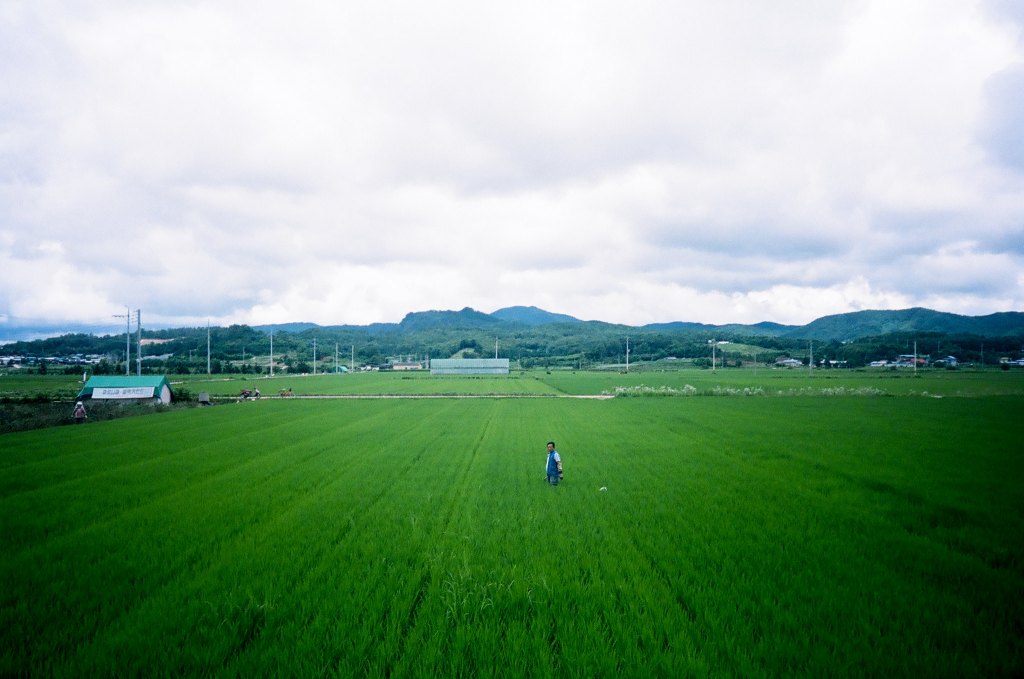
From July 12th to July 18th, me and my buddy Don toured the length of the Korean peninsula from our southern hometown of Busan to the northern metropolis of Seoul along what is known as the 4 Rivers Trail. Over the course of a little over six days, three of which included riding in the pouring rain with the rest in the hot sun, we trekked mostly-paved terrain to see parts of Korea you could only see on two wheels.
All images taken on a Canon WP-1 with Kodak Portra 400.
“You end up exhausted and spent, but later, in retrospect, you realize what it all was for. The parts fall into place, and you can see the whole picture and finally understand the role each individual part plays. The dawn comes, the sky grows light, and the colors and shapes of the roofs of houses, which you could only glimpse vaguely before, come into focus.”
Haruki Murakami | What I Think About When I Think About Running
In the two years that I have worked abroad, I have already made a handful of friendships that I truly value. Almost all the of the people I work with are far from the places that they used to or still call home, but despite the diverse backgrounds we possess, we all share the fact that we are in the same place at the same time. Right here and right now.
I have learned that my coworkers have and will continue to become my closest friends because we share so much of the same experience by just being “here”, where ever that may be. Eventually though, some, most, or all of us will eventually move on to bigger and better things and when we do, we all have to say goodbye.
I feel like there’s something different about when people leave here (a school abroad), though. Back home in the states, teachers leave schools perhaps just as often, but they usually go to another school or another district. It never seems to be too far away. Nevertheless, you will still see them around town from time to time. But here, things feel a bit heavier and with a little bit more potential to be final. I think it’s because that after you say your last goodbyes in person, there’s a bit more uncertainty as to when or if you will meet again. It feels like there’s a slight tension underneath those warm hugs goodbye where both people know that there is a possibility that it might be the last time you see each other. Your transient lives could allow you to meet again just as much as they could draw you apart forever. But for all the time you spent together and memories you shared up to that moment, you appreciate them that much more and you say “This isn’t a goodbye, it’s a ‘See you later.’”
This year, quite a few more teachers will be leaving compared to last year. It feels different this time, partly because of the number of people leaving, but also because of a few other reasons. An easy goodbye with tapered emotions was railed off by Corona Virus and distance learning, but a handful the people leaving this year are also a core part of my social and professional circles, making it feel like a substantial portion of the group’s personality will be missing.
One of those people who are leaving is Meghan. She speaks her mind and says the things that everyone is thinking, but they might not be brave enough to say. She is someone that has made me more conscious and aware of my circumstances and my actions, and how the two may affect one another as well as the perspectives and experiences of others around me. I thank her for that.
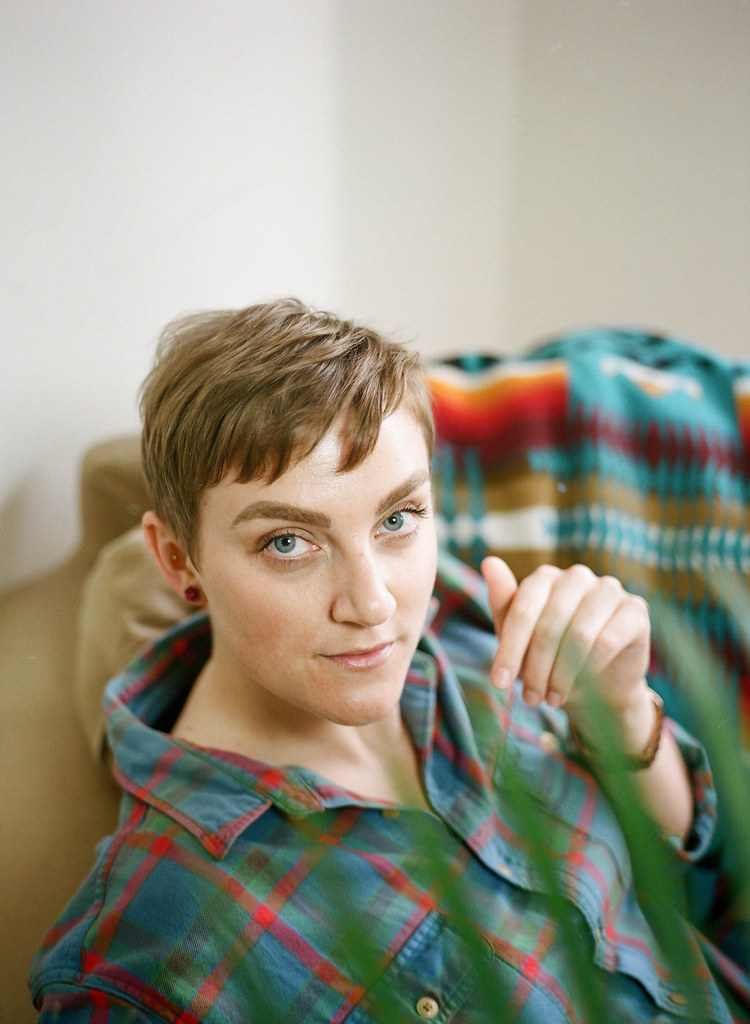
After seven years at our school, she is moving to embark on a new professional and personal journey. To bring some closure to her time here, we got together for some portraits to close her chapter on her time in Korea.
Lastly, Megs left some words to accompany the photos:
I’ve been sitting on this news for months—it’s never felt like a good time, and I am not sure when it will feel like a good time again, but I get on a plane in a week, so here we go: After seven years, I’m leaving Korea. I keep trying to write about this, but then I realized I already had—in my personal statement that is part of what helped me land my new job at a new-to-me international school in a new-to-me region. Here’s part of it:
It was in college, studying literature, where I learned to distinguish between the notion of place and an actual, physical location. The exploration of the way in which a location becomes a place—the catalyst for which American artist, author, and teacher Alan Gussow identified as “the process of experiencing deeply”—drove my twin passions: literature and teaching. I began to think of both as meeting points—vehicles to connect to varied human experiences.
Both international teaching and my love of literature have given me the opportunity to examine my own narrative and deepen my understanding of myself, my home, and my place in the world. Both require similar skills: uncovering the argument behind a story; exploring intertextuality; and leaving home, if only in our minds.
I will miss the home that Korea has become over the past seven years; I have experienced deeply. And I am ready to do it again. Moving will be unfamiliar at first, but I have gone through the process of transforming a new place into a home before. I welcome the redefining and examining of myself that I know will be part of leaving a familiar place. But I also know that when I leave this place, I will take a little part of it with me. And leave a little bit of myself here.
…
Needless to say, I didn’t anticipate a pandemic in thinking about the last chapter of my time here. And it has not been easy; this is not the ending I wanted. But Dan Savage always says that closure is something you give yourself. This tattoo is part of the gift of closure: to honor my time and experience here, the young woman I was when I got here, the woman I am today, and all the variations in between.
Like many people who choose to live outside their homeland, I use the word home to denote a feeling, not a particular location. In Korea, I say I am going home when I travel to Montana. I call San Francisco, California—where I have never actually lived, but have visited extensively—home. And when I am in Montana, I use the word home to refer to Korea. But this was not always the case.
Before I moved to Korea, I had only lived in Montana: a vast, beautiful, rugged, sparsely-inhabited state in the northwestern United States, largely unacquainted with diversity. After graduating high school, I moved to Missoula to attend the University of Montana and found myself surrounded by people whose home was not my home. And yet, as the years progressed and friendships formed, we all developed a familiar relationship with Missoula and each other; my home was redefined.
It was also in college, studying literature, where I was finally able to articulate my kinship with Montana: I learned to distinguish between the notion of place and an actual, physical location. The exploration of the way in which a location becomes a place—the catalyst for which American artist, author, and teacher Alan Gussow identified as “the process of experiencing deeply”—drove my twin passions: literature and teaching. I began to think of both as meeting points, vehicles to connect to varied human experiences.
After graduating and then working as a substitute, I took the leap to teach internationally. Growing up, I had traveled only regionally; moving to Korea, having never set foot on the Asian continent, radically redefined what and where I called home. It was in Korea that I began to understand that in the States, I’m a Montanan; in the world, I’m an American. This new emphasis on my Americanness led me to examine the legacy of my home: I had to rethink many of the values, norms, and beliefs that I learned as defaults; I had to examine the things I thought I knew and decide if I wanted to keep or redefine them.
Both international teaching and my love of literature have given me the opportunity to examine my own narrative and deepen my understanding of myself, my home, and my place in the world. Both require similar skills: uncovering the argument behind a story; exploring intertextuality; and leaving home, if only in our minds. The role of texts—their ability to allow us to step into the home of another—as the impetus to redefine and reimagine the self has become the heart of my teaching philosophy. I encourage and support students as they explore and deepen their understanding of themselves and the world around them so that they may go forth, embrace the unknown, and cultivate satisfying lives as globally-minded citizens focused on bettering their home—however they choose to define it.
I will miss the home that Korea has become over the past six years. I have experienced deeply. I have redefined my home and myself. And I am ready to do it again. Moving will be unfamiliar at first, but I have gone through the process of transforming a new place into a home before. I welcome the redefining and examining of myself that I know will be part of leaving a familiar place—a home. But I also know that when I leave this place, I will take a little part of it with me. And leave a little bit of myself here.
– Megs
All images taken on a Mamiya 645 Pro TL w/ 80mm 2.8 on Portra 400.
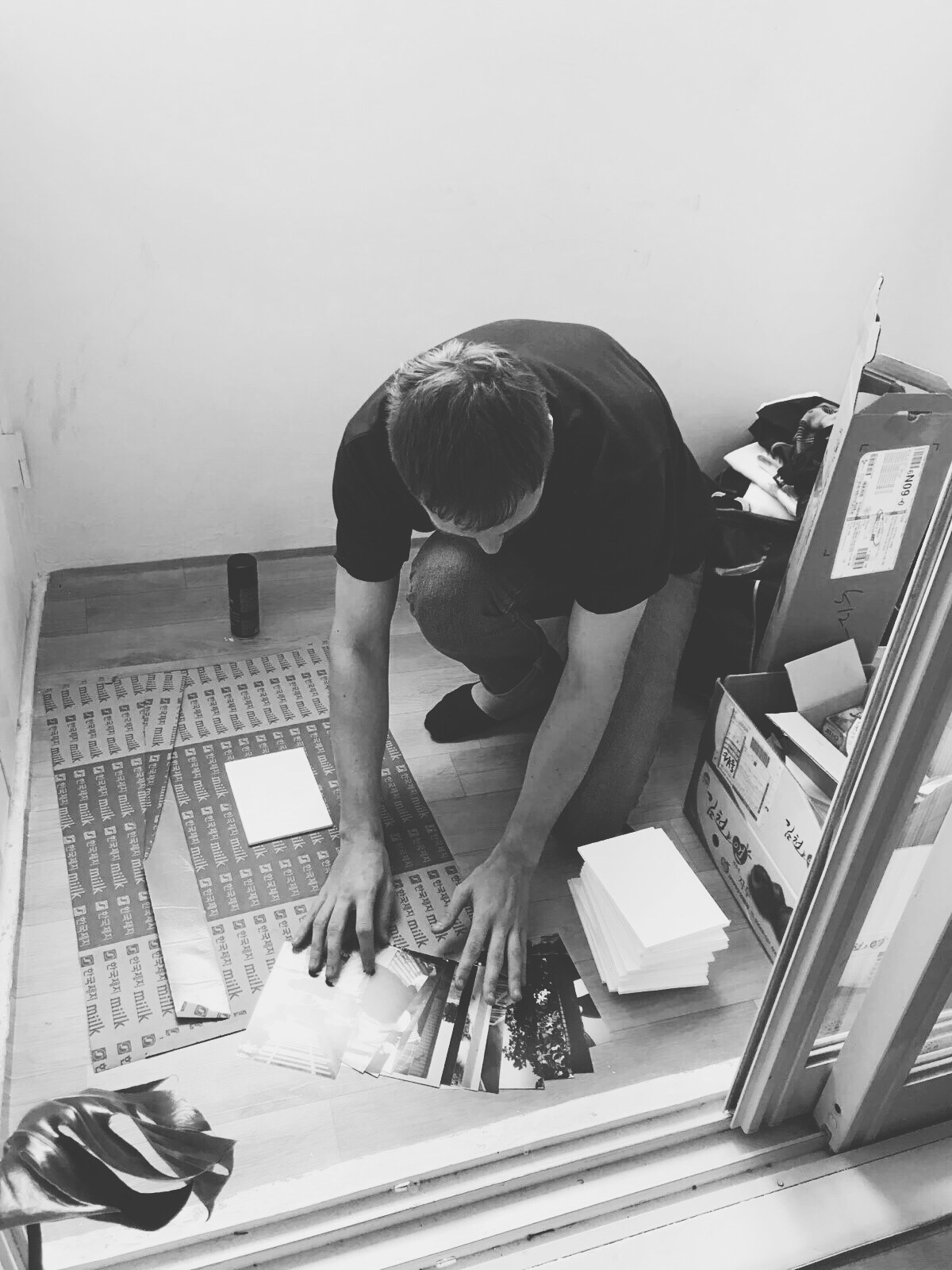
Like many others during this very odd and unique time, I have been looking for ways to be productive with my time. With the extra time spent at home, I have finally had a chance to create some sort of vision for an analog photography zine. While there are many details to be hashed out, I believe I have planned out enough to get the ball rolling and can figure out the rest along the way. Even if there is only a single issue created out of this, I believe that the process will be worth it. The goal is to simply get the idea out of my head and into the world.
I am excited to get this project started and contribute to the analog photography community in a meaningful way, giving a platform and a voice to those who utilize the medium to create images with substance and authenticity.
The first issue of the Now Developing zine will feature 12-15 analog photographers worldwide. An open call for entries is now live and the rules and guidelines to submit your work can be found here.
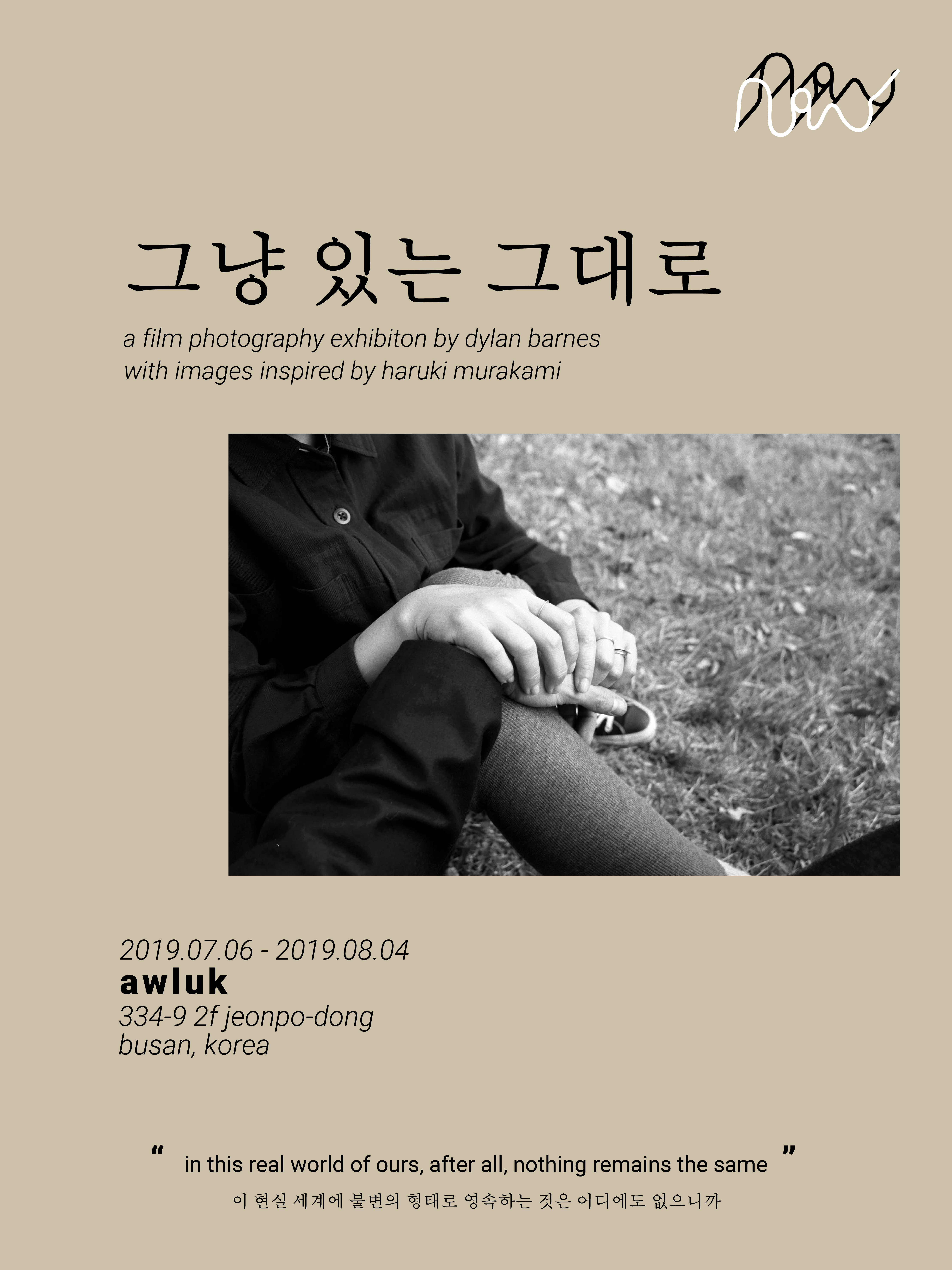
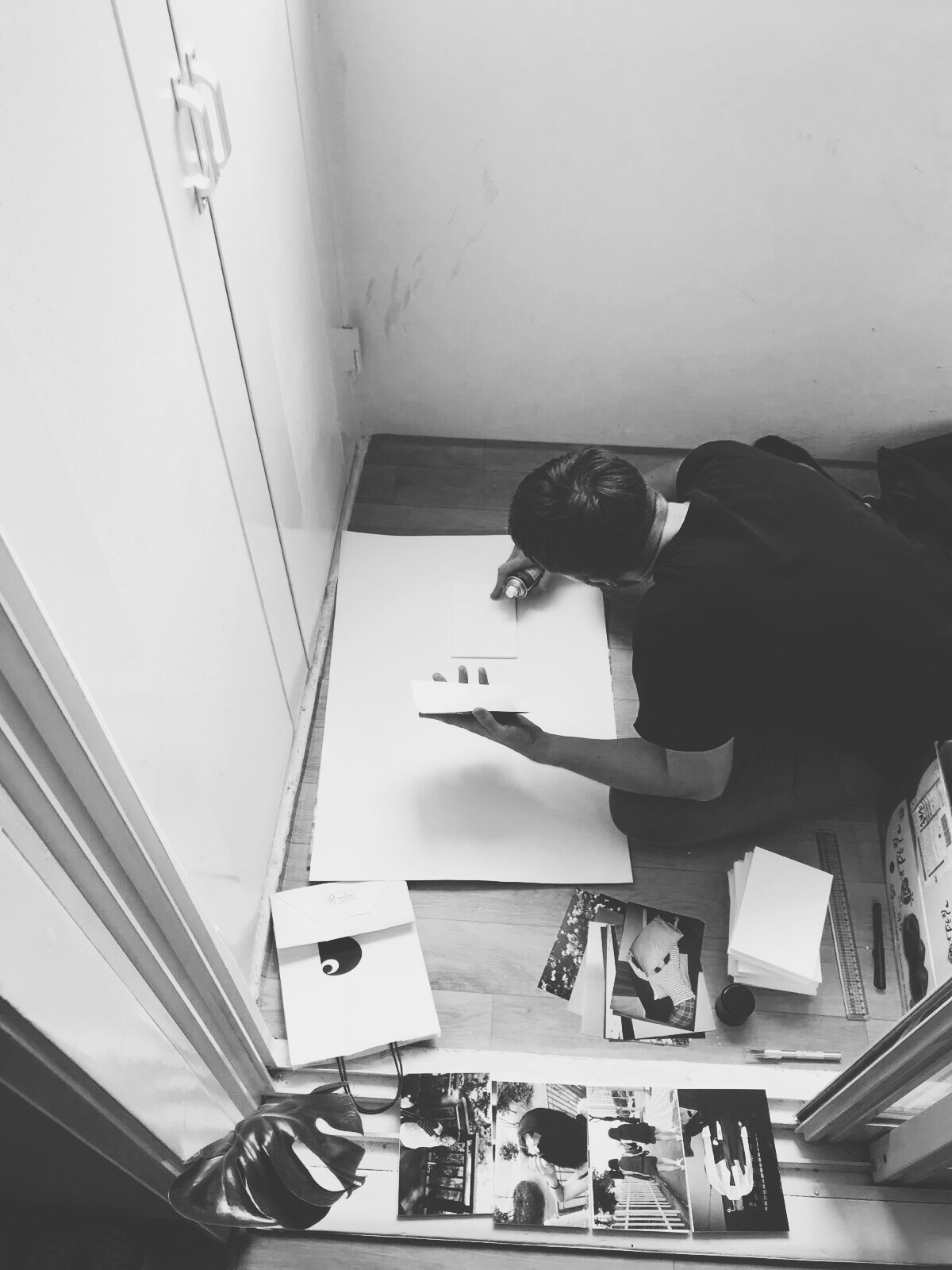
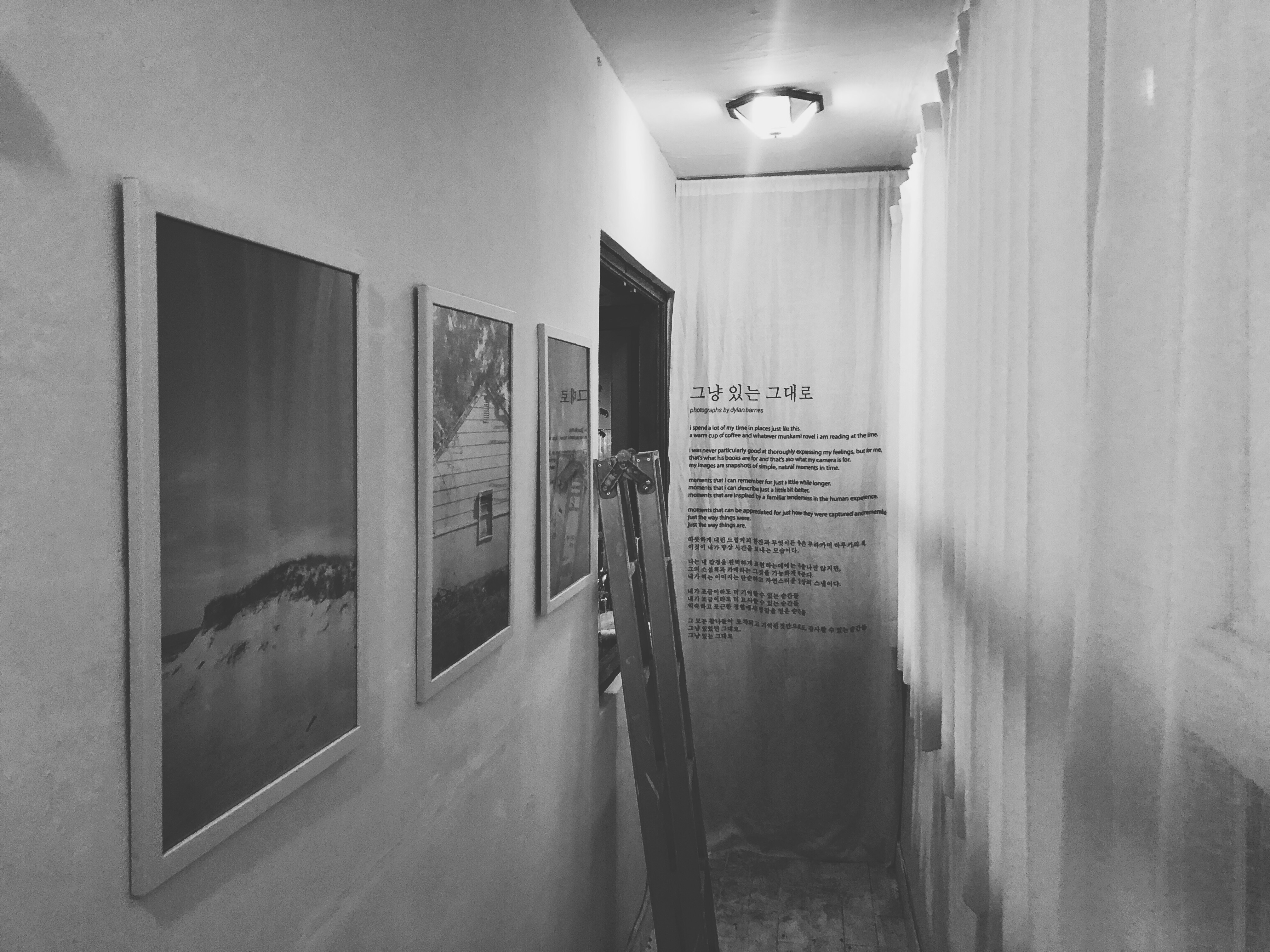
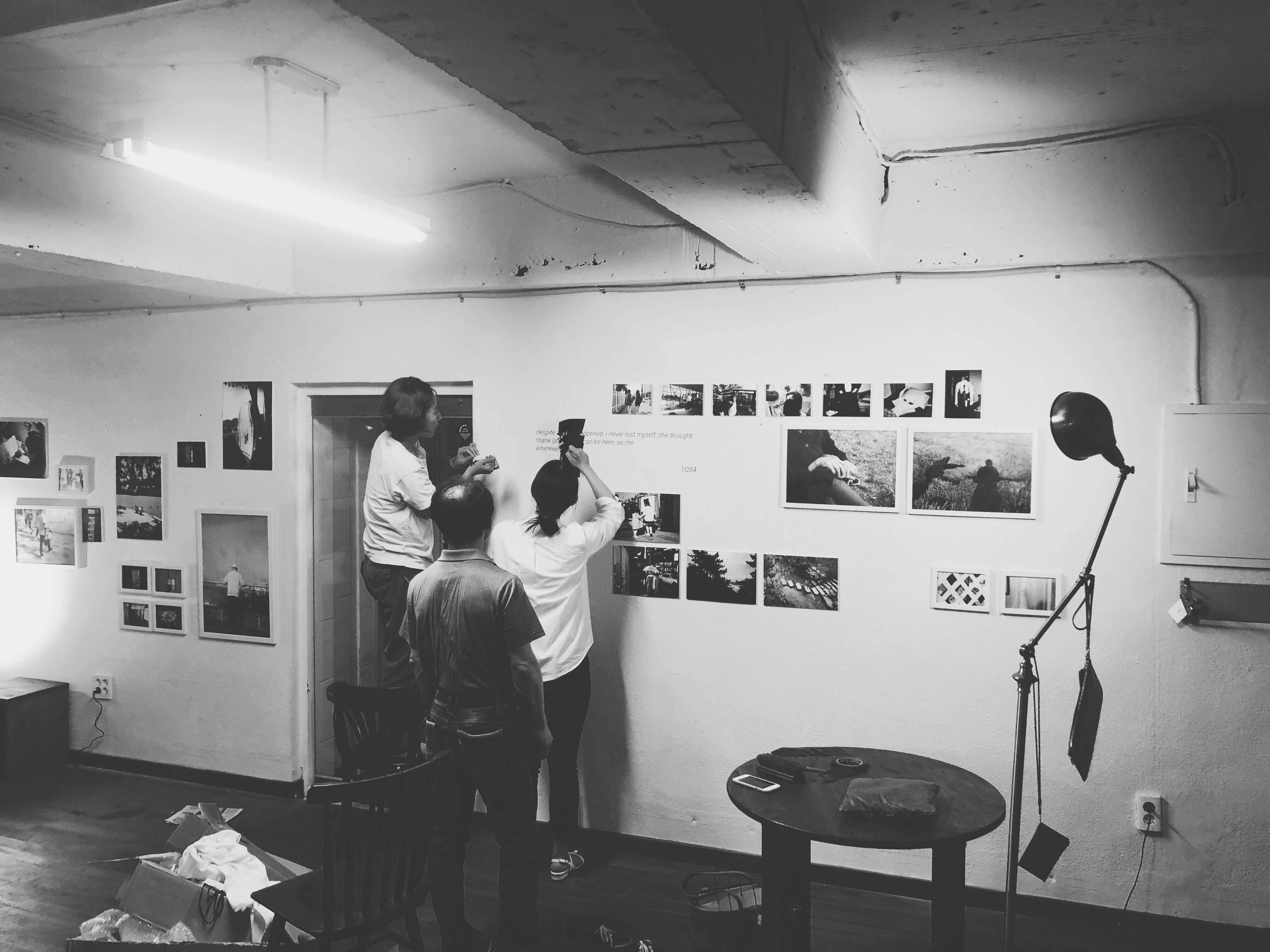
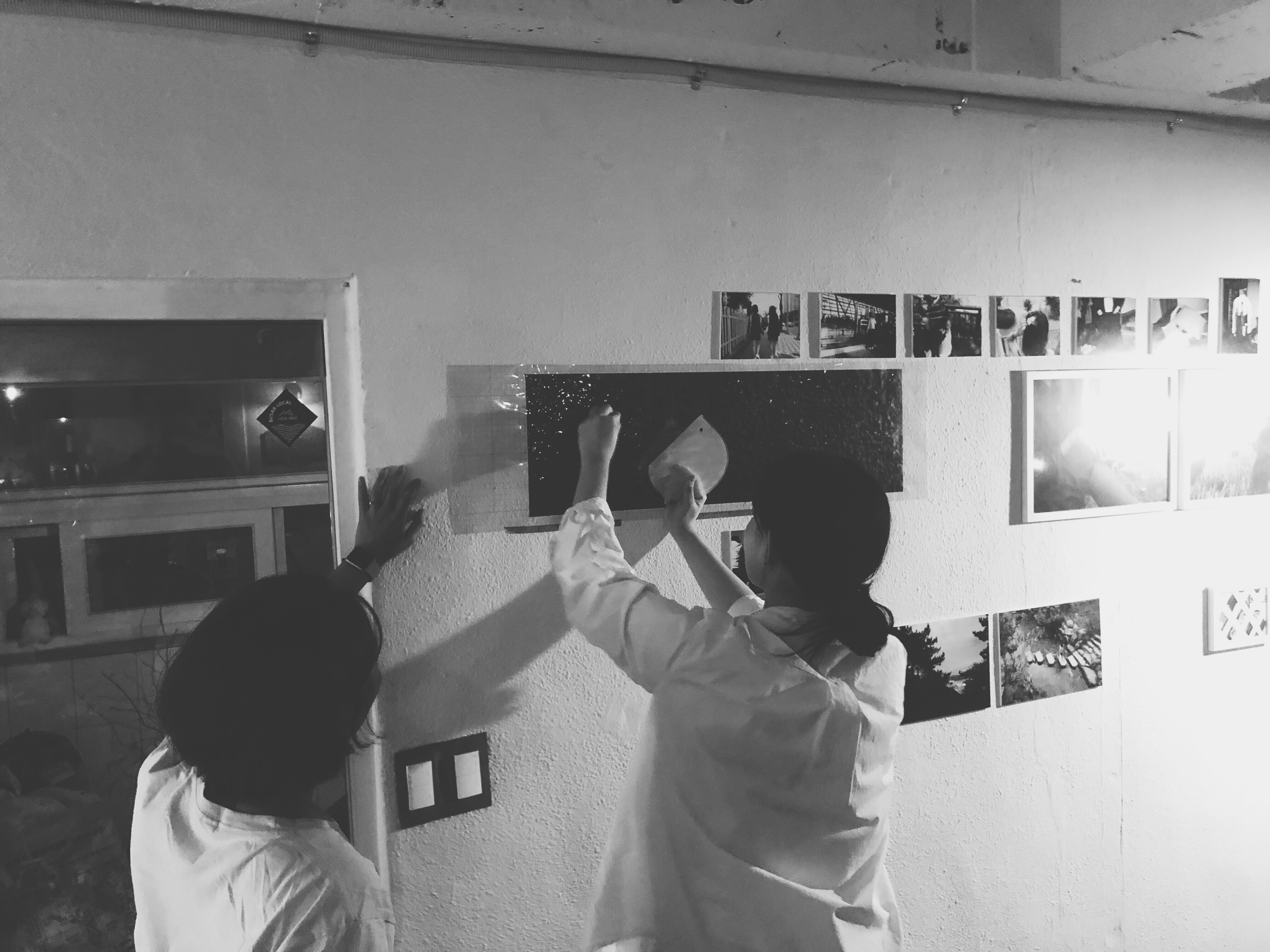
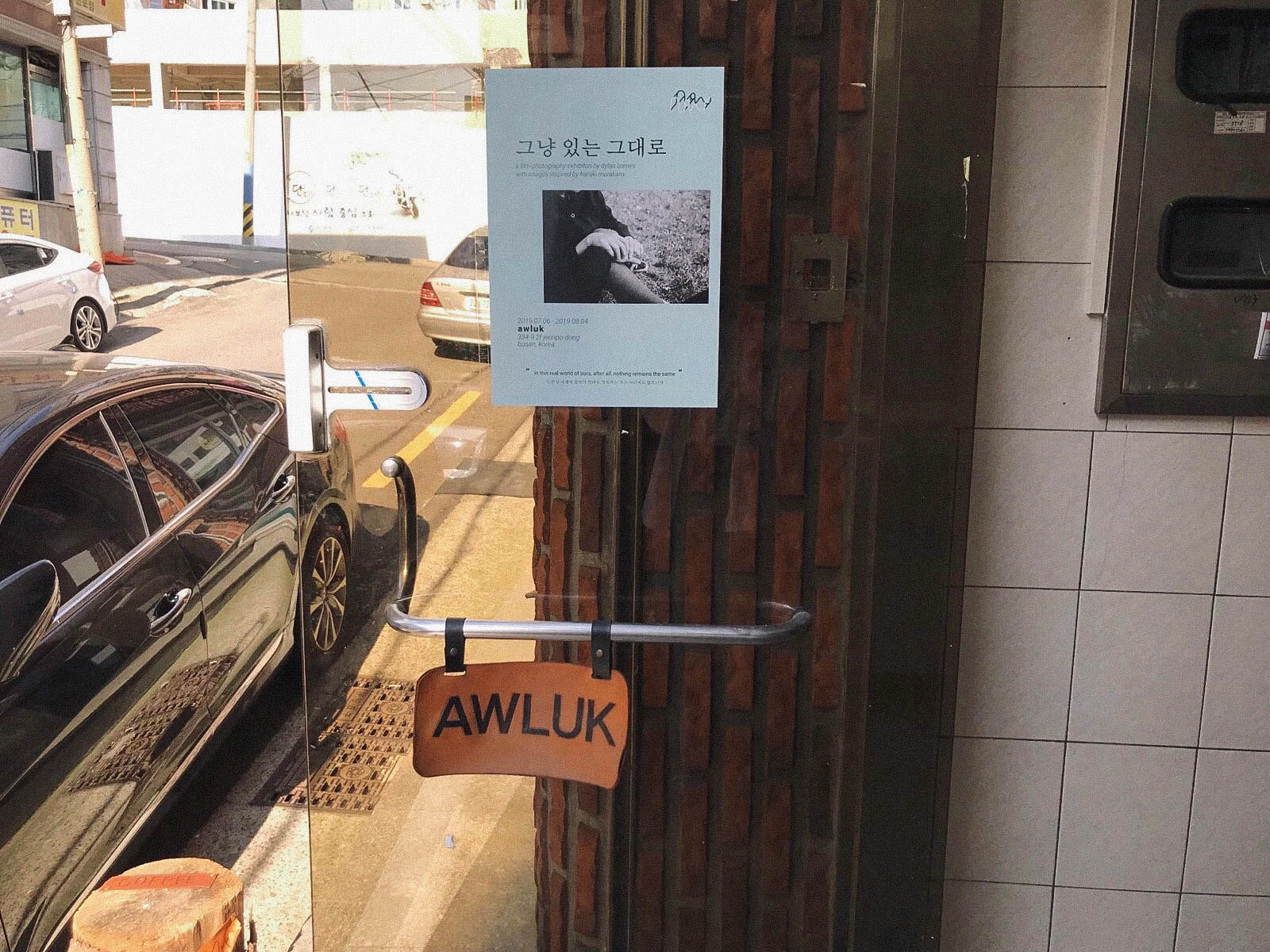
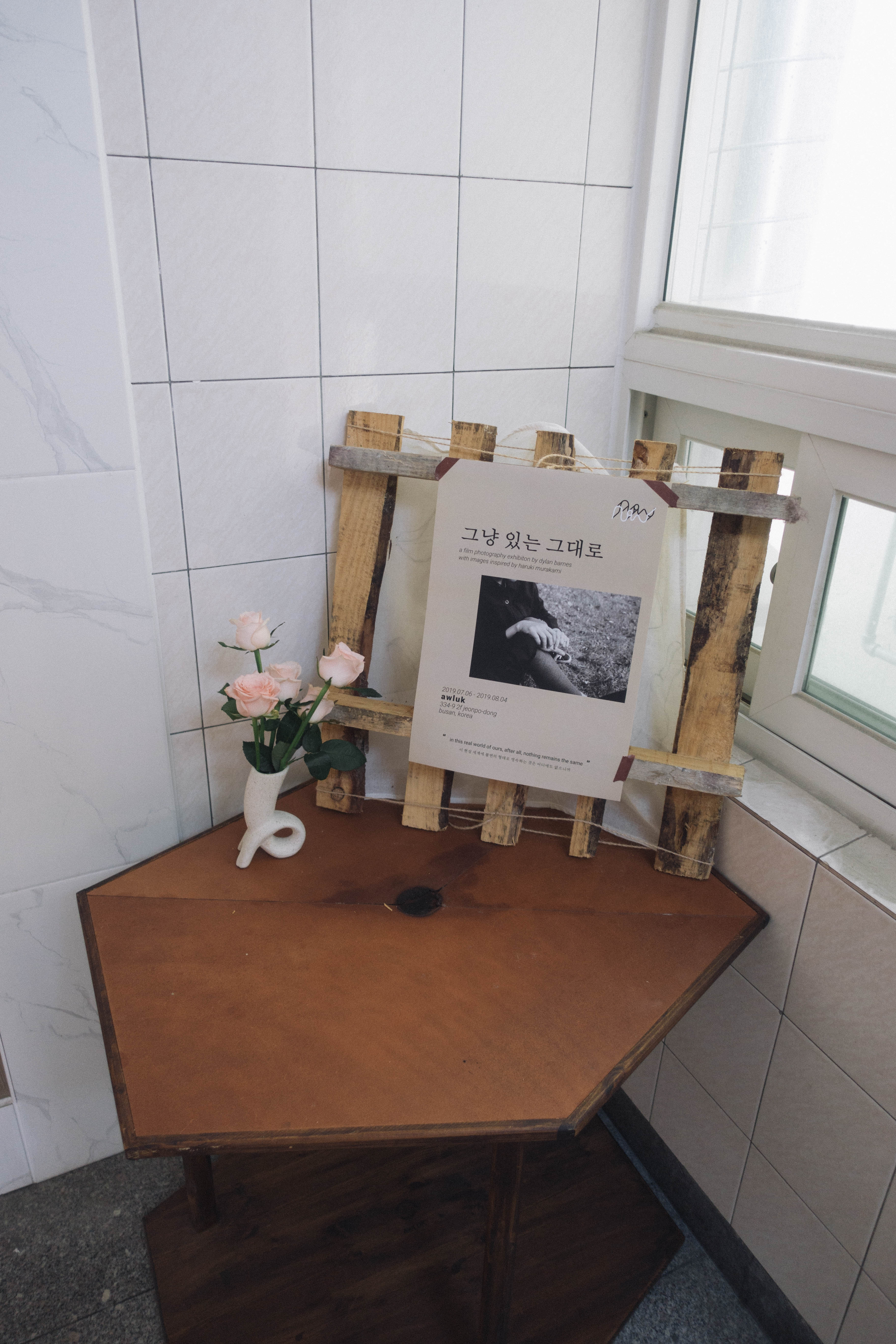
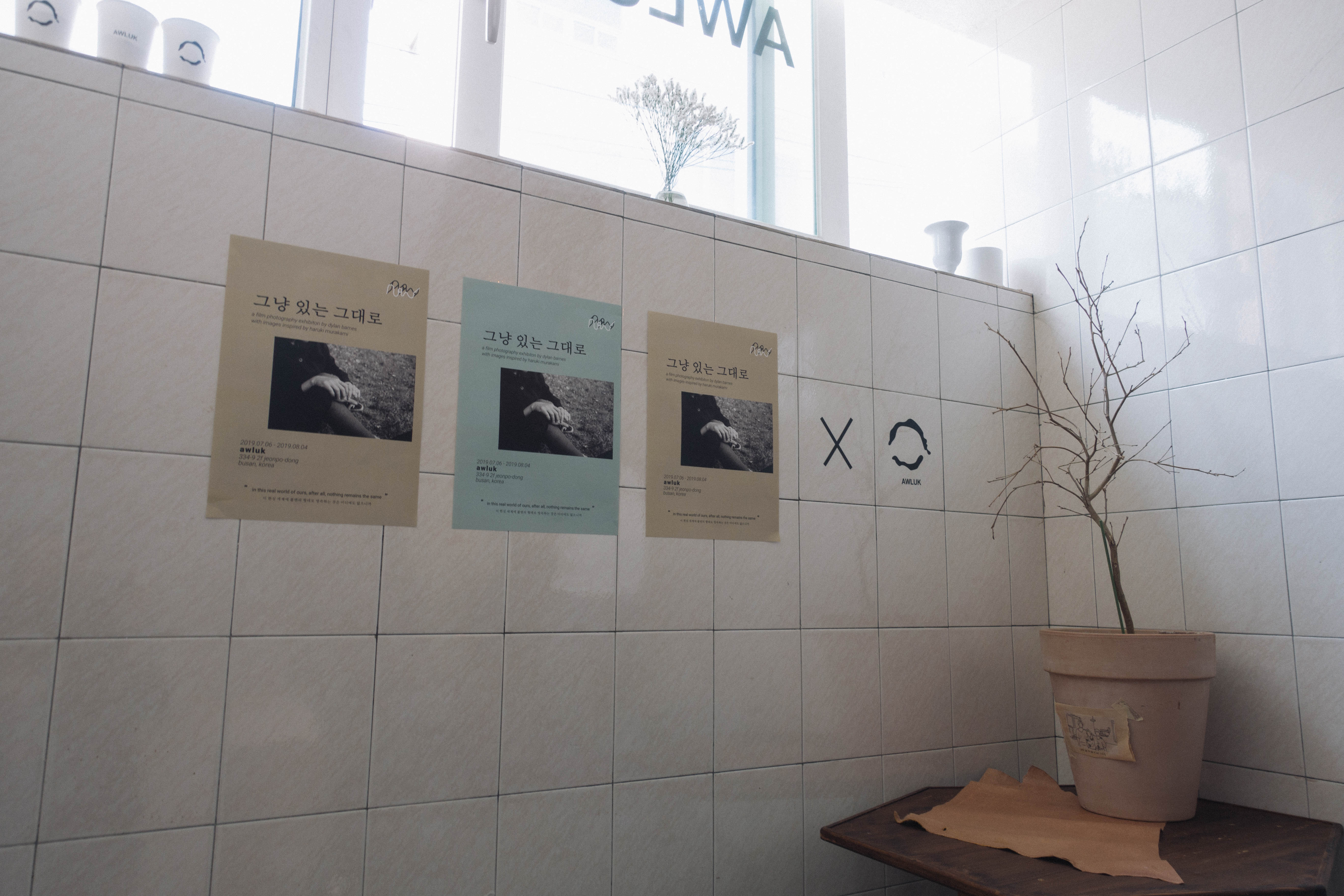
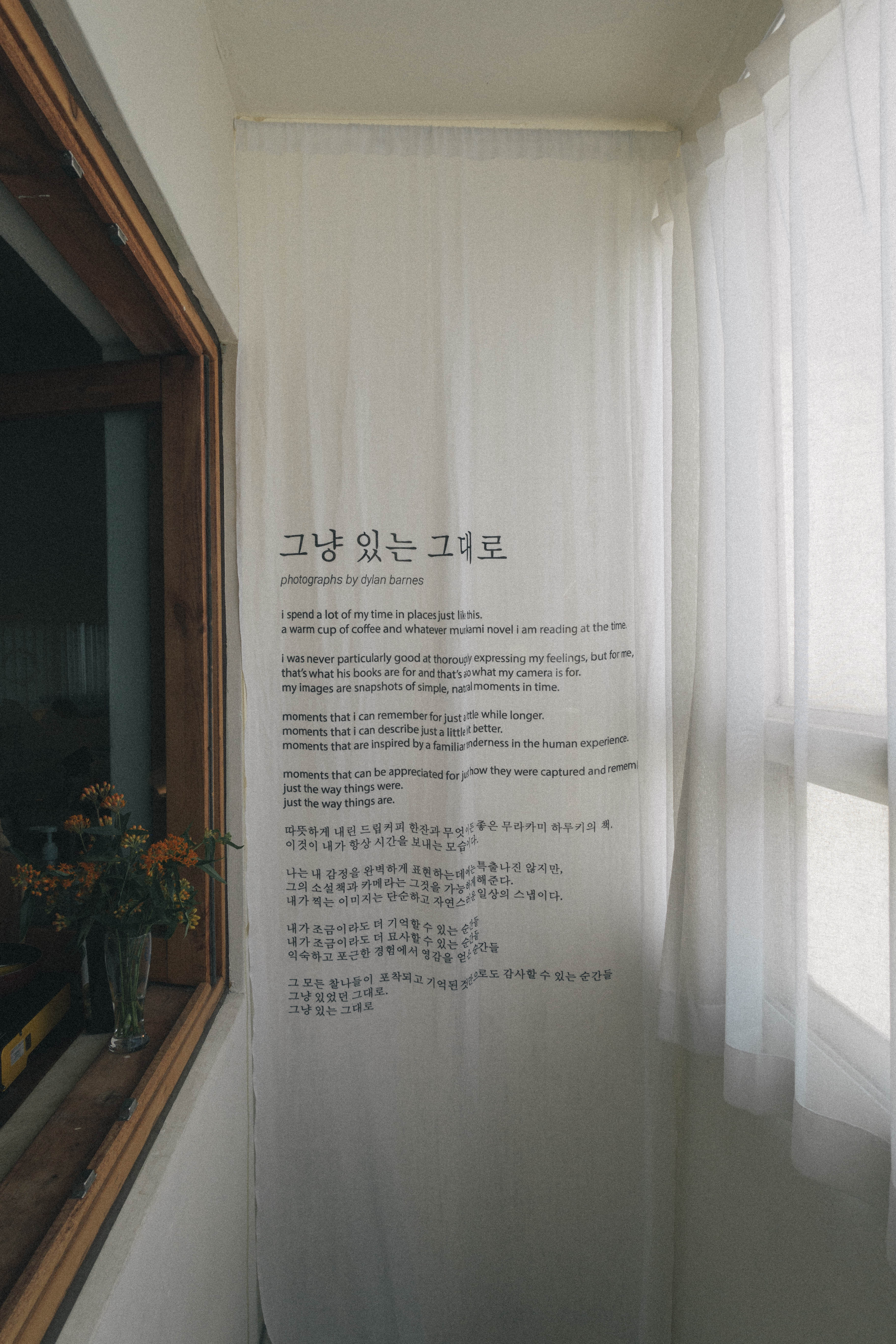
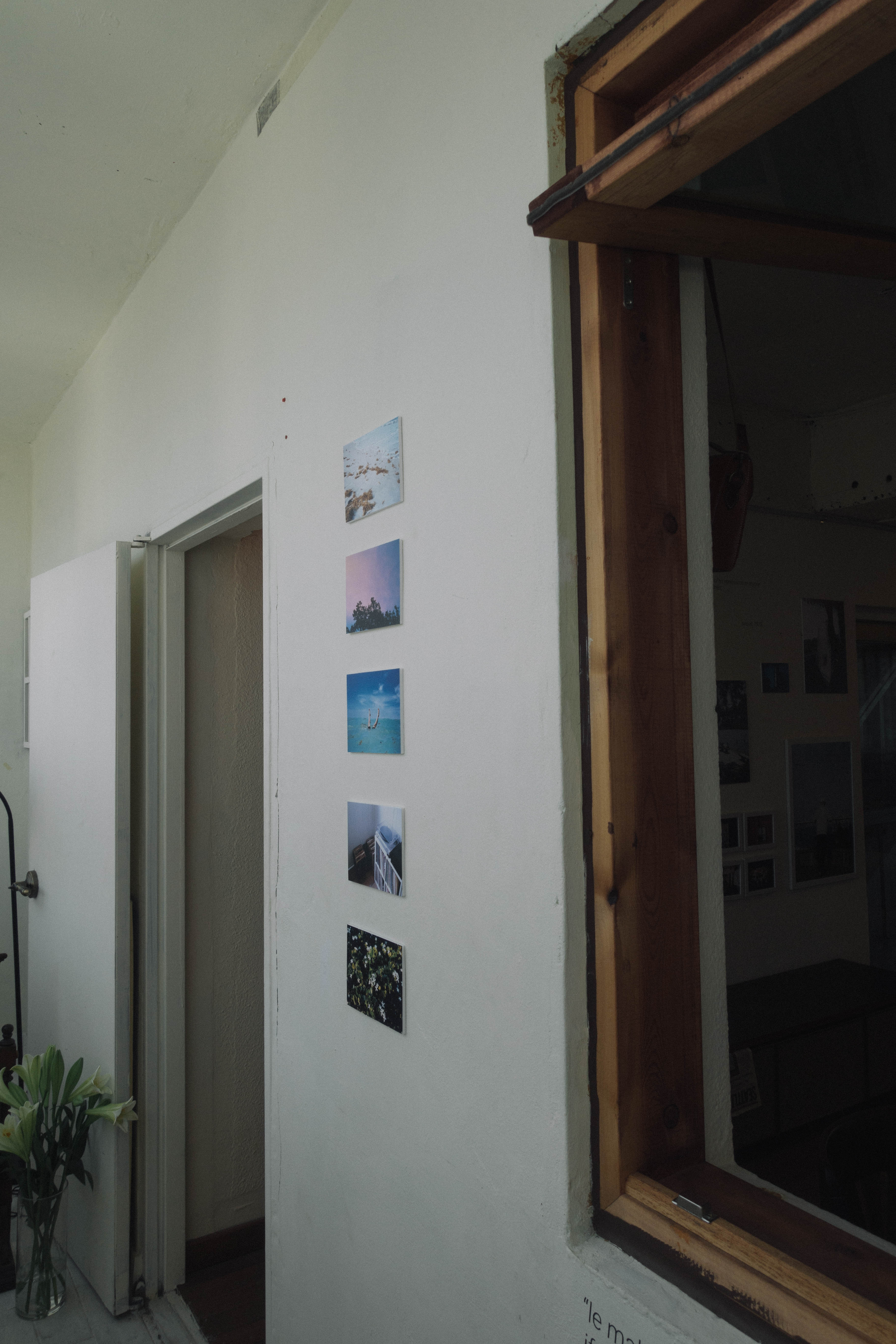
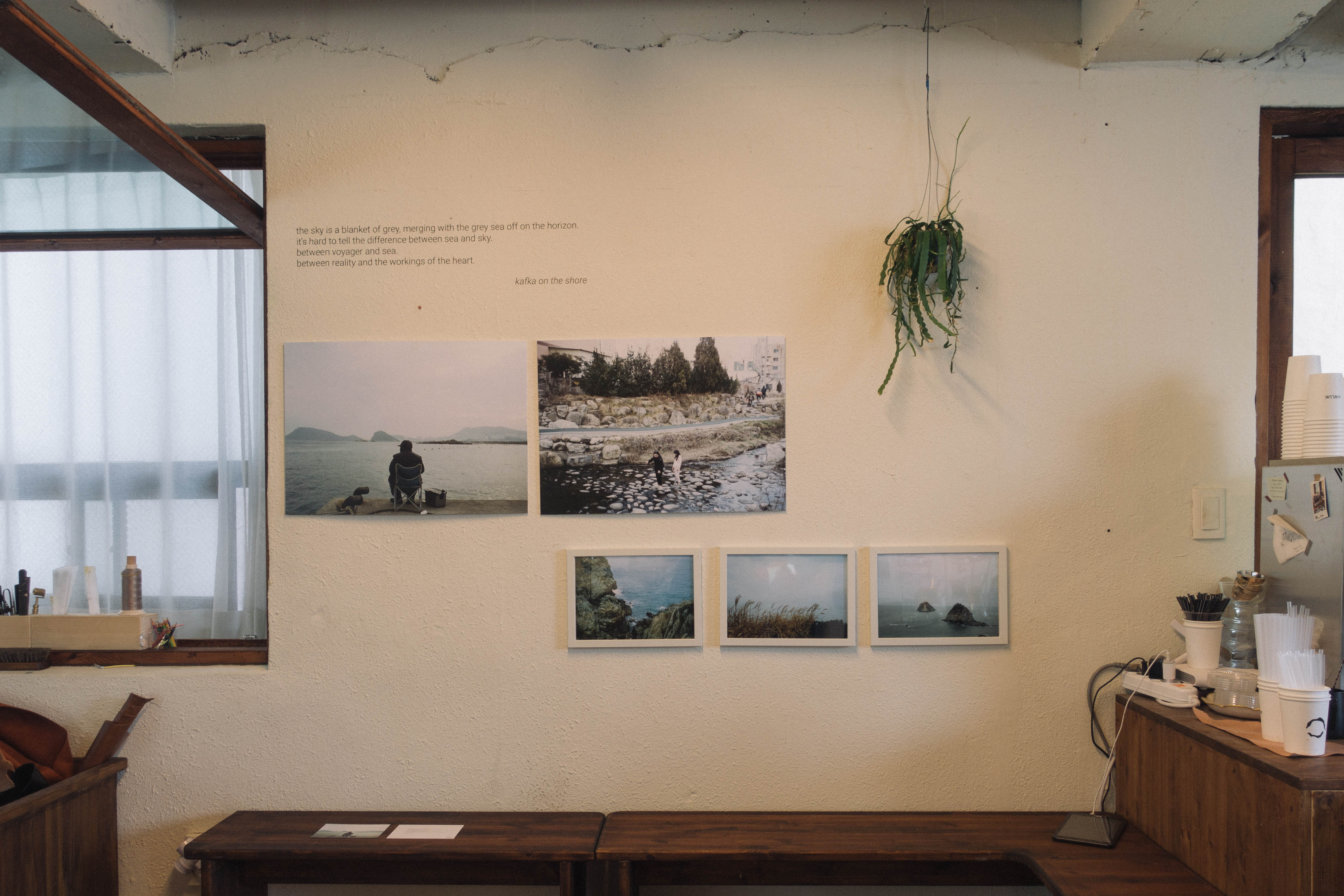
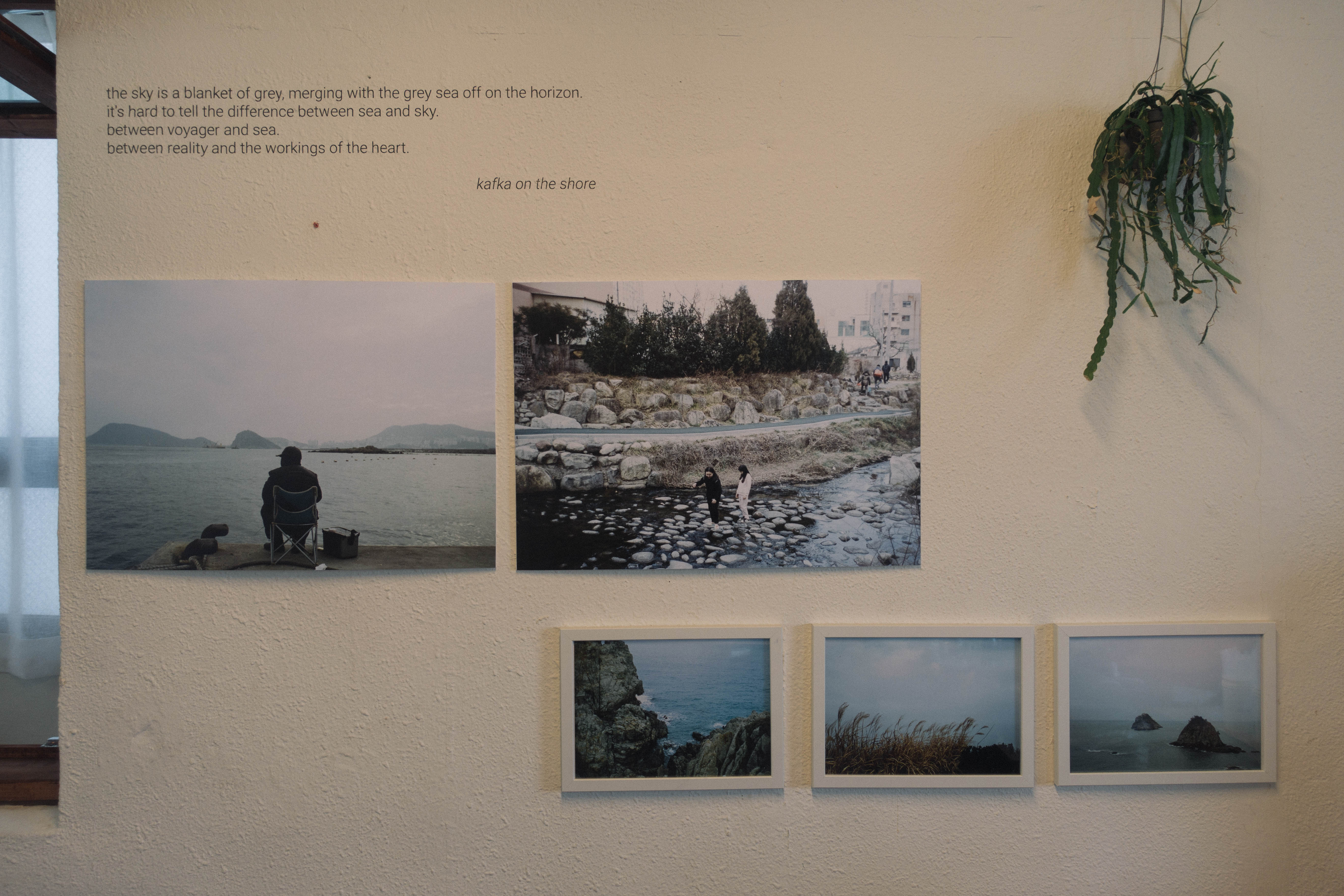
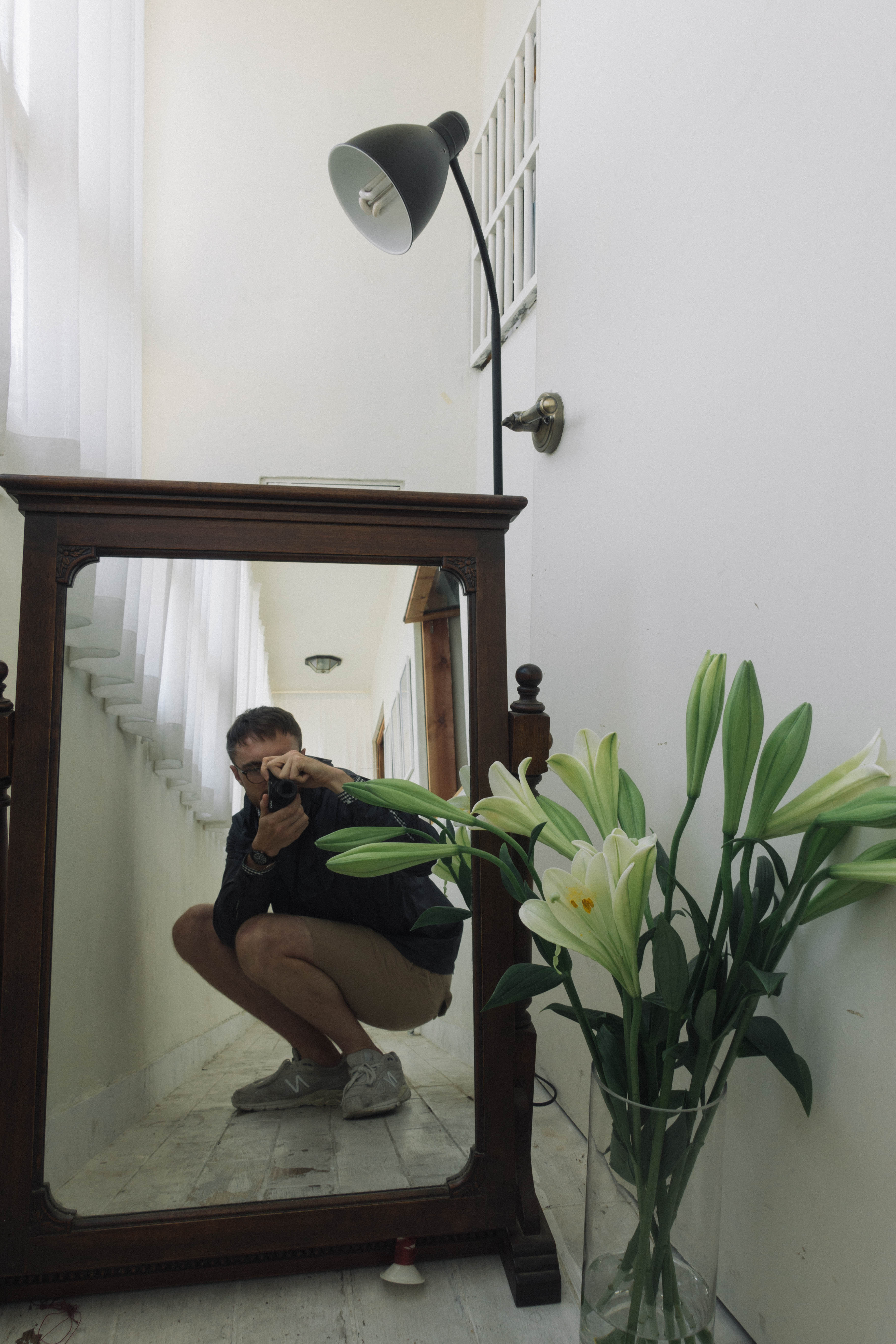
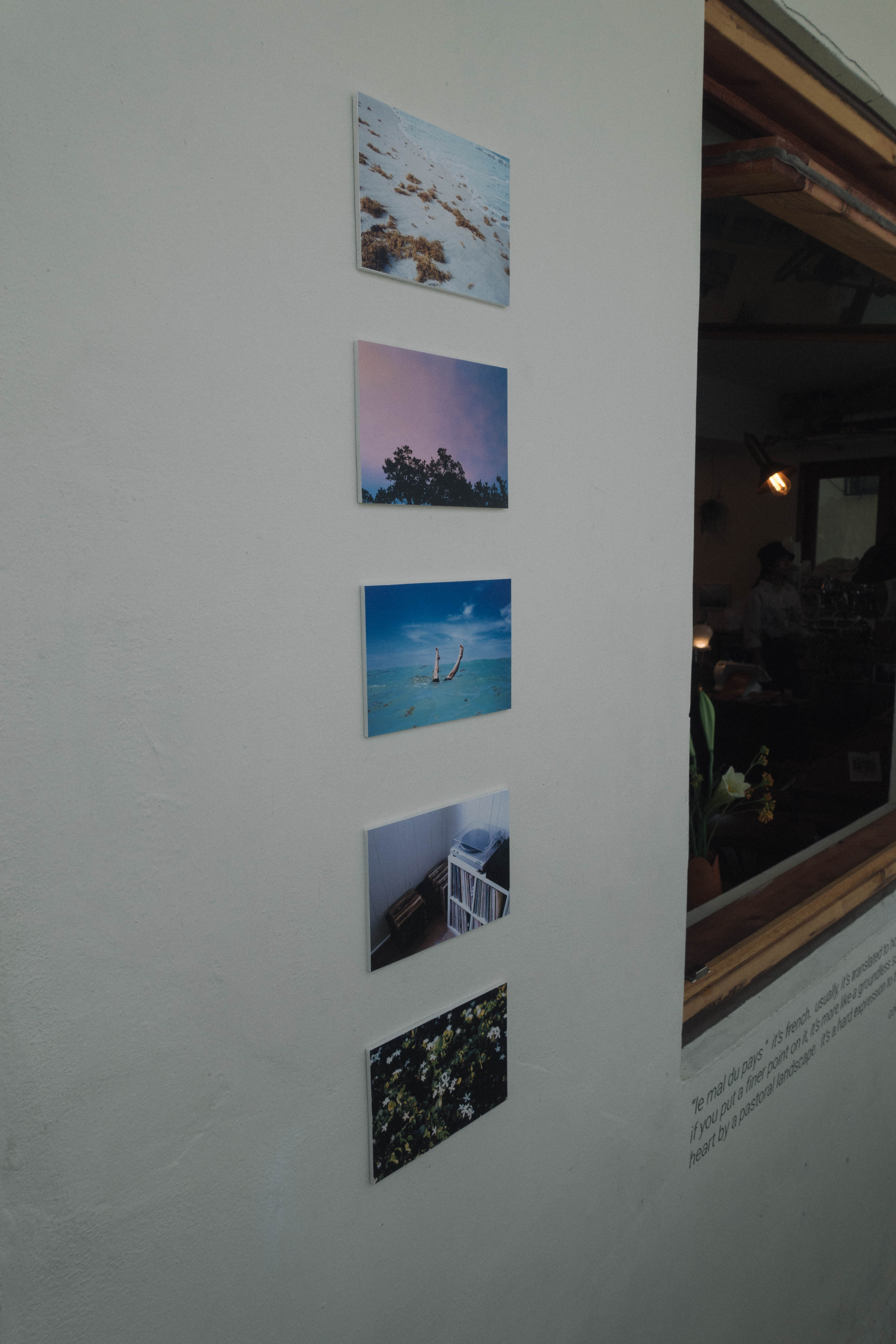
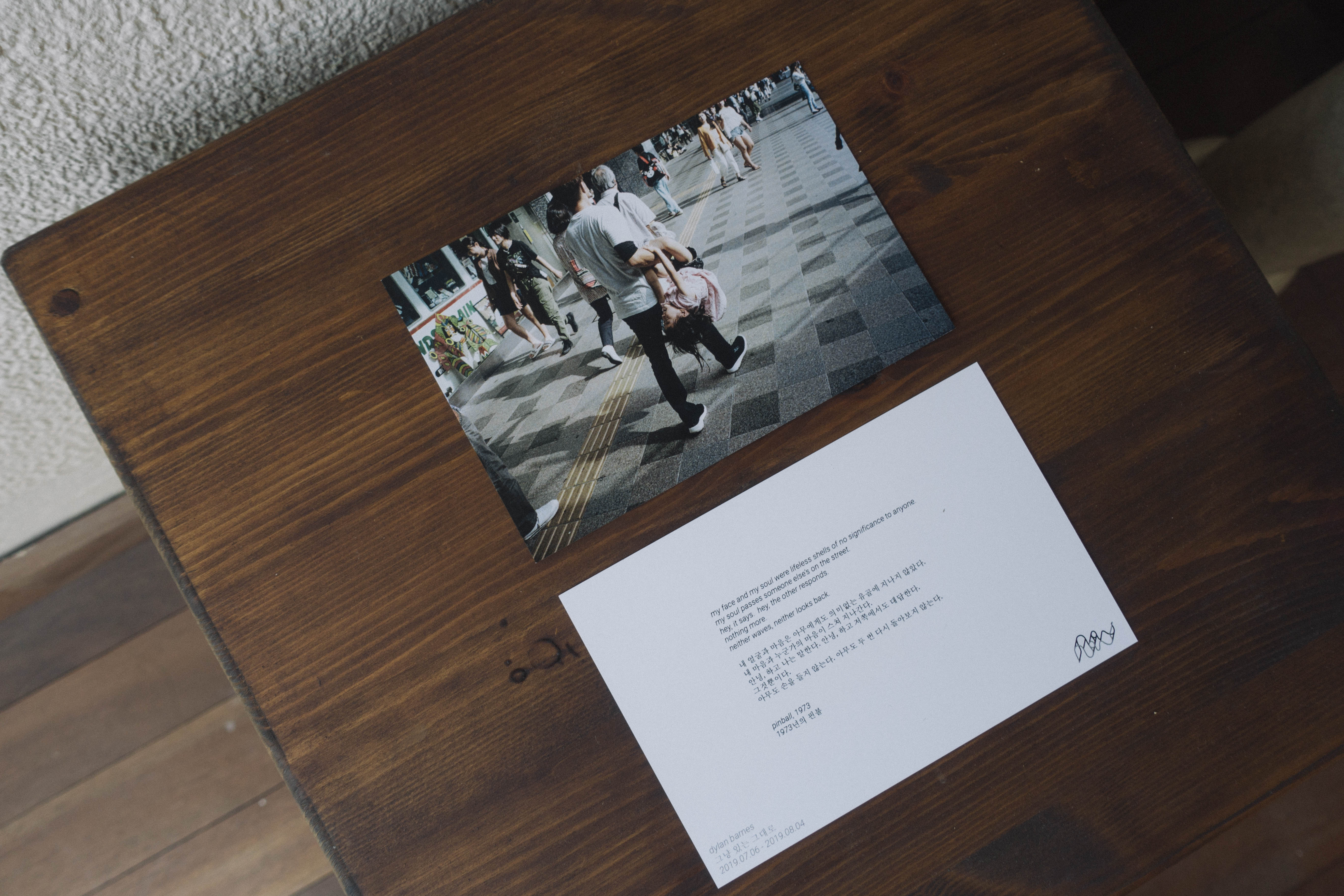
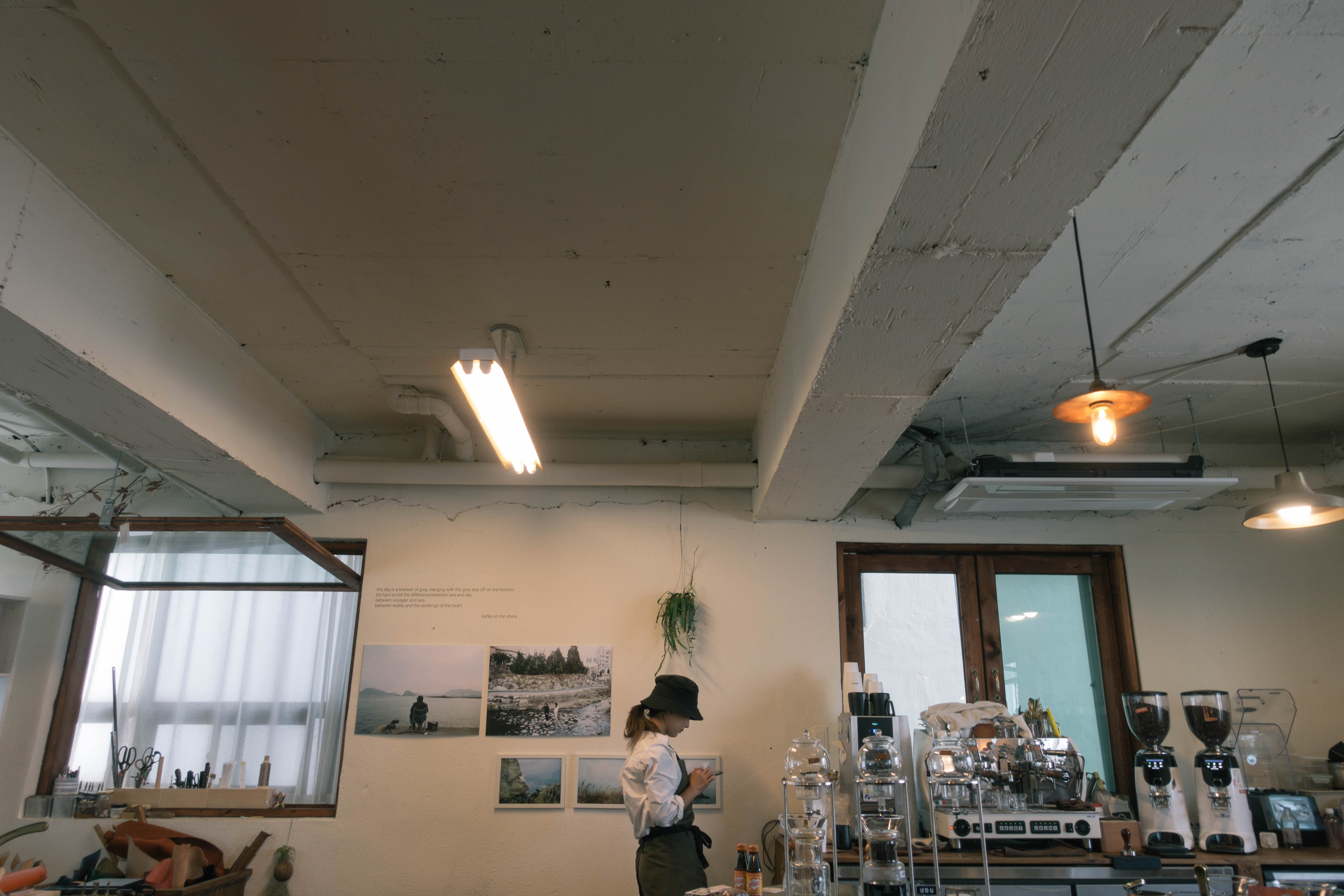
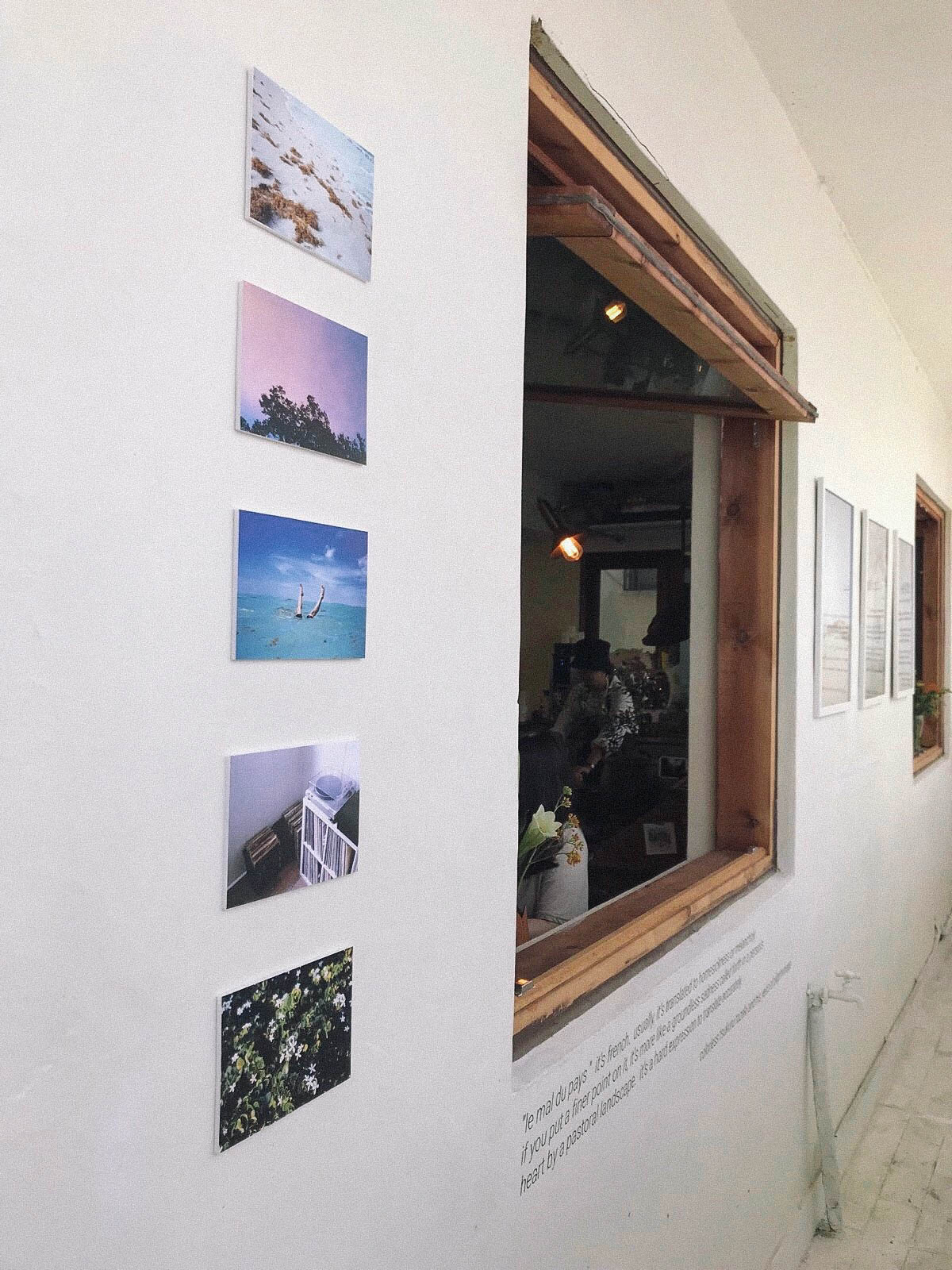
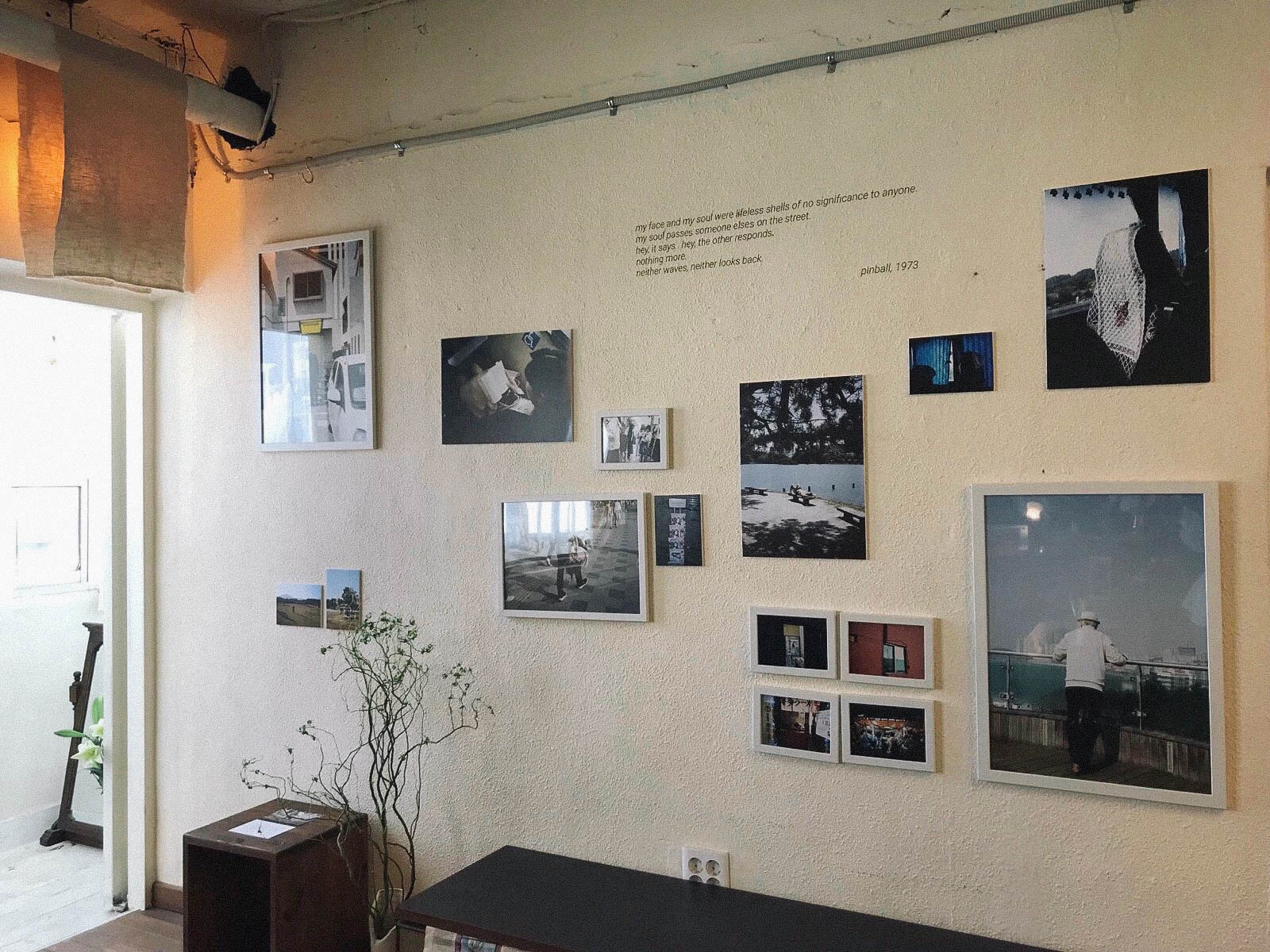
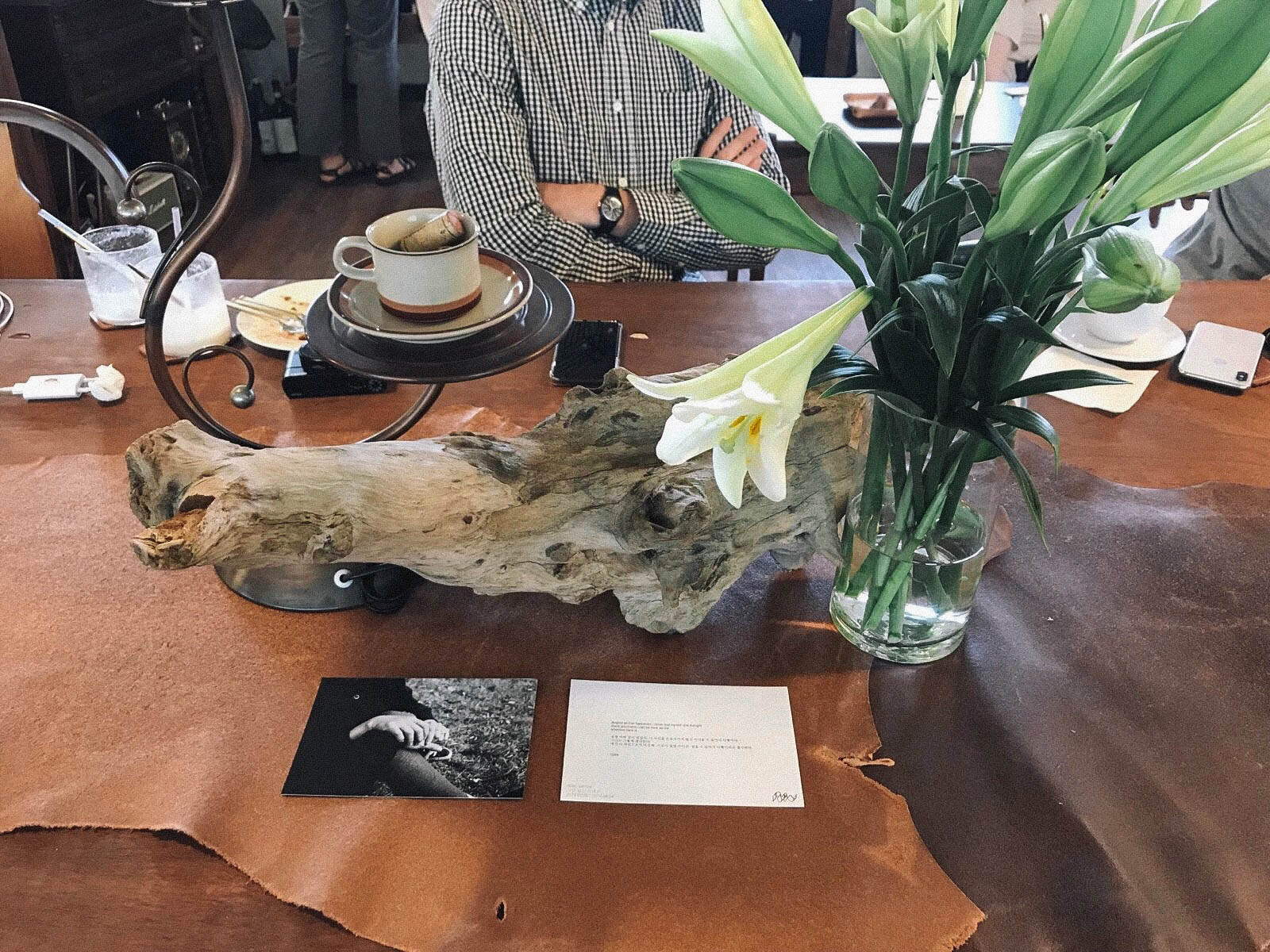
i spend a lot of my time in places just like this. a warm cup of coffee and whatever murakami novel i am reading at the time. i was never particularly good at thoroughly expressing my feelings, but for me, that’s what his books are for and that’s also what my camera is for. my images are snapshots of simple, natural moments in time. moments that i can remember for just a little while longer. moments that i can describe just a little bit better. moments that are inspired by a familiar tenderness in the human experience. moments that can be appreciated for just how they were captured and remembered. just the way things were. just the way things are.
따뜻하게 내린 드립커피 한잔과 무엇이든 좋은 무라카미 하루키의 책. 이것이 내가 항상 시간을 보내는 모습이다. 나는 내 감정을 완벽하게 표현하는데에는 특출나진 않지만, 그의 소설책과 카메라는 그것을 가능하게 해준다. 내가 찍는 이미지는 단순하고 자연스러운 일상의 스냅이다. 내가 조금이라도 더 기억할 수 있는 순간들. 내가 조금이라도 더 묘사할 수 있는 순간들. 익숙하고 포근한 경험에서 영감을 얻은 순간들. 그 모든 찰나들이 포착되고 기억된것만으로도 감사할 수 있는 순간들. 그냥 있었던 그대로. 그냥 있는 그대로.
















 dylan barnes | blog