Tag: filmisnotdead

  • Reader Excerpts: Foreign Observer

    Reader Excerpts: Foreign Observer

    Today’s feature comes from Daniel Rodriguez. Daniel tells a story from his perspective of a Mexican-American that most likely echoes true to many first-generation citizens.  His work as well as his written story make you understand what many people in America go through on a daily basis: floating in the in-between of identifying and understanding their cultural roots while also attempting to solidify their identity as an American citizen.  Daniel brings us on his (and his family’s) journey back to Mexico to document the town in which his father emigrated from to find his place in two different countries.

    Reader Excerpts allow those who read Now Developing to become part of the collective by sharing a written piece alongside their images on a topic of their choice.  If you have any ideas for a piece and would like to have it featured here, feel free to contact me!

    Foreign Observer, shot and written by Daniel Rodriguez (Website, Instagram)

    Foreign Observer is a photo series that took me three years to complete and is centered on how I was able to reconnect with my cultural roots through photography. When my dad immigrated to the USA over thirty years ago the only sentence he could confidently deliver in English was “One Jumbo Jack and a Strawberry Shake, please.” A few years passed and he became fluent in English, met my mom, got married and, had 3 kids.

    My mom was born here in the states, but was a child of immigrant parents and understood the hardships of life in Mexico. My parents wanted my siblings and I to have that same understanding as well as the knowledge of where we came from. Once my dad became a legal citizen in the 90’s, we would take trips down to Mexico as a family every other year. The trips consisted of lots of handshakes with family we had never met, fireworks, and a temporary suspension of my parents’ anti-junk food rules. These trips felt more like a vacation to me than an opportunity to connect with my culture but that all changed once I became a teenager.

    I had dealt with an unusual amount of discrimination as a child and was often treated differently by American kids for being “too Mexican” while also be teased by Mexican kids for being “too American”. I never felt like I fit in anywhere and somehow felt like a foreigner in each land. I remember being 13 years old and walking around the streets of Calvillo, Aguascalientes with my dad wondering how different my life would be if I would have grown up here instead of California.

    Would I have discovered my passion for art? Oh man, and what about my love for music? What does it really mean to be an American or a Mexican? I promised myself I would go back next year with my family and finally get a grip on where I fit in between these two cultures, but… the events of September 11, 2001 had happened and new international travel laws required passports cross the US/Mexico border.  It was going to take a lot of part-time summer job hours earn enough for a passport.

    Pretty soon after that my attention shifted to learning photography, the San Diego Punk Rock/Hardcore scene and my turbulent teen years which bled in to my awkward twenties. Before I knew it, over 10 years passed without visiting Mexico.

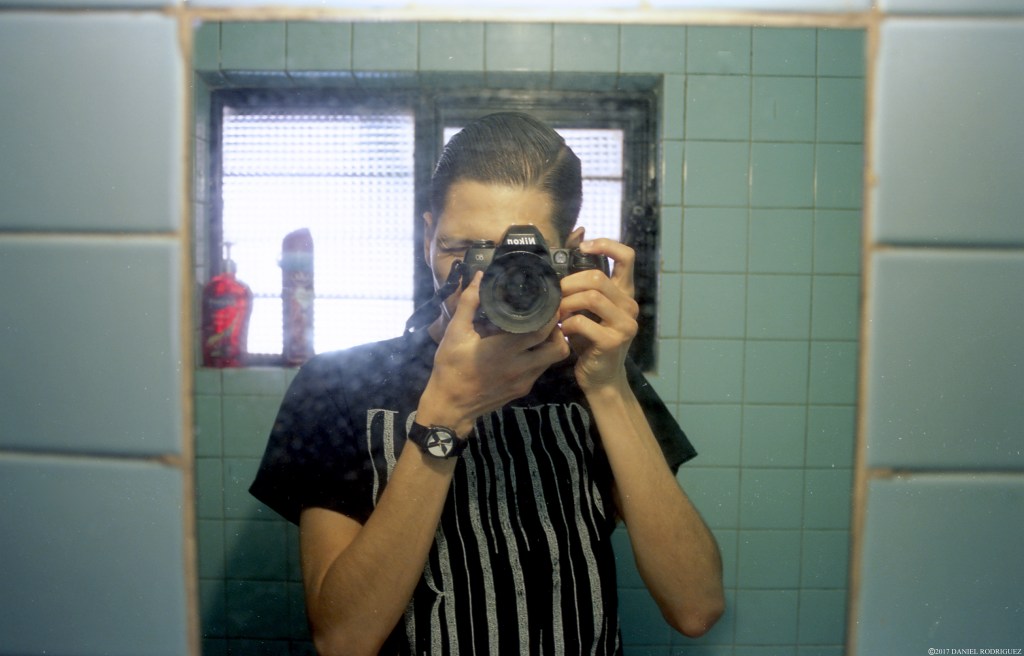
    I returned to Mexico in 2014 with my family in hopes of closing the chapter I started in December 2000 and photographing the experience. I knew I was going to bring my trusty Nikon N80 with my 35mm F2 lens and 28mm F2.8 lens but I couldn’t decide on what film stock to bring. After thinking things over, it seemed best to take a street photograph approach for this project and I convinced myself to use Kodak Portra instead Kodak Ektar (which is usually my preferred color film) in order to benefit from the faster film speed. I had never really shot with Portra and I was immediately dissatisfied with the results of that first trip back.

    I wanted make up for my error in judgement and I ended up shooting almost 40 rolls of Ektar after my subsequent trips in 2015 and 2016. It took a couple months to hand develop, scan and edit all the images but it was such a relief to see my images with the punchy colors and contrast that Ektar is famous for. These shots are a direct result of me walking around aimlessly for hours on end and interacting with the city. I stick out like a sore thumb when I walk around and take pictures since it’s such in small town. Between the guava orchards, churches and bars, there isn’t much to do there.

    My dad rented a car and took my Mom and I on a drive during one of our last days there. I spotted a corn field and asked him to stop so I can snap a few pictures. I hopped a fence and walked in to a cornfield to shoot the bundles of corn stalks piled together like giant yellow pyramids.

    When I came back to the car, an old man was speaking to my dad and I instantly got nervous and thought he was mad at me for being on his property. I introduced myself as I approached him and he asked me which news channel I was shooting for as he shook my hand. I explained that I was not a reporter, but just a photographer from the U.S. and that I’m here to capture the city my dad immigrated from. He was surprised that someone had taken so much interest in this little city and he praised God for giving me the opportunity to document it.

    He said to me, “Listen, son. I think it’s a beautiful thing you’re here capturing these landscapes and finding the beauty of this land. Never forget that you’re a part of this land and its yours as much as its mine, or your fathers. Your home exists on both sides of that border and you know why? Look over there… That’s my home. It may be small and it may be simple, but it’s also yours. You are welcome to it at any time. Whether its a glass of water or a bed to sleep in, it’s there if you need it.”

    If you would like to purchase this project in print, Daniel is selling the work here.

  • Developed Roll: Leica M2 w/ Canon 50mm f1.8 LTM

    Developed Roll: Leica M2 w/ Canon 50mm f1.8 LTM

    In my (hopefully deceased) search for the perfect 35mm rangefinder, I decided to pick up a Leica M2.  While I already had a Zeiss 35mm f/2 ZM, I felt that I could really benefit from a 50mm focal length.  After a bit of reading, I came across the “Japanese Summilux”, or the Canon 50mm f1.4 LTM.  While the extra half of stop would be nice, I decided to go with its slower sibling, the Canon 50mm f/1.8 LTM at a fraction of the cost.

    To put both the lens and my ability to judge exposure without a meter to the test,  I took my M2 with 50mm attached and HP5 loaded and left the light meter at home.

    I took my camera to an exhibition hockey game between the University of South Florida Men’s hockey club team and the USA National Women’s Hockey team who are currently on a tour to garner excitement and get a bit of practice in before the Olympics in Pyeongchang, South Korea later this year.

    While shooting a hockey game is typically no easy feat with a dSLR due to the tricky lighting, I found that shooting meterless and on black and white film was definitely a bit more rewarding.  Not to mention manually focusing a subject at f/4 that was moving at high speeds.  All in all, I was very satisfied with the results.

    All images were taken on a Leica M2 with a Canon 50mm f1.8 LTM on Ilford HP5.

  • Part of the Process: Sara G. Amo

    Part of the Process: Sara G. Amo

    Part of the Process is a series of posts that puts the spotlight on film photographers and DIY film developers.  These features provide unique experiences and perspectives on shooting and developing film while also showcasing diverse talent and film photographers around the globe.  If you are interested in being featured, feel free to contact me!

    Name: Sara G. Amo

    Location: From Barcelona, Spain, but currently living in Iceland

    Links:

    Cargo Collective

    Tumblr

    Facebook

    What other websites or blogs do you keep up with to feed your photographic interests?

    I like to wander around Tumblr to find other photographers and inspiration.

    What attracted you to film photography? How did you get started/introduced to shooting film? How soon after did you start developing?

    What attracted me the most are the aesthetics of film and the whole artisanal value of the process of developing. I discovered film when I was studying graphic design, we had a photography class and the first year was all about film photography, so we learned to shoot with film cameras and develop our negatives and prints. After that, when I became more focused in photography, I started shooting and developing by myself at the same time.

    What do you like to shoot on a regular basis?

    I shoot mostly portraits, but also landscape. I am very interested in human emotions, the connection between humans and nature, and also in the social documentary perspective.

    What formats, cameras, and films do you shoot? What do you like about the formats, cameras, films you prefer? 

    I use mostly 35mm and medium format. I like 35mm because it’s the most easy to bring when traveling, or when going out in the street or hiking in the mountains.  It’s light weight, and you have a lot of photographs in every roll. But actually, my favorite format is medium format, I love the depth of the negatives; the results are amazing both in portrait and landscape photography. But it’s also more difficult to use because the camera is a lot heavier and the rolls have less photographs.

    So, I often use the 35mm when I’m shooting on my own, and the medium format when I have to work on specific projects.

    What types of film do you develop?

    At home, I develop black and white, both negatives and prints. In the future, I would like to be able to also develop C41.

    Tell us about your first experiences in developing your own film.  How did you muster the courage to give it a shot? What resources did you use?

    I already had the basics of developing because I learned it at school, but I remember the first time I decided to do it at home, totally by myself alone, and I felt kind of scared of making some mistake and ruining the whole batch of work. But in the end, everything went well and the more I developed, the more confidence I gained to continue doing it.

    What is your development process like now?

    First, I decide what format or camera I am gonna use depending on the project, after the shooting, I normally don’t develop the rolls until I have many to develop them in a batch.

    I send the color film to the lab, also when I have quite a lot of them. After I have all the negatives, I scan them at home and make a selection. Then, I edit the final ones in photoshop, just the basic touches: brightness, contrast, color dominance, and not much more than that. When I have money and I can buy photographic paper, I enlarge some of my favorite black and white prints in the darkroom and scan the final print instead of the negatives.

    I also like to experiment with alternative processes, such as cyanotype, van dyke brown, or photographic emulsion, among many others. Alternative processes are really interesting to me but I haven’t got the time to work with them as much as I want. I hope I can work more with them in the future!

    What’s your processes regarding scanning, enlarging, and/or printing your work?

    I like to do everything by myself. The first thing I did when I got my latest job was buy a professional scanner so I can scan all my negatives at home, because the prices of the laboratory were too high and I also didn’t like the quality of it.

    I enlarge and print my black and white photographs in the darkroom, but lately I can’t do it much because of the cost of the photographic paper. But when I have an exhibition, I always do it, the quality of the prints is much better when you develop them in the darkroom.

    What equipment are you using to develop your film and why?

    I don’t have a fixed darkroom. I would love to have it in the future, but for now I have to use my bathroom (I call it the “bathlab”). I use a Meopta Opemus 6a enlarger and a Paterson tank, because I bought it all together from a friend that was selling all of her darkroom equipment.

    Currently, I use Kodak HC-110 as a film developer because I love the results in all the films that I’ve tried, the contrast and tones that you get are perfect, and also because it lasts for a long long time. The rest of the chemicals, including fixer, stop bath and paper developer are from Tetenal, mostly because they are the ones that are more easy to find here and the price isn’t too expensive.

    Are you content with where you are now with your shooting and developing? Do you have any future plans or ambitions?

    I feel that I am still in the beginning of the journey. I still have to shoot a lot more, I still have to develop a lot of projects that I have in my mind and spread my works so they reach more people. I realized that my way is slow, so everything goes little by little, but the best I can do is enjoy the process, go with the flow, and see what happens next!

    Have you completed any notable projects or in the process of creating something from the film you have shot and developed? 

    I’m currently finishing some projects that I shot in the last years, organizing all the photographs and making the final selections. This is always the most difficult part of the projects for me, mainly because it’s very time consuming and I have to spend many hours on the computer.  I prefer to be shooting outside or developing in the darkroom.

    My latest finished project that you can find online in my portfolio is ‘A dor da ausencia’, regarding the loss of my grandmother Ilda, probably one of the most special and difficult projects that I’ve done up until now.

    What advice can you give to others who are interested in shooting and developing film but are apprehensive about getting started?

    Don’t be afraid, start in the most simple way: just find a film camera (ask your family if they have any old cameras or buy a second hand one), buy the cheapest film that you find, and start shooting!

    Developing B&W at home is very easy, you just have to learn the basics and start experimenting. You’ll discover a whole new world that will let you experiment photography in many different ways. Don’t worry if you make mistakes at first, keep shooting and practicing, that is the key to grow and improve!


  • Developed Roll: Polaroid SX-70 // Polaroid Originals Black and White

    Developed Roll: Polaroid SX-70 // Polaroid Originals Black and White

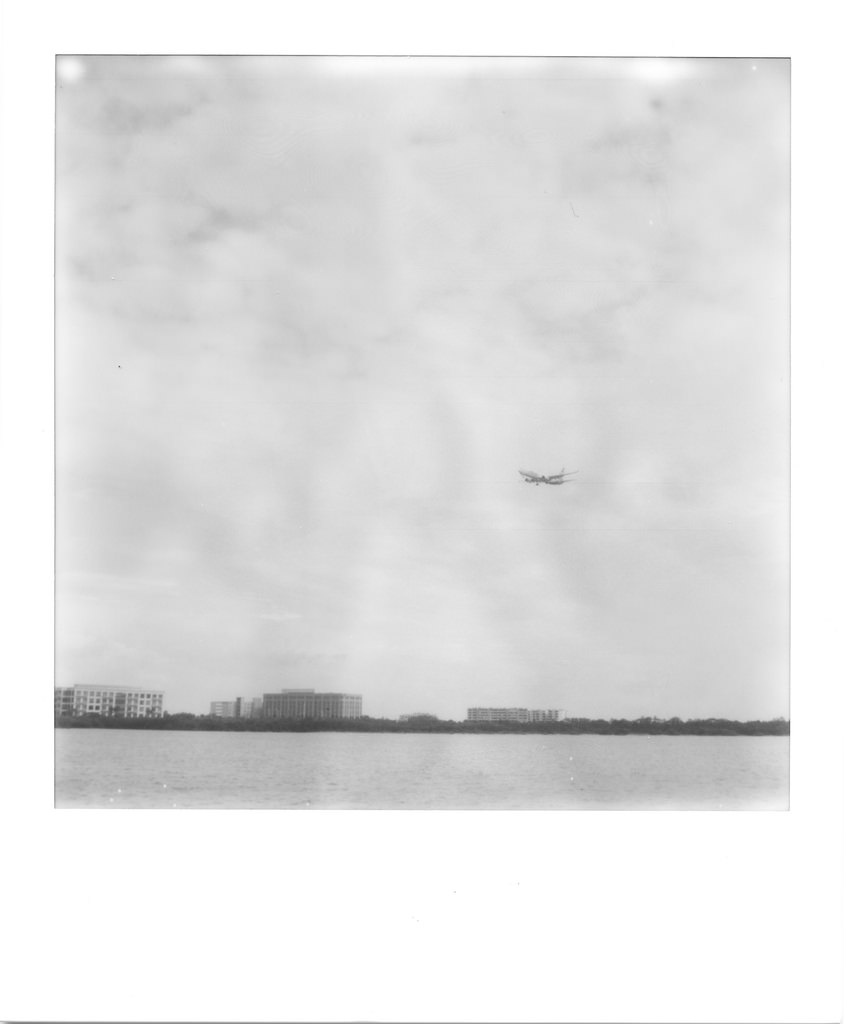
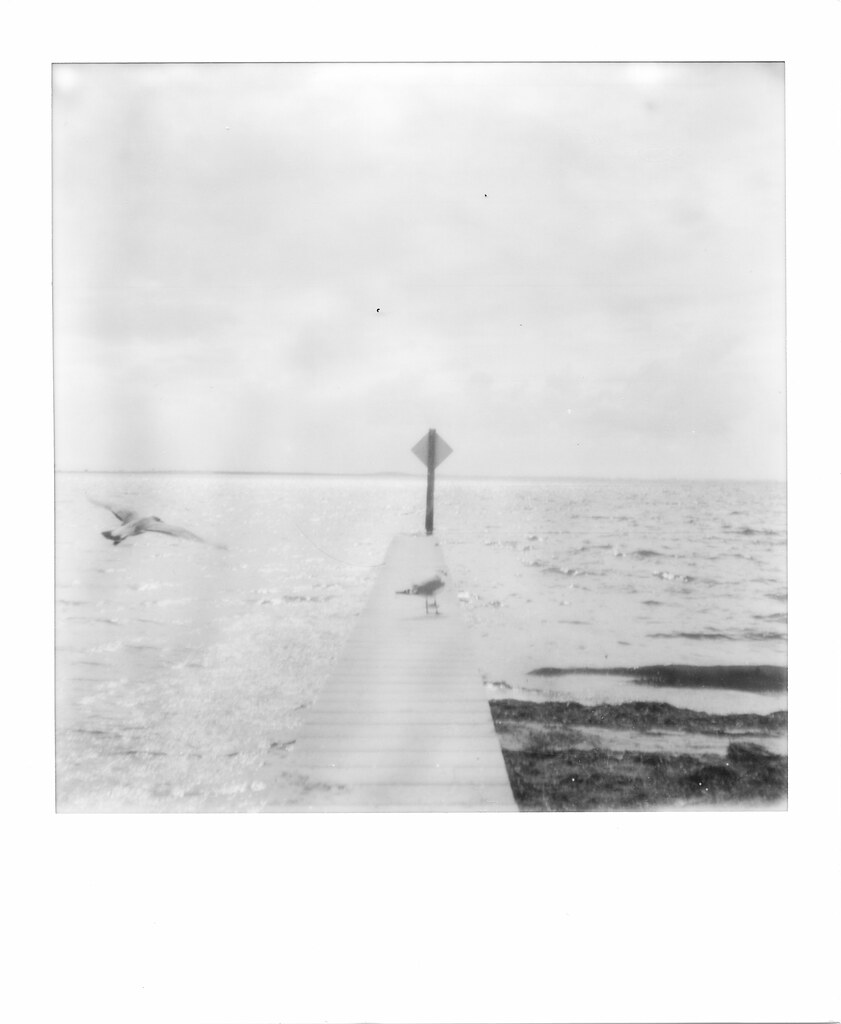
    It is truly exciting to see that some of my film photo friends are receiving emails regarding the shipping and delivery of the new Polaroid One Step 2.  I still eagerly await my delivery email, but I’ll try to remain patient. Back when I preordered the new Polaroid camera, I also bought a pack of new Polaroid Originals Black and White for my SX-70 to test out.

    Through shooting my first pack, I have encountered a few obstacles with the film and my camera.  I have found that my cameras electronics are either on their way out, or my battery contacts need a simple cleaning.  First, on two of the shots, the camera died mid-shutter release.  Secondly, on most of the frames, I was left with a milky-look to the frames.  Not going to lie, it has left me a bit disappointed.  Not sure if this was the fault of my camera, the film, or myself for not putting the frames away from light right after shooting them.  Maybe it’s the scanner, too.  Judging by some other people’s photos with the new film, it looks like some sort of user or camera error on my end.  Ah well, better luck next time.

    Overall though, it’s extremely exciting to try something new, and I am glad that these film packs, albeit still on the expensive side, have come down more than a third of their former price.  For now, here are my first photos with the new film stock.

    All images shot with a Polaroid SX-70 on Polaroid Originals Black and White Instant Film.

  • Part of the Process: Kent Miller

    Part of the Process: Kent Miller

    Part of the Process is a series of posts that puts the spotlight on film photographers and DIY film developers.  These features provide unique experiences and perspectives on shooting and developing film while also showcasing diverse talent and film photographers around the globe.  If you are interested in being featured, feel free to contact me!

    Name: Kent Miller

    Location: New York, New York, USA

    Links:

    Website

    What other websites or blogs do you keep up with to feed your photographic interests?

    Casey Neistat, Thomas Heaton, Ben Horne, On Taking Pictures, and Art of Photography.

    What attracted you to film photography? How did you get started/introduced to shooting film? How soon after did you start developing?

    I started shooting film because digital didn’t exist at the time. Processing your film was something you just did. It allowed you to experiment with your art and push things with your own vision. Spending hours in the darkroom in the early years was a different kind of high. Seeing something appear in the developer was a rush and was super exciting.

    Lin Bowman working in her studio, Linhof 5×7, Ilford HP5, 150mm Fujinon-W lens, f6.8 @ 1sec

    What do you like to shoot on a regular basis?

    With large format film, I do a bit of portraiture and land/waterscapes.

    What formats, cameras, and films do you shoot? What do you like about the formats, cameras, films you prefer? 

    5×7, 4×5, 2.25, and 35mm. Right now my go to camera is a Linhof 5×7. I shoot only black and white film. Mostly, I shoot very old stock from the 50’s. I also shoot Ilford FP4 and anything I can get my hands on.

    What types of film do you develop?

    I started with color film. Convinced the world is in color I never thought about anything else. Then a friend and amazing shooter talked me into buying a Monochrome Leica. I fell in love and have been obsessed with black and white since. Going back to film was a product of exploring deeper and deeper into the art. A friend in the family is also a great motivation to move your ass.

    So, now I am only developing black and white films at this time. Some old, some new. Using Kodak D76, R5 monobath and Ilford developers.

    Sam and Alder Zuckerman, Rafters, VT.  Linhof 5×7, Kodak Panchromatic exp. 1958, Schneider Symmar convertible lens at 210, f8 @ 1sec

    What is your development process like now?

    I load my film and paper in the darkroom as much as possible before going out. I take 3-4 different emulsions and papers. Some days, I use paper negatives for more contrast or a unique look to the image, other times I want super sharp and a safe film I know will look great.

    I’ve been working on a portrait project using very old outdated film with great results. It’s just a risk you take to use this film. You just never know how it was stored or handled. So far, so good, though.

    Jeff and Ruben, Rafters, VT. Linhof 5×7, Kodak Panchromatic exp. 1958, Schneider Symmar convertible lens at 210, f6.8 @ 1sec

    I then process using one of three developers I talked about above. I then scan the negatives and pick a best shot to wet scan for digital printing. I plan to print the best shots with platinum/palladium.

    I’m still working on this project so the final prints have not been made yet. I don’t really have any great tricks to offer. I’m not a master printer at all, so I just do the best I can and look to others for life long guidance. Tim Layton is amazing and I pick up anything i can from him. I’m also lucky, My great friend and now brother-in-law in an amazing alternative process guy so he is always a source of inspiration and guidance.

    What’s your processes regarding scanning, enlarging, and/or printing your work?

    Now I develop my film and scan using a wet scanning process for the best results from my Epson V700. The negatives are also contact printed using a platinum / palladium process on watercolor paper. I also print using a digital negative with amazing results.

    Katie Jo Flanagan, Dancer/Performer, White Plains, NY. Linhof 5×7, Ilford HP5, Schneider Symmar convertible lens at 210, f6.8 @ 4sec 

    What equipment are you using to develop your film and why?

    I use many types of processing vessels. Stainless tanks, Patterson tanks and reels for roll film and 4×5.  I also picked up a beautiful tank for 5×7 sheet film made by B&W King in China. Only available through eBay, but it is a work of art in itself. I use trays for some work if I only have a sheet or two to process. I have loaded and messed up film in all the options I use, so no real one way of doing things. I have been using the stainless 5×7 tank for a lot of work lately.

    Jonathan Perry, The Jugglah, Circus Arts, Hacks Point, MD, Linhof 5×7, Ilford HP5, Nikkor-W f8 @ 1/30

    Are you content with where you are now with your shooting and developing? Do you have any future plans or ambitions?

    I’ll never be content with the process as I will never be a master. I’m always learning and trying different things. A lab is not in the cards for sure but you never know about other options. I think youtube or blog type things are more in my future. Mostly just to show the things Im doing so others can offer help or info to push things in different directions.

    Jim and Leroy Bowman, Elizabethtown, PA. Linhof 5×7, Ilford HP5, Nikkor-W f8 @ 1/15

    Have you completed any notable projects or in the process of creating something from the film you have shot and developed?

    My current work is still very new and still in its infantry. I am a commercial photographer in New York City, so I do mostly what clients need. I have yet to show any of this work yet.

    What advice can you give to others who are interested in shooting and developing film but are apprehensive about getting started?

    If you have never shot film, you need to at least run a few rolls through an old camera and see what you think. If you’re searching for something with feeling, texture, and a different look than you get with digital then you may find it in film.

    Michelle Kelly Wurf, Dancer, Dobbs Ferry, NY. Linhof 5×7, Ilford HP5, Nikkor-W f11@1/125

    The cost to give it a try is not all that much, but could be a bit of a process. I would just send out a few rolls to a lab at first and see if you want to take the plunge into the art form that is film. I believe that shooting large format will slow you down and make you think differently. It’s a thought process. It’s just a box with a lens on the front but so many things can and will go wrong. When you get it right you will be amazed at the results. If you have never seen a 4×5, 5×7 or 8×10 chrome you will just sit and stare at it. It is stunning to see!

    ** All the film was developed in D76 straight, 7.5 min@ 70degrees, Agitation was first 30 seconds then 10 seconds every 2 minutes.  The images were scanned on an Epson V700 with a better scanning wet system. **